

Best Sleeping Position for Back Pain, Sleep Apnea & More
- March 6, 2026
- 0
Best Sleeping Position for Back Pain, Sleep Apnea & More (2026) The best sleeping position for you depends entirely on your body and health. Side sleeping works for


9621 Agnes Crossing, Lake Suzanneview, New Mexico Island 84604-9295.
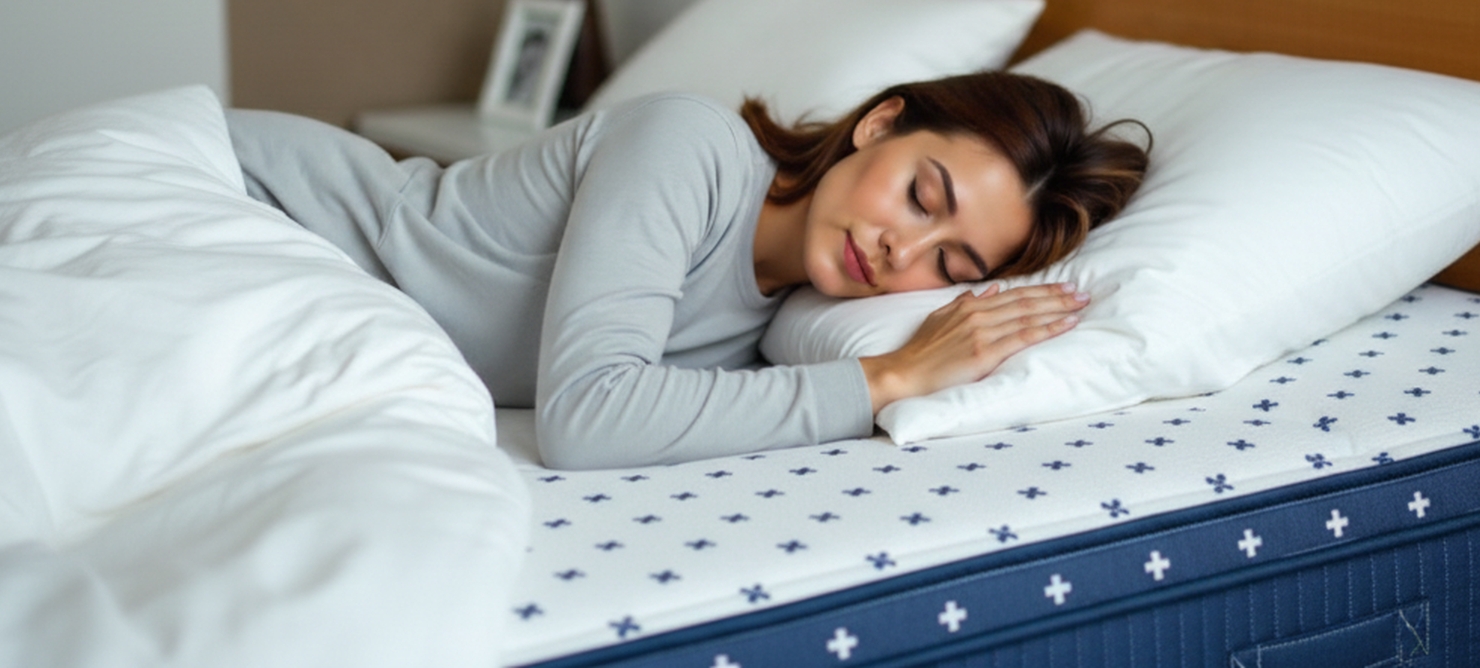
The best sleeping position for you depends entirely on your body and health. Side sleeping works for most people. But if you have back pain, GERD, sleep apnea, or neck pain, the wrong position can make your nights miserable and your mornings worse.
You spend roughly one-third of your life asleep. The position you choose affects your spine, your breathing, your digestion, and how you feel when your alarm goes off. Getting it right is one of the simplest changes you can make to improve your daily health.
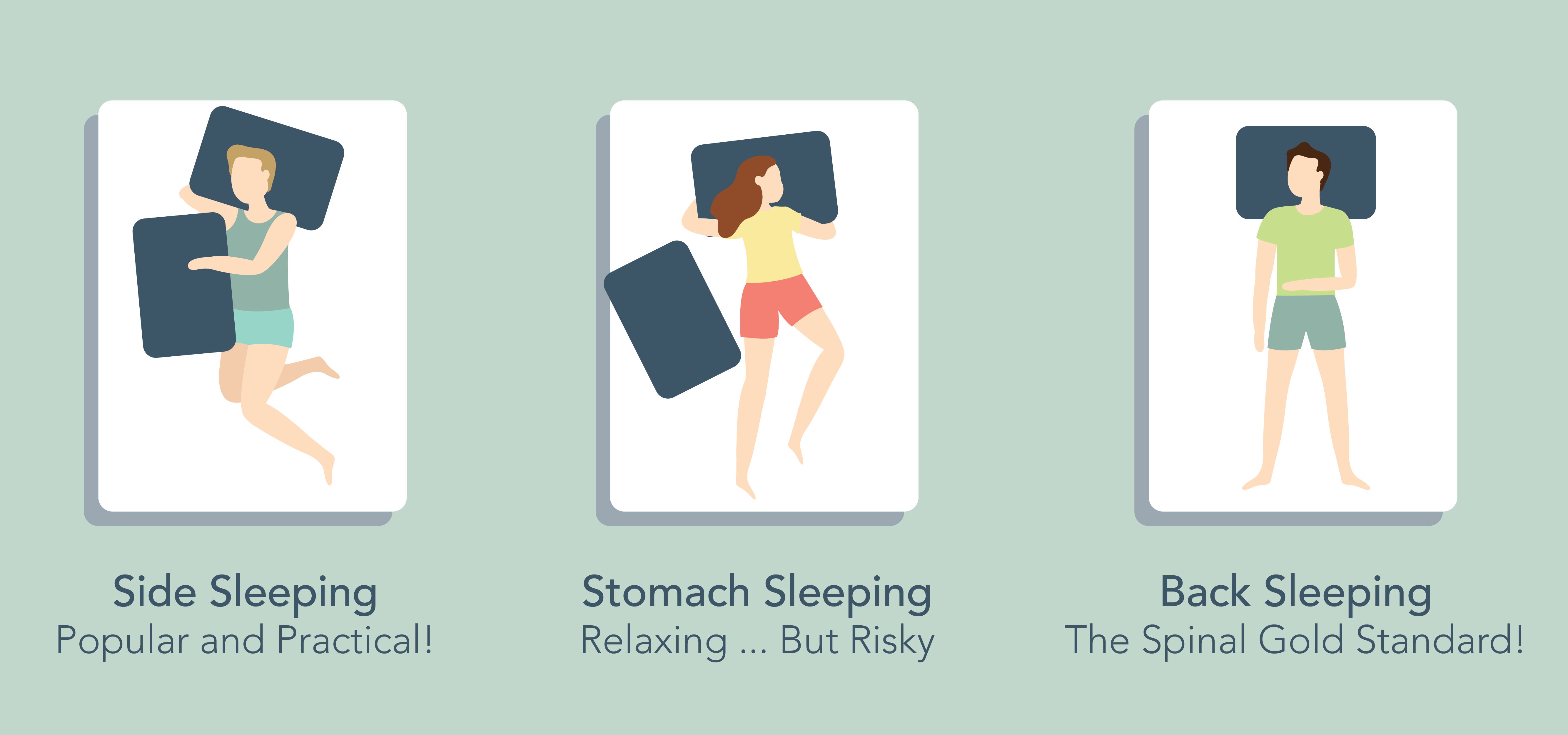
There are three main sleeping positions — side, back, and stomach. Each one has real benefits and real drawbacks. The best sleeping position for your needs depends on which health concerns matter most to you.
Best overall. Supports spine, reduces snoring, helps back pain, GERD and sleep apnea.
Preferred by 60%+ of adults.
Good for neck pain and even weight distribution.
Not recommended for sleep apnea, snoring, or GERD.
Least recommended. Twists the neck, strains the lower spine.
Causes pain over time for most people.
| Condition | Best Position | Worst Position |
|---|---|---|
| Back pain | Side — knees bent | Stomach |
| Sleep apnea | Side | Back |
| GERD / Heartburn | Left side | Right or Back |
| Neck pain | Back | Stomach |
| Pregnancy | Left side | Back |
| Snoring | Side | Back |
| Shoulder pain | Back or unaffected side | Affected side |
| Wrinkle prevention | Back | Side or Stomach |
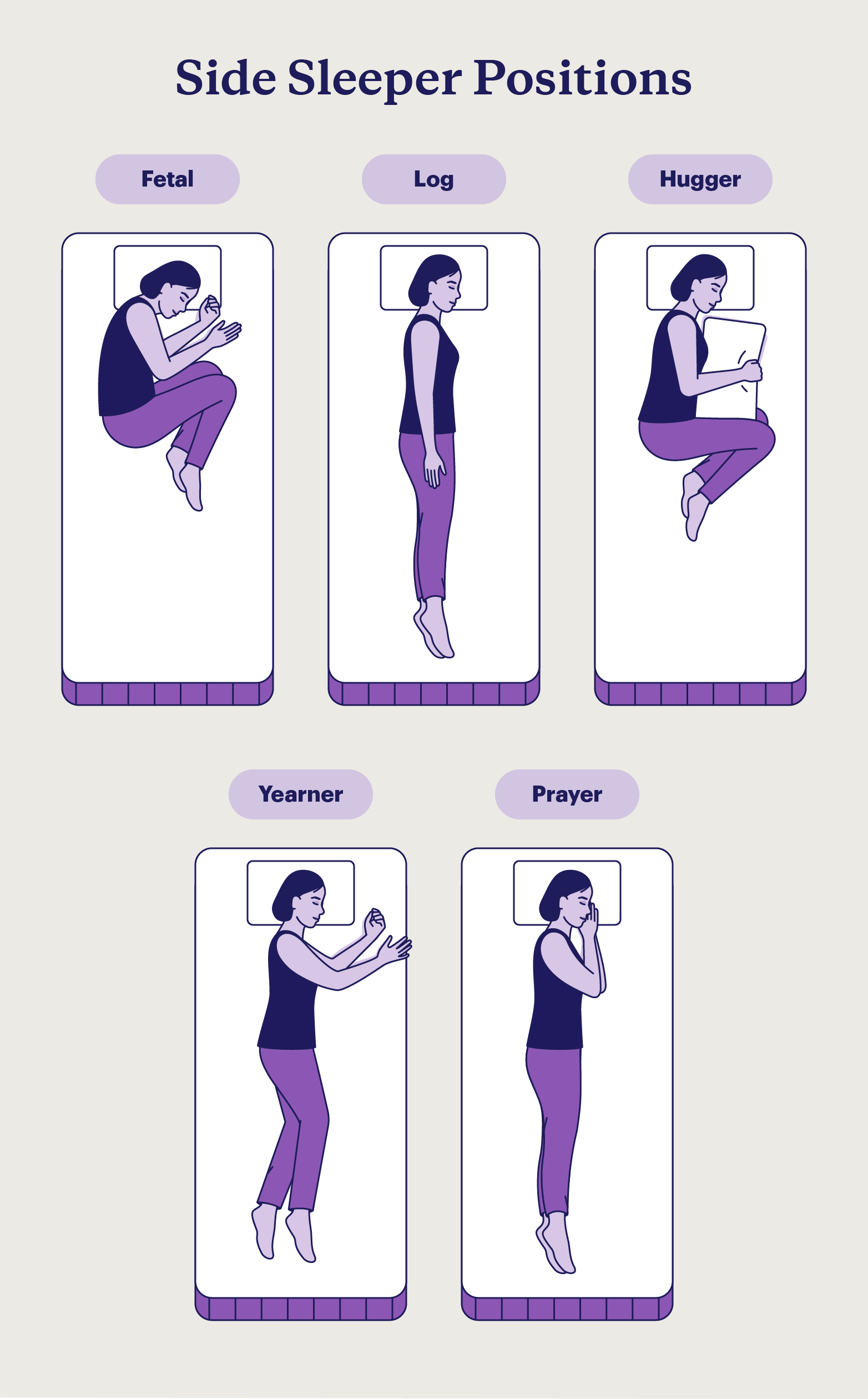
Side sleeping is the most popular sleep position worldwide. More than 60% of adults naturally prefer it — and for good reason. It keeps the spine in a neutral line, reduces snoring, and improves breathing quality throughout the night.
Left-side sleeping is the better choice for most people. Your internal organs are positioned so that the left side naturally reduces acid reflux. It also improves circulation and is the recommended position during pregnancy.
Right-sided sleeping is generally fine, but worsens GERD symptoms for people who have them. If you do not have acid reflux, either side works equally well for back pain and spinal support.
Back sleeping is the second most common position. When done with the right pillow and mattress, it evenly distributes body weight and keeps the spine naturally supported. It is one of the best sleeping positions specifically for neck and shoulder pain relief.
Use a low pillow that supports your neck’s natural forward curve without pushing your head too far forward. Place a thin pillow under your knees or the small of your back to reduce lumbar tension.
Keep both arms in a similar position at your sides — not raised above your head. Raised arms create asymmetrical pressure on the neck muscles and can cause soreness in the morning.
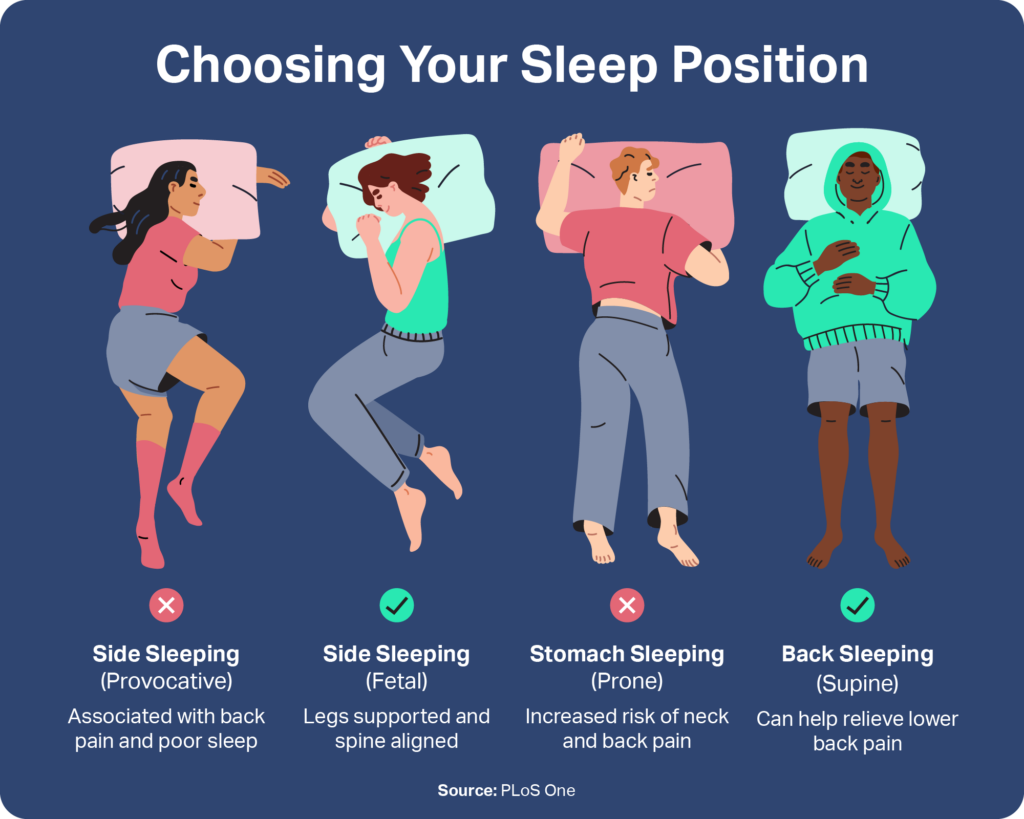
Stomach sleeping is the least common and least recommended position. Only around 10% of adults sleep this way regularly. It forces your neck to twist sideways for hours at a stretch — a position no neck is designed to hold for that long.
Your lower spine suffers too. If your mattress is not firm enough, your hips and stomach sink down and pull the lower back into an unnatural curve. This is a direct cause of the back pain many stomach sleepers experience every morning.
Who Should Never Stomach Sleep
Anyone with neck pain, lower back pain, or who is pregnant should avoid stomach sleeping entirely. The risks to spinal alignment are too high to justify the position, even occasionally.
Side sleeping with your knees slightly bent is the best sleeping position for lower back pain. Place a small pillow between your knees. This single step keeps your hips, pelvis, and spine in alignment and removes the rotational stress that builds in the lower back overnight.
Back sleeping with a pillow under the knees can also work for some people. The goal is to maintain the natural lumbar curve so your lower back does not flatten out against the mattress for hours.
Side sleeping is the best sleeping position for sleep apnea. When you lie on your back, gravity pulls your tongue and soft throat tissues backward — narrowing or even blocking the airway. Around 50% of sleep apnea cases are positional, meaning they occur only when sleeping on the back.
Simply switching to side sleeping can significantly reduce or completely eliminate symptoms for positional sleep apnea. A body pillow placed behind your back can prevent you from rolling over during the night.
Left-side sleeping is the best sleeping position for acid reflux. When you sleep on your left side, the stomach sits below the esophageal valve — gravity keeps acid down. On your right side or back, the stomach rises above the valve, and acid travels upward far more easily.
Elevating the head of your bed by around 15cm (6 inches) adds further protection. Left-side sleeping, combined with a raised head, provides the maximum relief for regular heartburn sufferers.
Left-side sleeping with knees gently bent is the recommended position throughout pregnancy. It improves blood flow, reduces pressure on the liver, eases lower back strain, and reduces swelling in the hands, feet, and legs.
Back sleeping should be avoided in late pregnancy — the growing baby’s weight presses on major blood vessels, potentially restricting circulation. Most people naturally find back sleeping uncomfortable by the third trimester anyway.
Back sleeping is the best sleeping position for neck pain. It reduces the overactivity of neck muscles that occurs when the head is held sideways during side sleeping. Use a low-profile, contoured pillow — it should support the neck without pushing the head too far forward.
Your mattress plays as big a role as your position. The best sleeping position in the world still causes pain on the wrong mattress. Here is what works best for each position.
Side sleepers need enough give to cushion the hips and shoulders.
A mattress that is too firm creates pressure points at these contact areas.
Back sleepers need a mattress that supports the lumbar curve without letting the hips sink too far. Medium-firm prevents the spine from flattening overnight.
Stomach sleepers need a firm surface to prevent the hips from sinking. A soft mattress pulls the lower spine into a downward curve, worsening back pain.
Side sleepers — use a thick, high-loft pillow to fill the gap between head and shoulder.
Back sleepers — use a thin, contoured pillow that cradles the neck.
Stomach sleepers — use no pillow or the thinnest pillow available.
Stomach sleeping is the hardest habit to break because most position changes happen unconsciously during deep sleep. These five steps make it easier to train your body into a healthier position over 2–4 weeks.
If you have shoulder pain on one side, sleep on the opposite shoulder. Sleeping on the painful side adds hours of direct pressure to an already irritated joint. Back sleeping is often the best sleeping position for bilateral shoulder pain — it removes all contact pressure from both shoulders.
Side sleepers with shoulder pain should also check their mattress. A mattress that is too firm creates impact pressure on the shoulder contact point. A medium-soft mattress with enough give distributes weight more evenly across the shoulder and hip.
Side sleeping is the best sleeping position for snoring. Back sleeping causes the tongue and jaw to relax backward, narrowing the airway and creating the vibration that produces snoring. Most people snore significantly less — or not at all — when they switch to side sleeping.
Elevating the head slightly while side sleeping can further reduce snoring. A thicker pillow or a wedge pillow keeps the airway at a more open angle throughout the night.
Side sleeping is the best sleeping position for most adults. It supports spinal alignment,reduces snoring, and is recommended for back pain, sleep apnea, and during pregnancy. Left-side sleeping reduces acid reflux symptoms.
Q: What is the best sleeping position for back pain?
Side sleeping with knees slightly bent and a pillow between them is the best sleeping position for lower back pain. It keeps the spine, hips, and pelvis aligned overnightand removes rotational stress from the lower back.
Q: What is the best sleeping position for sleep apnea?
Side sleeping is the best sleeping position for sleep apnea. Back sleeping is the worst —it allows gravity to collapse soft throat tissues into the airway. Around 50% of sleep apneacases are positional and improve or resolve entirely with a switch to side sleeping.
Q: What is the best sleeping position for GERD?
Left-side sleeping is the best sleeping position for GERD and acid reflux. It physicallypositions the stomach below the esophageal valve, making acid reflux harder. Elevatingthe head of the bed by 15cm (6 inches) adds further protection.
Q: Is stomach sleeping bad for you?
Stomach sleeping is the worst sleeping position for most people. It forces the neck to twistsideways for hours and increases pressure on the lower spine. It is especially harmful forpeople with existing neck or back pain.
Q: How do I stop sleeping on my stomach?
Use a body pillow in front of you, place a pillow behind your back, start every night onyour side, and use a firmer mattress. These changes gradually train your body into a new default position over 2–4 weeks.
This article is for informational purposes only. All information is based on widely available sleep research and general wellness guidance. It does not substitute for personalised advice from a qualified professional.