Is 6 Hours of Sleep Enough for Good Health?
Six hours of sleep has become a badge of honour in modern culture. Successful people brag about it. Busy professionals wear it as proof of their dedication. Social media is full of productivity influencers claiming to wake at 4 am after only five or six hours, apparently thriving. The message embedded in all of this is that needing more sleep is a weakness, that six hours is plenty for the ambitious and the disciplined.
But is 6 hours of sleep enough? The scientific answer is unambiguous: for the overwhelming majority of adults, the answer is no. Six hours of sleep is not enough for optimal health, cognitive performance, emotional regulation, or long-term physical well-being, not because of arbitrary guidelines, but because of what the body actually does during sleep and what remains incomplete when sleep is cut short.
This complete guide examines what the research says about six-hour sleep, explains why most adults genuinely need 7 to 9 hours, covers the short and long-term health consequences of chronic short sleep, addresses the popular belief that some people are wired to function on less, and provides practical guidance for extending your sleep duration if six hours is currently your norm.
Quick Answer: Is 6 Hours of Sleep Enough?
For most adults, 6 hours of sleep is not enough for optimal health and cognitive function. Sleep researchers and health organisations consistently recommend 7 to 9 hours per night for adults to support physical recovery, immune function, hormonal balance, emotional regulation, and mental performance. A small percentage of people carry a rare genetic variant that allows them to function well on 6 hours of sleep, but this applies to fewer than 3% of the population. The vast majority of people who believe they are fine on 6 hours are operating in a state of normalised sleep deprivation without realising it.
How Much Sleep Do Adults Actually Need?
The question of whether 6 hours of sleep is enough can only be properly answered by first establishing what adults genuinely need and why.
Recommended Sleep Duration: Leading sleep research organisations, including the American Academy of Sleep Medicine and the Sleep Research Society, recommend 7 to 9 hours of sleep per night for adults aged 18 to 64, and 7 to 8 hours for adults aged 65 and above. These recommendations are based on extensive research linking sleep duration to health outcomes across large population studies. They represent the range within which most adults perform optimally on cognitive, physical, and metabolic health measures.
Sleep Needs Vary by Person: Within the 7- to 9-hour recommended range, individual variation is real and meaningful. Some adults genuinely function at their best on 7 hours of sleep, while others need the full 9. The correct sleep duration for any individual is the amount that allows them to wake naturally without an alarm, feeling refreshed, maintain full alertness throughout the day without caffeine dependency, and sustain a stable mood and cognitive performance. If you need an alarm, feel groggy for an extended period after waking, or experience afternoon energy crashes, you are not sleeping enough for your individual needs.
Lifestyle Factors: Several lifestyle factors increase sleep requirements toward the higher end of the recommended range. Regular intense exercise requires more sleep for adequate muscle repair and growth hormone release. High cognitive work demands require more REM sleep for memory consolidation and creative problem-solving. Significant psychological stress requires more sleep for cortisol regulation and emotional processing. During illness or injury, the immune system substantially increases sleep requirements. All of these factors push genuine sleep needs above 7 hours for many adults, making 6 hours even more inadequate in these contexts.
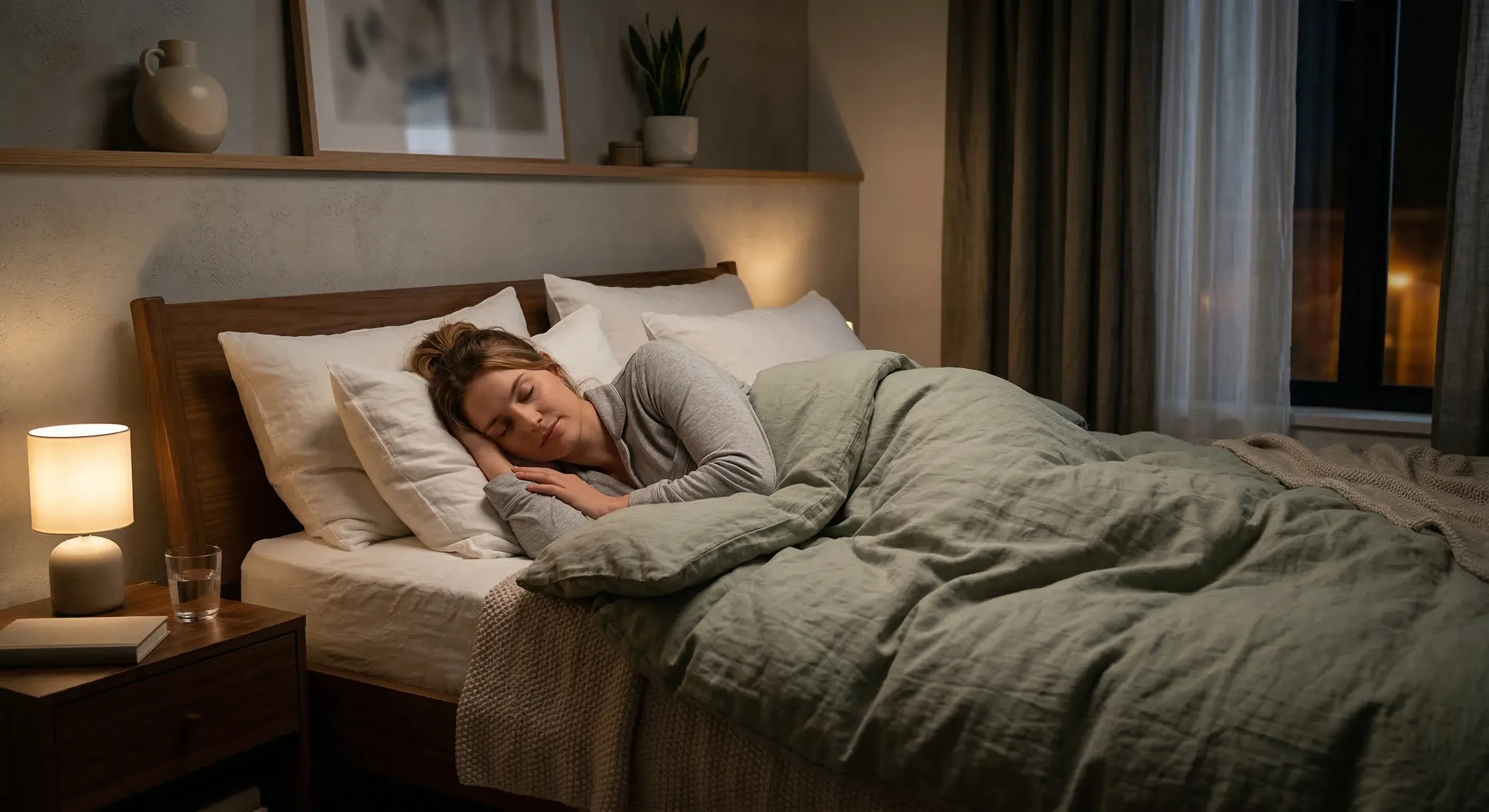
Recommended Sleep Hours by Age
Sleep needs are not uniform across the lifespan. Here is the complete age-based recommendation chart that contextualises the adult 7 to 9-hour requirement:
| Age Group | Age Range | Recommended Sleep | Key Biological Reason |
|---|---|---|---|
| Newborns | 0 to 3 months | 14 to 17 hours | Rapid neural development |
| Infants | 4 to 11 months | 12 to 16 hours | Physical growth, brain development |
| Toddlers | 1 to 2 years | 11 to 14 hours | Language and motor skill development |
| Preschoolers | 3 to 5 years | 10 to 13 hours | Cognitive and emotional development |
| School-Age Children | 6 to 12 years | 9 to 12 hours | Academic performance, physical growth |
| Teenagers | 13 to 18 years | 8 to 10 hours | Prefrontal cortex development, hormonal changes |
| Young Adults | 18 to 25 years | 7 to 9 hours | Brain maturation continues until age 25 |
| Adults | 26 to 64 years | 7 to 9 hours | Physical recovery, cognitive function, and hormonal balance |
| Older Adults | 65 and above | 7 to 8 hours | Cardiovascular health, cognitive maintenance |
Notice that 6 hours falls below the minimum recommendation for every adult age group in this table. It is not in the normal range for any adult category, regardless of lifestyle, health status, or personal preference. For a deeper exploration of sleep duration by age, read our complete How Many Hours of Sleep Do You Need guide.
What Happens If You Sleep Only 6 Hours?
The immediate effects of sleeping only 6 hours are well-documented and begin affecting performance and health the very next day:
Fatigue: After a single night of 6 hours of sleep, adenosine, the sleep pressure chemical that must be cleared during sleep, is incompletely removed from the brain. The residual adenosine produces the grogginess, heaviness, and lack of motivation that characterise the morning after insufficient sleep. After multiple consecutive nights of 6-hour sleep, this adenosine accumulates progressively, producing a deepening fatigue that caffeine temporarily masks but does not resolve.
Poor Concentration: Working memory, the ability to hold and manipulate information in mind simultaneously, is one of the first cognitive functions impaired by sleep restriction. After two weeks of 6-hour sleep, working memory performance declines to the level of someone awake for 24 hours continuously. Reaction time, decision-making quality, and creative problem-solving ability all show measurable degradation after even a single night of 6 hours of sleep.
Mood Changes: Emotional regulation depends heavily on REM sleep, which is disproportionately lost when sleep is cut short. Six hours of sleep truncates the longest and most emotionally important REM periods of the night, which occur in the 6th to 8th hour of sleep for most adults. The result is increased irritability, reduced stress tolerance, heightened emotional reactivity, and greater susceptibility to anxiety and low mood that persists throughout the day following short sleep.
Physical Performance: Muscle repair, growth hormone release, and glycogen restoration all occur primarily during sleep. Athletes and physically active individuals who sleep 6 hours show measurably reduced strength, slower reaction time, higher injury rates, and impaired training adaptation compared to the same individuals who sleep 8 hours. Even non-athletes notice reduced physical energy and stamina after consecutive nights of 6 hours of sleep.
Health Risks of Sleeping Less Than 7 Hours
Beyond the immediate daily effects, chronic 6-hour sleep accumulates health damage over months and years that the body cannot fully reverse simply by sleeping more on occasional nights:
Heart Health Risks: Chronic short sleep, consistently defined in research as less than 7 hours, is associated with significantly elevated risk of cardiovascular disease. People sleeping 6 hours or less show higher rates of hypertension, elevated inflammatory markers, increased arterial stiffness, and higher rates of heart attack and stroke than those sleeping 7 to 9 hours. The cardiovascular system uses sleep to recover from the daily demands of wakefulness, and consistent undersleep prevents this recovery, accumulating cardiovascular stress over time.
Weakened Immune System: The immune system is most active during sleep, producing cytokines and antibodies that defend against infection and support tissue repair. Studies show that adults who sleep 6 hours are four times more likely to develop a cold after exposure to a rhinovirus than those who sleep 7 hours or more. Chronic 6-hour sleep reduces vaccine effectiveness, slows healing, and impairs the immune memory that protects against reinfection.
Weight Gain: Sleep duration directly regulates the hormones that control hunger and satiety. Ghrelin, the hunger-stimulating hormone, increases with sleep restriction. Leptin, the fullness-signalling hormone, decreases. The combined effect of these hormonal changes from 6 hours of sleep is increased appetite, particularly for high-calorie foods, reduced willpower to resist eating, and impaired insulin sensitivity, which promotes fat storage rather than fat burning. Population studies consistently show higher rates of obesity and type 2 diabetes in chronic short sleepers.
Mental Health Effects: The relationship between insufficient sleep and mental health is bidirectional and powerful. Chronic 6-hour sleep significantly increases the risk of developing depression and anxiety disorders. It impairs the emotional processing that occurs during REM sleep, reduces the brain's capacity for stress regulation, and elevates the chronic cortisol levels that are directly associated with anxiety and mood disorders. For people who already have mental health conditions, 6 hours of sleep consistently worsens symptoms and reduces treatment effectiveness.
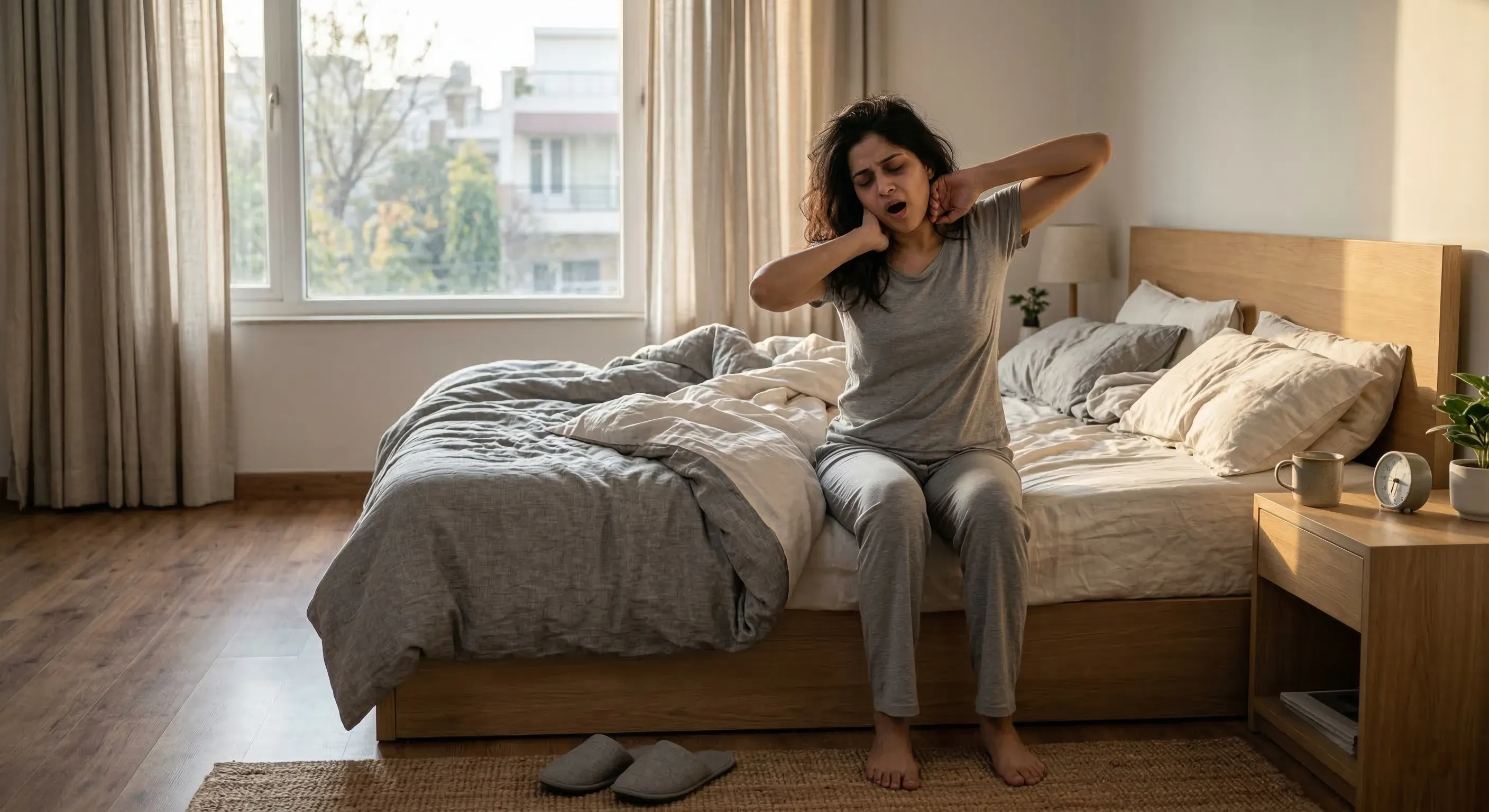
Why Some People Think 6 Hours of Sleep Is Enough
If 6 hours is genuinely insufficient for most adults, why do so many people believe they function fine on it? The answers reveal some of the most interesting aspects of sleep science:
Genetic Differences: A small proportion of the population, estimated at 1-3%, carries a rare mutation in a gene called ADRB1 that genuinely allows them to function well on 6 hours of sleep without the cognitive and health consequences that affect most people. These natural short sleepers are real but extraordinarily rare. They are the origin of the cultural myth that discipline or willpower allows anyone to sleep less. If you believe you are one of them, the research suggests you almost certainly are not. True natural short sleepers are so rare that statistically, most people reading this article do not know one personally.
Lifestyle Habits: Many people who sleep 6 hours maintain enough stimulant use, physical activity, and social engagement during the day to mask the cognitive and mood effects of sleep deprivation. Caffeine temporarily restores alertness. Exercise provides energy. Social demands require performance that overrides subjective fatigue. The masking effect of these compensating behaviours creates the convincing but false impression that 6 hours is sufficient.
Adaptation to Sleep Deprivation: This is perhaps the most important and alarming finding in sleep-deprivation research. After 2 to 3 weeks of consistently sleeping 6 hours, most people stop noticing how impaired they are. Subjective sleepiness ratings stabilise or even improve while objective cognitive performance measures continue to deteriorate. People literally adapt to feeling only slightly tired while remaining substantially cognitively impaired. They can no longer accurately assess their own deficit because their reference point for normal has shifted to sleep-deprived normal.
Sleep Quality vs Sleep Duration
An important nuance in the "6 hours of sleep enough" question involves the relationship between quality and duration. Can 6 hours of high-quality sleep match 8 hours of poor-quality sleep?
Deep Sleep Importance: Deep slow-wave sleep, the stage most responsible for physical restoration, immune function, and growth hormone release, is concentrated in the first few hours of sleep. Six hours of uninterrupted sleep captures most of this deep sleep. However, it still misses the longest and most important REM sleep periods in hours 7 and 8, where the most cognitively and emotionally important sleep processing occurs.
Sleep Cycles: A full night of 7 to 8 hours contains 4 to 5 complete 90-minute sleep cycles. Six hours contains approximately 4 cycles, but truncates the final one or two cycles that are richest in REM sleep. Even perfect quality within those 6 hours cannot replicate the REM sleep content of 7 to 8 hours because REM-rich cycles do not occur within a 6-hour sleep window.
Interruptions During Sleep: The quality argument for 6 hours only holds if those 6 hours are completely uninterrupted and deeply restorative. Most people sleeping 6 hours are doing so in the same environment, on the same mattress, and with the same stress levels that would disrupt 8 hours of sleep, meaning their 6-hour sleep is neither maximally high-quality nor adequate in duration.
Signs You Are Not Getting Enough Sleep
These are the reliable indicators that your current sleep duration, whether 6 hours or otherwise, is insufficient for your individual needs:
- Daytime Sleepiness: Feeling drowsy during passive activities such as reading, meetings, or watching television is the most reliable sign of insufficient sleep. Well-rested healthy adults do not feel sleepy during normal daytime hours without provocation.
- Alarm Dependency: Consistently needing an alarm to wake up and feeling groggy and disoriented for 20 to 30 minutes afterwards indicates the body has not completed its natural sleep requirement and is being forced awake prematurely.
- Irritability: Increased emotional reactivity, a shorter fuse, and disproportionate responses to minor frustrations are reliable signs of sleep deprivation, as emotional regulation is among the first cognitive functions to be impaired with insufficient sleep.
- Poor Memory: Forgetting things easily, struggling to recall information learned recently, and making more frequent errors in familiar tasks are hallmarks of insufficient deep and REM sleep, both of which are the stages most responsible for memory consolidation.
- Caffeine Dependency: Needing caffeine not for pleasure but as a functional necessity to reach baseline alertness is one of the clearest signs of accumulated sleep debt operating as your normalised baseline.
- Weekend Sleep Extension: Sleeping significantly longer on weekends than weekdays without choosing to is your body's involuntary attempt to repay accumulated sleep debt from a week of insufficient sleep.
For a complete exploration of sleep quality signs and improvement strategies, read our How to Improve Sleep Quality Naturally guide.
How to Improve Sleep Duration
If 6 hours is currently your norm and you want to extend it to the recommended 7 to 9 hours, these strategies produce the most effective and sustainable increase:
Consistent Sleep Schedule: Set a target bedtime that allows for 7.5 to 8 hours before your required wake time, and maintain it every day, including weekends. The circadian rhythm adapts to consistent timing, making it progressively easier to fall asleep at the target time. Move your bedtime earlier by 15 to 30 minutes each week rather than trying to add a full 90 minutes immediately, as gradual adjustment sustains the change better than sudden schedule shifts.
Reduce Caffeine: Cut all caffeine intake from 1 pm to 2 pm2pm daily. Late caffeine extends sleep onset latency and reduces the adenosine-driven sleepiness that is the body's natural prompt to go to bed at an appropriate time. People who drink caffeine in the evening often cannot fall asleep early enough to get 7 to 8 hours before their required wake time, regardless of their intention to do so.
Create a Better Sleep Environment: A cool bedroom (17 to 20 degrees Celsius), completely dark and quiet, helps sleep onset occur faster and improves sleep continuity, making the hours you do spend in bed more restorative. This allows the same bedtime to yield better quality sleep while also making earlier bedtimes more comfortable to maintain.
Address Sleep-Preventing Habits: Screen use before bed, late-night alcohol consumption, and stimulating pre-sleep activity all delay sleep onset, effectively stealing the extra 60 to 90 minutes that would bridge the gap between 6 hours and the recommended 7 to 9 hours. Eliminating these habits creates the natural early sleep onset that makes achieving adequate duration possible without extending your time in bed beyond what your schedule allows.
For a comprehensive guide to sleep quality and duration improvement, read our Why Can't I Sleep Through the Night article and our Best Sleeping Position for Back Pain guide.
How Your Mattress Affects Sleep Duration
An often-overlooked reason people consistently sleep only 6 hours is that physical discomfort from an inadequate mattress wakes them earlier than their bodies would otherwise choose to wake. If you consistently wake after 6 hours and feel like you could sleep more but cannot fall back asleep comfortably, your mattress may be a contributing factor.
Mattress Comfort: An uncomfortable mattress creates progressive pressure at the contact points during sleep. During the deep sleep of the early night, the arousal threshold is high enough to tolerate this discomfort. By the early morning hours, when sleep is lighter, and the body has been in the same position for several hours, accumulated pressure can produce discomfort sufficient to prevent a return to sleep after the natural 6-hour cycle transition, artificially capping sleep duration.
Spinal Alignment: A mattress that fails to maintain spinal alignment creates muscular tension that builds throughout the night. By the 6-hour mark, this tension can be sufficient to prevent the comfortable stillness that continued sleep requires, particularly in the lighter sleep stages of the early morning. Correcting spinal alignment through appropriate mattress firmness often allows people who have been sleeping 6 hours by default to extend their sleep to 7 to 8 hours comfortably.
Pressure Relief: Inadequate pressure relief leads to unconscious positional changes, fragmenting sleep and reducing its restorative quality. Read our complete Mattress Firmness Guide to identify the correct firmness for your sleeping position,n and our Best Mattress for Back Pain guide for back-specific mattress guidance.
Conclusion
The answer to whether 6 hours of sleep is enough is clear and consistent across decades of sleep research: for the vast majority of adults, the answer is no. Six hours falls below the minimum recommended range for every adult age group, produces measurable cognitive and emotional impairment from the very first short night, and accumulates serious long-term health risks across multiple body systems with chronic use.
The widespread belief that 6 hours is sufficient is not supported by evidence. It is supported by adaptation to feeling only slightly impaired while remaining substantially cognitively limited, by caffeine masking the subjective experience of sleep debt, and by the cultural prestige of appearing to need little sleep. The practical solution is straightforward: prioritise sleep as you would any other fundamental health behaviour, establish a consistent schedule that allows for 7 to 9 hours, address the habits and environmental factors that prevent you from achieving it, and invest in a mattress that supports your body for the full duration your body requires.