How to Dry a Mattress After Bedwetting
Most guides about bedwetting and mattresses focus entirely on cleaning. And that is important. But drying is just as critical, and it is the step that most people rush or get wrong. A mattress that is not fully dried after a bedwetting accident is going to smell. It is going to feel damp. And in the worst case,s it will develop mould inside the layers where you cannot see it.
If you want to dry a mattress properly and quickly after bedwetting, here is everything you need to know.
Why Proper Drying Matters as Much as Cleaning
Think about what happens when a mattress stays even slightly damp inside. The residual moisture creates the perfect environment for bacteria and mould to grow. Those bacteria produce odour. That mould can affect air quality in the bedroom. And because it is happening inside the mattress layers where you cannot see it, you might not realise it is happening until the smell becomes noticeable weeks later.
On top of that, any uric acid crystals that were not fully removed by cleaning will reactivate when they absorb moisture. The smell that seemed to be gone will come back. Every time. Until the mattress is genuinely bone dry.
Getting the drying right the first time is not just about comfort. It protects the mattress and protects your family's health.
Start With Maximum Moisture Removal
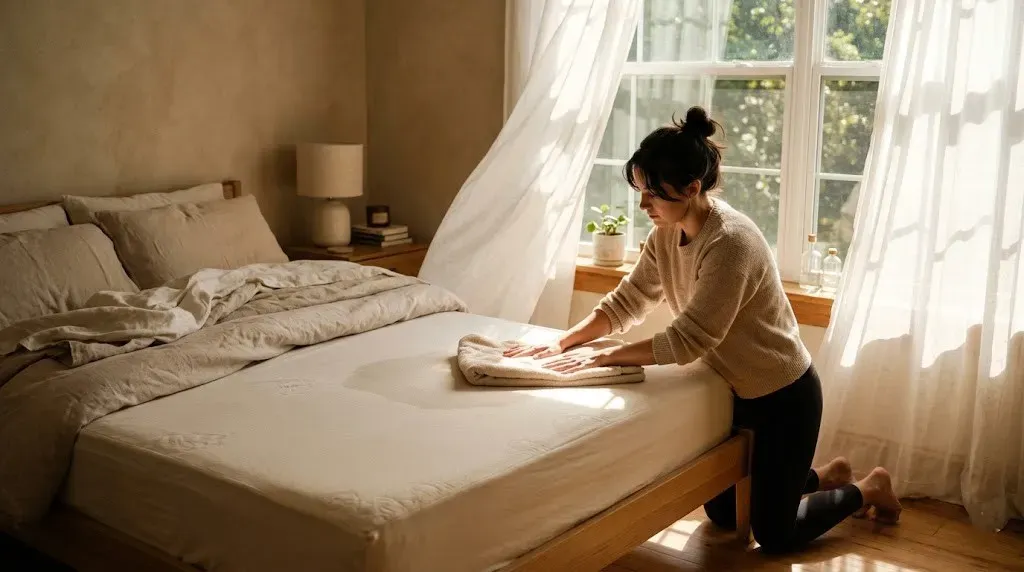
Before drying can be effective, you need to remove as much liquid as possible from the mattress. Grab thesek, clean towels and pressm firmly onto the wet area. Hold them down for 10 to 15 seconds. Replace with fresh towels. Keep going until no more moisture transfers onto the towels.
This manual blotting stage is the foundation of good drying. Every bit of liquid uy you physically remove is liquidin the drying process, it does not have to evaporate. The more you get out now, the faster the mattress dries.
The Fastest Ways to Dry a Mattress
Once you have blotted out everything you can and completed your cleaning treatment, here is how to dry the mattress as quickly as possible.
Fans are your most reliable tool. Point one or two fans directly at the treated area on full power. The airflow accelerates evaporation significantly. If you have a dehumidifier, run it in the same room. It pulls moisture from tthe air, allowingthe mattress tto releasemore quickly.
Open every window in the room. Fresh air circulation helps enormously. A stuffy, closed room with high humidity dries a mattress very slowly. A well-ventilated room with moving air dries it several times faster.
If you can,t stand the mattress upright against a wal, rather than leave it flat. When the mattress is flat, only the top surface is exposed to airflow. Standing it upright allows air to circulate on both ssides, which significantlyimproves drying time,m,e especially finmattresses where moisture has soaked deeper.
Sunlight Is the Best Natural Dryer There Is
If the weather allows pplacing the mattress out in of direct sunlight is the most effective drying .method. UV rays from the sun do three things at once. They evaporate moisture. They kill bacteria and mould spores. And they naturally break down organic odour compounds.
Even two or three hours of direct sun on a freshly cleaned and blotted mattress makes a dramatic difference to both drying time and the freshness of the final result. If you cannot get it outside, prop it up near the largest window in the room where direct sunlight can reach it.
How to Know When It Is Actually Dry
This is important. People regularly mistake a dry surface for a dry mattress. The surface can feel dry to the touch, while the layers inside still retain moisture.
The test is this. Press your open palm firmly onto the treated area and hold it there for 10 seconds. If you feel any coolness or dampness at all, the mattress is not ready. Keep drying. Only when the palm test comes back completely neutral and dry across the entire treated area is it safe to put bedding back on.
For memory foam mattresses, allow 24 to 48 hours for drying time, regardless of how dry the surface feels. Memory foam holds moisture deep in its structure long after the surface appears dry.
What Happens if You Put Sheets on Too Early
Honestly, a lot of people find this out the hard way. You put fresh sheets on a mattress that feels dry enough. The next morning, there is a damp smell. The,n a few days late,r the urine smell is back. Then, after a week,ter the room has a musty odour that you cannot quite locate.
All of it traces back to putting the bedding on before the mattress was fully dry. The sheets trap the remaining moisture inside. It cannot evaporate. Bacteria multiply. Mould starts to grow in the inner layers. And all those uric acid crystals that are nearly gone get reactivated by the trapped humidity.
The few extra hours you save by rushing the drying process cost you days of dealing with the consequences. Wait until it is genuinely dry.
Protecting Against the Next Time
If bedwetting is a regular occurrence in your household, please invest in a waterproof mattress protector today. It completely changes the situation. The urine never reaches the mattress at all. The protector gets pulled off, washed in the machine, and the mattress underneath is completely dry and unaffected. No cleaning. No drying time. Just a fresh protector back on.
For children who wet the bed regularly, a waterproof protector is genuinely one of the most practical purchases you can make. According to the NHS, bedwetting is very common in children and can continue until the early teenage years for some. A good protector makes the entire experience manageable rather than stressful.
Related Guides
For the full cleaning process before you get to the drying stage, visit our guide on how to get pee out of a mattress.
If the smell is still present even after drying, visit our guide on how to remove urine odour from a mattress.
For everything in one complete place, visit our full guide: How to Get Urine Out of a Mattress: The Complete Guide.