BREAKING
Sleep

Which Direction Is Best for Sleeping? Science vs Vastu Explained

Sandeep Singh Mar 15, 2026 0 Views
Which Direction Is Best for Sleeping? Science vs Vastu Explained

Which Direction Is Best for Sleeping for Better Health

Most people spend considerable thought on their mattress, their pillow, and their sleeping position. Very few stop to consider the direction their head faces while they sleep. Yet across cultures, centuries, and continents, the question of the best direction to sleep has been taken seriously by traditional health systems, ancient architectural sciences, and increasingly by sleep researchers curious about the human body's relationship with the Earth's magnetic field.

In India, Vastu Shastra has prescribed sleeping directions for thousands of years, linking the body's orientation during sleep to energy flow, health outcomes, and mental well-being. Feng Shui traditions in East Asia carry similar principles. And while Western sleep science has been slower to investigate directional sleeping, emerging research on geomagnetic alignment and circadian biology is beginning to examine whether the direction your head faces at night genuinely influences the quality of your sleep.

In this complete guide, we examine what both science and Vastu Shastra say about the best direction to sleep, explain the reasoning behind each recommendation, cover directions traditionally considered harmful, and provide practical sleep-improvement tips that work regardless of your bedroom's direction.

Quick Answer: Which Direction Is Best for Sleeping?

Sleeping with your head facing south or east is most widely recommended for better sleep quality and health. According to Vastu Shastra, south-facing sleep is considered most beneficial for deep rest, health, and longevity, while east-facing sleep promotes mental clarity and positive energy. From a scientific perspective, some researchers suggest that aligning the body parallel to the Earth's magnetic field lines, which run broadly north to south, with the head facing south, may support better sleep by reducing geomagnetic stress on the body. Both traditions agree that sleeping with the head facing north should be avoided.

Why Sleeping Direction Matters

The idea that the direction your body faces during sleep affects your health and the quality of your rest may seem unusual from a purely mechanical perspective. Still, it draws on several coherent frameworks for understanding the body's relationship with its environment.

Body Alignment and Environmental Forces: The human body is not a closed system operating independently of its environment. It is a biological entity embedded in a planetary environment that exerts measurable physical forces on it at all times. The Earth's gravitational, electromagnetic, and geomagnetic fields all interact with the body's biological systems. The question of whether the body's orientation relative to these fields during the extended period of sleep affects biological processes is a legitimate scientific inquiry, not merely superstition.

Cultural Beliefs and Traditional Knowledge: Vastu Shastra, the ancient Indian science of spatial arrangement, is one of the oldest systematic bodies of knowledge about how the orientation of living and sleeping spaces affects human health and well-being. Developed over thousands of years of observational practice, its prescriptions for sleeping direction are not arbitrary. They reflect accumulated cultural knowledge about which sleeping orientations appear to produce better health outcomes, even if the mechanistic explanation provided within the system differs from modern scientific language.

Energy Flow Concepts: Both Vastu Shastra and Traditional Chinese Medicine operate on the principle of energy flow through the body and its environment. Vastu describes the flow of cosmic energy through directional orientations, with different directions associated with different qualities of energy that interact with the human body's own energy systems. While Western science does not use the same conceptual language, the underlying observation that directional orientation during sleep affects biological outcomes is being investigated through the lens of geomagnetic biology.

Scientific Explanations: The most scientifically investigated mechanism relating sleeping direction to health involves the Earth's geomagnetic field. The human body contains magnetite crystals in the brain and other tissues that may respond to geomagnetic orientation. Research on magnetoreception in humans is ongoing, and some studies suggest that the body's orientation relative to geomagnetic field lines during sleep influences sleep quality, REM duration, and morning alertness.
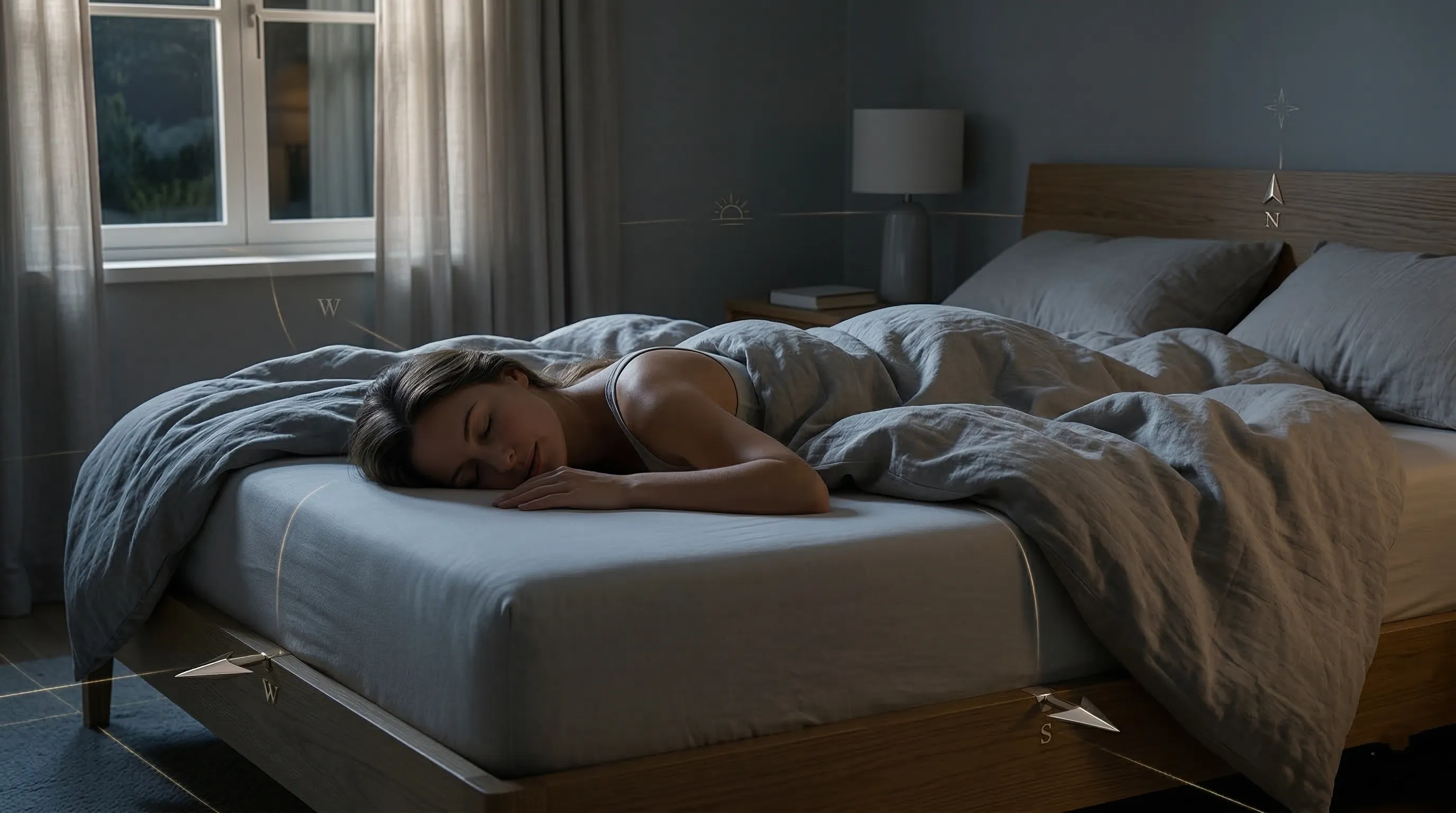
Which Direction Is Best for Sleeping for Better Health Most people spend considerable thought on their mattress, their pillow, and their sleeping position. Very few stop to consider the direction their head faces while they sleep. Yet across cultures, centuries, and continents, the question of the best direction to sleep has been taken seriously by traditional health systems, ancient architectural sciences, and increasingly by sleep researchers curious about the human body's relationship with the Earth's magnetic field.  In India, Vastu Shastra has prescribed sleeping directions for thousands of years, linking the orientation of the body during sleep to energy flow, health outcomes, and mental wellbeing. Feng Shui traditions in East Asia carry similar principles. And while Western sleep science has been slower to investigate directional sleeping, emerging research on geomagnetic alignment and circadian biology is beginning to examine whether the direction your head faces at night genuinely influences the quality of your sleep.  In this complete guide, we examine what both science and Vastu Shastra say about the best direction to sleep, explain the reasoning behind each recommendation, cover the directions traditionally considered harmful, and provide practical sleep improvement tips that work regardless of which direction your bedroom faces.  Quick Answer: Which Direction Is Best for Sleeping? Sleeping with your head facing south or east is most widely recommended for better sleep quality and health. According to Vastu Shastra, south-facing sleep is considered most beneficial for deep rest, health, and longevity, while east-facing sleep promotes mental clarity and positive energy. From a scientific perspective, some researchers suggest that aligning the body parallel to the Earth's magnetic field lines, which run broadly north to south, with the head facing south may support better sleep by reducing geomagnetic stress on the body. Both traditions agree that sleeping with the head facing north should be avoided.  Why Sleeping Direction Matters The idea that the direction your body faces during sleep affects your health and rest quality may seem unusual from a purely mechanical perspective, but it draws on several coherent frameworks of understanding the body's relationship with its environment.  Body Alignment and Environmental Forces: The human body is not a closed system operating independently of its environment. It is a biological entity embedded in a planetary environment that exerts measurable physical forces on it at all times. The Earth's gravitational field, electromagnetic field, and geomagnetic field all interact with the body's own biological systems. The question of whether the orientation of the body relative to these fields during the extended period of sleep affects biological processes is a legitimate scientific inquiry, not merely superstition.  Cultural Beliefs and Traditional Knowledge: Vastu Shastra, the ancient Indian science of spatial arrangement, is one of the oldest systematic bodies of knowledge about how the orientation of living and sleeping spaces affects human health and wellbeing. Developed over thousands of years of observational practice, its prescriptions for sleeping direction are not arbitrary. They reflect accumulated cultural knowledge about which sleeping orientations appear to produce better health outcomes, even if the mechanistic explanation provided within the system differs from modern scientific language.  Energy Flow Concepts: Both Vastu Shastra and Traditional Chinese Medicine operate with concepts of energy flow through the body and its environment. Vastu describes the flow of cosmic energy through directional orientations, with different directions associated with different qualities of energy that interact with the human body's own energy systems. While Western science does not use the same conceptual language, the underlying observation that directional orientation during sleep affects biological outcomes is being investigated through the lens of geomagnetic biology.  Scientific Explanations: The most scientifically investigated mechanism relating sleeping direction to health involves the Earth's geomagnetic field. The human body contains magnetite crystals in the brain and other tissues that may respond to geomagnetic orientation. Research on magnetoreception in humans is ongoing, and some studies suggest that the orientation of the body relative to geomagnetic field lines during sleep influences sleep quality, REM duration, and morning alertness.  Best Direction to Sleep According to Science Scientific research on sleeping direction is still developing, but several findings provide a basis for directional sleeping recommendations grounded in biology rather than tradition alone.  Earth's Magnetic Field and Human Biology: The Earth's geomagnetic field runs broadly from geographic south to north, with the magnetic field lines entering the Earth near the north magnetic pole and exiting near the south magnetic pole. The human body has a natural polarity, with the head being the positive pole and the feet the negative pole in many bioelectrical models. Some researchers have proposed that aligning the body's natural polarity with the Earth's geomagnetic field, by sleeping with the head pointing south, creates a condition of geomagnetic harmony that supports deeper, more restorative sleep.  Research on Directional Sleep: A study published in the Indian Journal of Physiology and Pharmacology examined the sleep quality of participants sleeping in different directions and found that those sleeping with their heads pointing east showed the fastest sleep onset and longest REM sleep duration, while those sleeping with their heads pointing north showed the slowest sleep onset and shortest REM duration. While the study was limited in scope, it provided measurable data supporting the traditional directional sleep recommendations of Vastu Shastra.  Head Position and Blood Flow: The brain requires a consistent and precisely regulated blood supply during sleep for the glymphatic waste clearance processes that are most active during deep sleep. Some researchers have proposed that the head's position relative to the Earth's magnetic field affects cerebral blood flow regulation, with south and east orientations supporting optimal circulation and north orientation potentially creating mild circulatory disruption during sleep. This hypothesis remains under investigation but provides a plausible physiological mechanism for the traditional recommendations.  Sleep Posture and Direction: From a purely biomechanical perspective, the direction the head faces does not directly affect spinal alignment or pressure point distribution, which are determined by sleeping position rather than compass orientation. The directional effects, if real, operate through subtler biological mechanisms rather than obvious mechanical ones, which is why they have been harder to study and why the scientific evidence remains less definitive than the evidence for sleeping position effects.  Best Sleeping Direction According to Vastu Shastra Vastu Shastra, the ancient Indian science of directional energy in living spaces, provides some of the most detailed and widely followed guidance on the best direction to sleep in the Indian cultural context. Its recommendations are based on the association of different compass directions with different cosmic energies and their effects on the human body and mind.  Sleeping with Head Towards South South is considered the most beneficial sleeping direction in Vastu Shastra and is the direction most consistently recommended across different schools of Vastu practice. When you sleep with your head pointing south and feet pointing north, you are said to align with the Earth's magnetic field in a way that promotes deep, restorative sleep, good health, and longevity. This direction is associated with the energy of Yama, the deity of death and transformation in Hindu tradition, interpreted in this context as the restful, surrendering quality of deep sleep rather than anything ominous.  People who sleep in the south direction are believed to experience improved memory, better concentration, reduced stress, and longer, healthier lives according to Vastu principles. This direction is recommended for all adults, particularly those who suffer from sleep problems, stress-related health issues, or chronic fatigue. Importantly, this is also the direction that the scientific research on geomagnetic alignment most consistently supports, as it places the head at the south end of the body's magnetic axis, aligning with the Earth's field rather than opposing it.  Vastu verdict for south direction: Most recommended. Good for health, deep sleep, and longevity.  Sleeping with Head Towards East East is the second most recommended sleeping direction in Vastu Shastra and is particularly favoured for students, intellectuals, and people in creative or knowledge-based professions. Sleeping with the head pointing east is associated with the energy of the rising sun, which in Vastu represents new beginnings, mental clarity, positive energy, and enhanced cognitive function. The east direction is considered to support memory consolidation, creative thinking, and spiritual growth.  From a scientific perspective, the east direction aligns the body perpendicular to the north-south geomagnetic axis rather than parallel to it, which is a different relationship to the magnetic field than the south direction provides. The research study referenced above found the longest REM sleep duration in east-sleeping participants, which may support the association with enhanced cognitive processing and memory consolidation that Vastu attributes to this direction.  East is particularly recommended for children and young adults whose brains are in active developmental phases and who may benefit most from the enhanced REM sleep and cognitive processing that this direction appears to support. It is also a practical recommendation for the many Indian homes where south-facing bed placement is not architecturally possible.  Vastu verdict for east direction: Highly recommended. Best for students, mental clarity, and positive energy.  Worst Sleeping Directions to Avoid Sleeping with Head Towards North North is the most consistently warned-against sleeping direction in both Vastu Shastra and in the emerging scientific literature on geomagnetic sleep effects. When you sleep with your head pointing north, your body's head-positive polarity directly opposes the Earth's north magnetic pole, creating what Vastu describes as an energy conflict and what geomagnetic researchers describe as a potentially disruptive interaction between the body's bioelectrical field and the Earth's magnetic field.  In Vastu Shastra, sleeping with the head towards north is associated with disturbed sleep, increased stress, headaches, elevated blood pressure, and over long periods, reduced life force and health deterioration. The north direction is traditionally associated with the domain of the dead in Hindu cosmology, making north-facing sleep a symbolic as well as energetically problematic choice in this framework.  From a scientific perspective, the study on directional sleep found the worst sleep quality outcomes in north-facing sleepers, including the slowest sleep onset, shortest REM duration, and highest reported morning fatigue. While the research base is still limited, the convergence of traditional wisdom and emerging scientific findings on this specific direction is notable and consistent.  Verdict for north direction: Most strongly discouraged by both Vastu and science.  Sleeping with Head Towards West West is generally considered less problematic than north in Vastu Shastra but is still not the recommended direction for ideal sleep quality. The west direction is associated with restlessness, increased dream activity, and a more agitated quality of sleep compared to the deep restfulness associated with south-facing sleep. Some Vastu practitioners associate west-facing sleep with increased ambition and worldly desires, which is considered energetically incompatible with the surrendering quality of restorative sleep.  Practically, west-facing sleep places the feet toward the east, which in Vastu is considered disrespectful to the sunrise direction and the positive solar energy it represents. While this is not considered as harmful as north-facing sleep, it is generally recommended to choose south or east over west whenever the room layout allows. West-facing sleep is sometimes recommended for people in competitive professions who benefit from the increased mental activity and drive it is said to support, though this comes at the cost of sleep depth and restfulness.  Verdict for west direction: Not recommended but less problematic than north. Choose south or east when possible.  How Sleeping Direction Affects Sleep Quality Whether through geomagnetic mechanisms, energy flow principles, or psychosomatic effects, the sleeping direction that individuals adopt does appear to influence several aspects of their subjective sleep experience:  Relaxation and Sleep Onset: People who have changed their sleeping direction to south or east consistently report improved ease of falling asleep and a greater sense of relaxation at bedtime. Whether this reflects a genuine physiological effect of geomagnetic alignment or a psychological benefit from aligning their sleep environment with traditional recommendations that feel culturally meaningful to them is difficult to separate in observational reports.  Mental Calmness: The south direction in particular is associated with a quieter, more settled mental state during the pre-sleep period. Many people who practice Vastu-aligned sleeping report reduced pre-sleep anxiety and fewer intrusive thoughts at bedtime after changing to a south or east orientation. This mental calming effect, regardless of its mechanism, is a genuine sleep quality benefit.  Sleep Cycles: The research findings on REM duration by sleeping direction suggest that direction may influence the architecture of sleep cycles beyond simply making sleep onset easier or harder. If east-facing sleep genuinely increases REM duration, as the available research suggests, this would have meaningful implications for memory consolidation, emotional processing, and morning cognitive performance, all of which depend heavily on adequate REM sleep.  Does Sleeping Direction Really Affect Health? The honest answer to this question is that the evidence is promising but not yet conclusive by the standards of modern clinical research.  The scientific case for directional sleep effects rests primarily on the plausibility of geomagnetic mechanisms, limited but directionally consistent research findings, and the convergent agreement of multiple independent traditional knowledge systems on the same recommendations. When Vastu Shastra, Feng Shui, and Ayurveda independently arrive at similar directional sleeping recommendations through different conceptual frameworks, the probability that there is a real underlying effect increases, even if none of the individual systems provides a complete scientific explanation.  The case against strong directional sleep claims rests on the limited quantity and quality of scientific research, the difficulty of isolating directional effects from the many other variables that influence sleep quality, and the fact that many millions of people in north-facing beds sleep perfectly well by conventional measures.  The practical conclusion is balanced: if you have the option of arranging your sleeping direction, choosing south or east costs nothing and may provide genuine benefits. If your bedroom architecture does not allow south or east orientation, focusing on the factors with much stronger evidence for sleep quality, mattress support, sleep schedule consistency, and sleep environment optimisation, will deliver more certain improvement. Read our guide on Why Can't I Sleep Through the Night for a complete overview of evidence-based sleep improvement factors.  Other Factors That Affect Sleep Quality Regardless of which direction you sleep in, these factors have strong, well-documented effects on sleep quality and deserve priority attention:  Mattress Comfort and Support: The single most impactful physical factor in sleep quality is the mattress. A mattress that creates pressure points, allows spinal sagging, or has deteriorated past its useful lifespan will disrupt sleep quality more reliably than any directional effect. A medium-firm mattress matched to your sleeping position and body weight eliminates the physical discomfort that causes tossing, turning, and night awakenings. Read our complete Mattress Firmness Guide for guidance on choosing the right mattress for your body.  Sleeping Posture: Your sleeping position has the most directly documented effects on spinal health, shoulder and hip pressure, and morning pain patterns of any sleep-related factor. Back sleeping with a pillow under the knees and side sleeping with a pillow between the knees are the most recommended positions for spinal health. Stomach sleeping is the most problematic for spinal alignment regardless of which direction the head faces. Read our Best Sleeping Position for Back Pain guide for complete position guidance.  Sleep Environment: Room temperature, light levels, and noise are the three environmental factors with the strongest evidence for sleep quality effects. A room temperature between 17 and 20 degrees Celsius, complete darkness achieved with blackout curtains or a sleep mask, and noise elimination through earplugs or white noise collectively produce measurable improvements in sleep depth and continuity that are among the most reliably documented sleep interventions available.  Sleep Duration: Getting the recommended hours of sleep for your age group is the foundation of sleep health that directional adjustments build on rather than substitute for. Read our complete guide on How Many Hours of Sleep Do You Need for age-specific sleep duration guidance.  Tips to Improve Sleep Regardless of Direction Maintain a Consistent Sleep Schedule: Going to bed and waking at the same time every day, including weekends, is the most powerful single intervention for sleep quality available. Consistent timing anchors the circadian rhythm and makes falling asleep and waking naturally progressively easier. Even a 30-minute variation on weekends disrupts weekday sleep quality for many people. Reduce Screen Time Before Bed: Stop all screen use 60 to 90 minutes before your intended sleep time. The blue-wavelength light from phones and tablets suppresses melatonin production and keeps the brain in an alert, engaged state that is directly incompatible with easy sleep onset. This simple change produces sleep quality improvement that most people notice within the first week of consistent implementation. Keep the Bedroom Quiet and Dark: The bedroom environment should be optimised for sleep rather than serving as a multipurpose living space. Remove televisions, work materials, and bright lighting. Use blackout curtains or a sleep mask to eliminate light. Use earplugs or white noise to neutralise noise disruption. These environmental adjustments are among the most reliably effective sleep quality interventions regardless of any directional considerations. Create a Pre-Sleep Wind-Down Routine: A consistent 30 to 60 minute calming routine before bed, light reading, gentle stretching, journaling, or meditation, signals the nervous system to transition from daytime alertness to sleep readiness. Consistency is key. Performed at the same time each night, even a simple routine becomes a powerful conditioned cue for sleep onset. Optimise Your Bedroom Direction if Possible: If your bedroom layout allows flexibility, position your bed so your head faces south as the primary recommendation, or east as an alternative. Even if the evidence for directional effects is not definitive, the cost of making this adjustment is zero and the potential benefit is real. Combining correct direction with all of the above factors creates the most complete sleep optimisation setup available. Conclusion The question of the best direction to sleep sits at an interesting intersection of ancient wisdom and emerging science. Vastu Shastra's recommendation of south and east as the optimal sleeping directions is consistent across thousands of years of Indian traditional knowledge and is supported, however partially, by the available scientific research on geomagnetic alignment and sleep quality. The north direction is most consistently discouraged by both traditions and research.  Practically, if you have the option to arrange your sleeping direction, orienting your head toward south or east is a simple, cost-free adjustment that may genuinely improve your sleep quality and aligns with both cultural wisdom and the best available scientific understanding. If your room layout does not allow this, focus your energy on the factors with the strongest evidence: a correct firmness mattress, consistent sleep schedule, optimised sleep environment, and proper sleeping position. These factors will improve your sleep quality measurably regardless of which direction your bedroom happens to face.
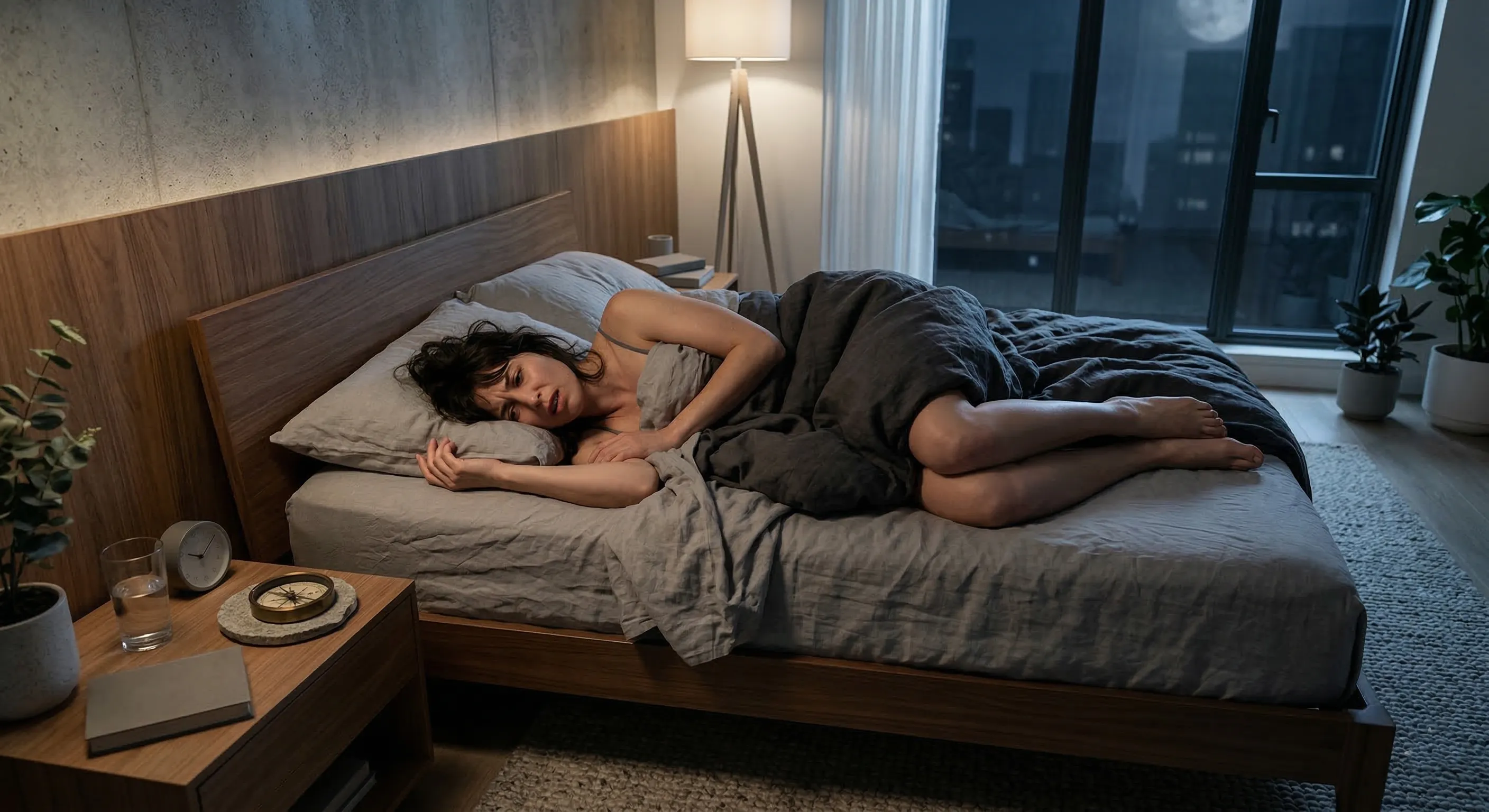

Best Direction to Sleep According to Science

Scientific research on sleeping direction is still developing, but several findings provide a basis for directional sleeping recommendations grounded in biology rather than tradition alone.

Earth's Magnetic Field and Human Biology: The Earth's geomagnetic field extends roughly from geographic south to north, with magnetic field lines entering the Earth near the north magnetic pole and exiting near the south magnetic pole. In many bioelectrical models, the human body has a natural polarity, with the head as the positive pole and the feet as the negative pole. Some researchers have proposed that aligning the body's natural polarity with the Earth's geomagnetic field, by sleeping with the head pointing south, creates a condition of geomagnetic harmony that supports deeper, more restorative sleep.

Research on Directional Sleep: A study published in the Indian Journal of Physiology and Pharmacology examined the sleep quality of participants sleeping in different directions and found that those sleeping with their heads pointing east showed the fastest sleep onset and longest REM sleep duration, while those sleeping with their heads pointing north showed the slowest sleep onset and shortest REM duration. While the study was limited in scope, it provided measurable data supporting the traditional directional sleep recommendations of Vastu Shastra.

Head Position and Blood Flow: The brain requires a consistent, precisely regulated blood supply during sleep for the glymphatic clearance of wastes that are most active during deep sleep. Some researchers have proposed that the head's position relative to the Earth's magnetic field affects cerebral blood flow regulation, with south- and east-oriented positions supporting optimal circulation and a north orientation potentially causing mild circulatory disruption during sleep. This hypothesis remains under investigation but provides a plausible physiological mechanism for the traditional recommendations.

Sleep Posture and Direction: From a purely biomechanical perspective, the direction the head faces does not directly affect spinal alignment or pressure point distribution, which are determined by sleeping position rather than compass orientation. The directional effects, if real, operate through subtler biological mechanisms rather than obvious mechanical ones, which is why they have been harder to study and why the scientific evidence remains less definitive than the evidence for sleeping position effects.

Best Sleeping Direction According to Vastu Shastra

Vastu Shastra, the ancient Indian science of directional energy in living spaces, provides some of the most detailed and widely followed guidance on the best direction to sleep in the Indian cultural context. Its recommendations are based on the association of different compass directions with different cosmic energies and their effects on the human body and mind.

Sleeping with Head Towards South

South is considered the most beneficial sleeping direction in Vastu Shastra and is the direction most consistently recommended across different schools of Vastu practice. When you sleep with your head pointing south and feet pointing north, you are said to align with the Earth's magnetic field in a way that promotes deep, restorative sleep, good health, and longevity. This direction is associated with the energy of Yama, the deity of death and transformation in Hindu tradition, interpreted here as the restful, surrendering quality of deep sleep rather than anything ominous.

People who sleep in the south direction are believed to experience improved memory, better concentration, reduced stress, and longer, healthier lives according to Vastu principles. This direction is recommended for all adults, particularly those who suffer from sleep problems, stress-related health issues, or chronic fatigue. Importantly, this is also the direction that scientific research on geomagnetic alignment most consistently supports, placing the head at the south end of the body's magnetic axis, aligning with the Earth's field rather than opposing it.

Vastu verdict for the south direction: Most recommended. Good for health, deep sleep, and longevity.

Sleeping with Head Towards East

East is the second-most-recommended sleeping direction in Vastu Shastra and is particularly favoured for students, intellectuals, and people in creative or knowledge-based professions. Sleeping with the head pointing east is associated with the energy of the rising sun, which in Vastu represents new beginnings, mental clarity, positive energy, and enhanced cognitive function. The east direction is considered to support memory consolidation, creative thinking, and spiritual growth.

From a scientific perspective, the east direction aligns the body perpendicular to the north-south geomagnetic axis rather than parallel to it, which is a different relationship to the magnetic field than the south direction provides. The research study referenced above found the longest REM sleep duration in east-sleeping participants, which may support the association with enhanced cognitive processing and memory consolidation that Vastu attributes to this direction.

East is particularly recommended for children and young adults whose brains are in active developmental phases and who may benefit most from the enhanced REM sleep and cognitive processing that this direction appears to support. It is also a practical recommendation for the many Indian homes where south-facing bed placement is not architecturally possible.

Vastu verdict for the east direction: Highly recommended. Best for students, mental clarity, and positive energy.

Worst Sleeping Directions to Avoid

Sleeping with Head Towards North

North is the most consistently warned-against sleeping direction in both Vastu Shastra and in the emerging scientific literature on geomagnetic sleep effects. When you sleep with your head pointing north, your body's head-positive polarity directly opposes the Earth's north magnetic pole, creating what Vastu describes as an energy conflict and what geomagnetic researchers describe as a potentially disruptive interaction between the body's bioelectrical field and the Earth's magnetic field.

In Vastu Shastra, sleeping with the head toward the north is associated with disturbed sleep, increased stress, headaches, elevated blood pressure, and,d over long periods, reduced life force and health deterioration. The north direction is traditionally associated with the domain of the dead in Hindu cosmology, making north-facing sleep a symbolic as well as energetically problematic choice in this framework.

From a scientific perspective, the study on directional sleep found the worst sleep quality outcomes in north-facing sleepers, including the slowest sleep onset, shortest REM duration, and highest reported morning fatigue. While the research base remains limited, the convergence of traditional wisdom and emerging scientific findings in this specific direction is notable and consistent.

Verdict forthe  north direction: Most strongly discouraged by both Vastu and science.

Sleeping with Head Towards West

The west is generally considered less problematic than the north in Vastu Shastra, but it is still not the recommended direction for ideal sleep quality. The west direction is associated with restlessness, increased dream activity, and a more agitated quality of sleep compared to the deep restfulness associated with south-facing sleep. Some Vastu practitioners associate west-facing sleep with increased ambition and worldly desires, which is considered energetically incompatible with the surrendering quality of restorative sleep.

Practically, west-facing sleep places the feet toward the east, which in Vastu is considered disrespectful to the sunrise direction and the positive solar energy it represents. While this is not considered as harmful as north-facing sleep, it is generally recommended to choose south- or east-facing sleep over west-facing whenever the room layout allows. West-facing sleep is sometimes recommended for people in competitive professions who benefit from the increased mental activity and drive it is said to support. However,h this comes at the cost of sleep depth and restfulness.

Verdict for west direction: Not recommended, ed but less problematic than north. Choose south or east when possible.

How Sleeping Direction Affects Sleep Quality

Whether through geomagnetic mechanisms, energy flow principles, or psychosomatic effects, the sleeping direction that individuals adopt does appear to influence several aspects of their subjective sleep experience:

Relaxation and Sleep Onset: People who have changed their sleeping direction to the south or east consistently report easier falling asleep and a greater sense of relaxation at bedtime. Whether this reflects a genuine physiological effect of geomagnetic alignment or a psychological benefit from aligning their sleep environment with traditional recommendations that feel culturally meaningful to them is difficult to separate in observational reports.

Mental Calmness: The south directi, in particular, ar is associated with a quieter, more settled mental state during the pre-sleep period. Many people who practice Vastu-aligned sleeping report reduced pre-sleep anxiety and fewer intrusive thoughts at bedtime after changing to a south or east orientation. This calming effect, regardless of its mechanism, is a genuine benefit for sleep quality.

Sleep Cycles: The research findings on REM duration by sleeping direction suggest that direction may influence the architecture of sleep cycles beyond simply making sleep onset easier or harder. If east-facing sleep genuinely increases REM duration, as the available research suggests, this would have meaningful implications for memory consolidation, emotional processing, and morning cognitive performance, all of which depend heavily on adequate REM sleep.

best direction to sleep bedroom compass


Does Sleeping Direction Really Affect Health?

The honest answer to this question is that the evidence is promising but not yet conclusive by the standards of modern clinical research.

The scientific case for directional sleep effects rests primarily on the plausibility of geomagnetic mechanisms, limited but directionally consistent research findings, and the convergent agreement of multiple independent traditional knowledge systems on the same recommendations. When Vastu Shastra, Feng Shui, and Ayurveda independently arrive at similar directional sleeping recommendations through different conceptual frameworks, the probability that there is a real underlying effect increases, even if none of the individual systems provides a complete scientific explanation.

The case against strong directional sleep claims rests on the limited quantity and quality of scientific research, the difficulty of isolating directional effects from the many other variables that influence sleep quality, and the fact that many millions of people in north-facing beds sleep perfectly well by conventional measures.

The practical conclusion is balanced: if you have the option of arranging your sleeping direction, choosing south or east costs nothing and may provide genuine benefits. If your bedroom architecture does not allow south or east orientation, focusing on the factors with much stronger evidence for sleep quality, mattress support, sleep schedule consistency, and sleep environment optimization will deliver more certain improvement. Read our guide on Why Can't I Sleep Through the Night for a complete overview of evidence-based sleep improvement factors.

Other Factors That Affect Sleep Quality

Regardless of which direction you sleep in, these factors have strong, well-documented effects on sleep quality and deserve priority attention:

Mattress Comfort and Support: The single most impactful physical factor in sleep quality is the mattress. A mattress that creates pressure points, allows spinal sagging, or has deteriorated past its useful lifespan will disrupt sleep quality more reliably than any directional effect. A medium-firm mattress that matches your sleeping position and body weight eliminates the physical discomfort that causes tossing, turning, and nighttime awakenings. Read our complete Mattress Firmness Guide for guidance on choosing the right mattress for your body.

Sleeping Posture: Your sleeping position has the most directly documented effects on spinal health, shoulder and hip pressure, and morning pain patterns of any sleep-related factor. Back sleeping with a pillow under the knees and side sleeping with a pillow between the knees are the most recommended positions for spinal health. Stomach sleeping is the most problematic for spinal alignment, regardless of which direction the head faces. Read our Best Sleeping Position for Back Pain guide for complete position guidance.

Sleep Environment: Room temperature, light levels, and noise are the three environmental factors with the strongest evidence for effects on sleep quality. A room temperature between 17 and 20 degrees Celsius, complete darkness achieved with blackout curtains or a sleep mask, and noise elimination through earplugs or white noise collectively produce measurable improvements in sleep depth and continuity, among the most reliably documented sleep interventions available.

Sleep Duration: Getting the recommended hours of sleep for your age group is the foundation of sleep health that directional adjustments build on,n rather than substitute for. Read our complete guide on How Many Hours of Sleep Do You Need for age-specific sleep duration guidance.

Tips to Improve Sleep Regardless of Direction

  • Maintain a Consistent Sleep Schedule: Going to bed and waking up at the same time every day, including weekends, is the most powerful single intervention for improving sleep quality. Consistent timing anchors the circadian rhythm and makes falling asleep and waking naturally progressively easier. Even a 30-minute variation on weekends disrupts weekday sleep quality for many people.
  • Reduce Screen Time Before Bed: Stop all screen use 60 to 90 minutes before your intended sleep time. The blue-wavelength light from phones and tablets suppresses melatonin production and keeps the brain in an alert, engaged state that is directly incompatible with easy sleep onset. This simple change improves sleep quality, and most people notice it within the first week of consistent use.
  • Keep the bedroom Quiet and Dark: The bedroom environment should be optimised for sleep rather than serving as a multipurpose living space. Remove televisions, work materials, and bright lighting. Use blackout curtains or a sleep mask to eliminate light. Use earplugs or white noise to neutralise noise disruption. These environmental adjustments are among the most consistently effective sleep quality interventions, regardless of direction.
  • Create a Pre-Sleep Wind-Down Routine: A consistent 30 to 60-minute calming routine before bed, light reading, gentle stretching, journaling, or meditation, signals the nervous system to transition from daytime alertness to sleep readiness. Consistency is key. Performed at the same time each night, even a simple routine becomes a powerful conditioned cue for sleep onset.
  • Optimise Your Bedroom Direction if Possible: If your bedroom layout allows flexibility, position your bed so your head faces south as the primary recommendation, or east as an alternative. Even if the evidence for directional effects is not definitive, the cost of making this adjustment is zero,o and the potential benefit is real. Combining the correct direction with all of the above factors creates the most complete sleep-optimisation setup available.

Conclusion

The question of the best direction to sleep sits at an interesting intersection of ancient wisdom and emerging science. Vastu Shastra's recommendation of south and east as the optimal sleeping directions is consistent across thousands of years of Indian traditional knowledge and is partially supported by available scientific research on geomagnetic alignment and sleep quality. The north direction is most consistently discouraged by both traditions and research.

Practically, if you have the option to arrange your sleeping direction, orienting your head toward south or east is a simple, cost-free adjustment that may genuinely improve your sleep quality and aligns with both cultural wisdom and the best available scientific understanding. If your room layout does not allow this, focus your energy on the factors with the strongest evidence: a correct firmness level, a mattress, a consistent sleep schedule, an optimised sleep environment, and a proper sleeping position. These factors will measurably improve your sleep quality, regardless of which direction your bedroom faces.

// FAQs

Many traditional systems and some emerging research suggest sleeping with your head facing south as the first choice and east as the second. South-facing sleep is associated with deep rest and alignment with the Earth's geomagnetic field, while east-facing sleep is linked with mental clarity and positive energy.

Traditional practices such as Vastu Shastra discourage sleeping with your head facing north, associating it with disturbed sleep and stress. Some geomagnetic theories also suggest that north-facing sleep may conflict with the Earth's magnetic alignment, although scientific evidence is still limited.

The scientific evidence regarding sleeping direction is suggestive but not conclusive. While traditional systems recommend specific directions such as south or east, factors like mattress quality, sleeping position, and a consistent sleep schedule have much stronger evidence for improving sleep quality.

According to Vastu Shastra, the best direction to sleep is with the head facing south, which is believed to support deep rest, good health, and longevity. East-facing sleep is also considered beneficial, especially for students and people engaged in intellectual work.

Sleeping direction has less influence on back pain than sleeping position, mattress firmness, and pillow height. Proper spinal alignment, supportive bedding, and good sleep posture have a much stronger impact on reducing back pain.

In the Indian cultural context, Vastu Shastra recommends sleeping with the head facing south for the best health and sleep quality. East-facing sleep is also considered beneficial and associated with clarity and positive energy.

Feng Shui and Vastu Shastra use different systems but share some similar ideas about bedroom energy and bed placement. Feng Shui often considers personal factors such as a person's Kua number, while Vastu provides general directional recommendations like south or east.

Vastu Shastra often recommends that children sleep with their head facing east. This direction is traditionally associated with improved focus, learning ability, and mental clarity.

Some traditional beliefs suggest that sleeping with the head facing north may contribute to higher blood pressure over time. However, scientific research on this topic is limited and inconclusive. Overall sleep quality plays a much larger role in cardiovascular health.

Even in a small bedroom, you may be able to adjust sleeping direction by rotating the bed or repositioning it against a different wall. If this is not possible, focusing on other sleep quality factors such as mattress comfort, room darkness, and a consistent schedule can still significantly improve sleep.

West-facing sleep is generally considered acceptable but not ideal in Vastu Shastra. While it is not associated with the negative effects attributed to north-facing sleep, south and east directions are typically preferred for better rest and overall wellbeing.

Stay Ahead of the Curve

Get the most important global headlines delivered directly to your inbox every morning. No spam, just news.