Best Sleeping Position for Shoulder Pain: How to Sleep Without Shoulder Pain
Shoulder pain is one of the most sleep-disrupting conditions a person can experience. Unlike back pain or hip pain — which often ease when you lie down — shoulder pain frequently gets worse at night. The moment you settle into bed, the wrong sleeping position can place direct pressure on the inflamed shoulder joint, compress the rotator cuff, and cause pain that wakes you repeatedly through the night.
What most people do not realise is that their sleeping position is often actively worsening their shoulder condition. Sleeping on the injured shoulder, sleeping on the stomach, or using the wrong pillow height can all increase pressure and inflammation in the shoulder joint overnight — turning what should be a healing rest period into hours of compressive damage.
Choosing the best sleeping position for shoulder pain can significantly reduce overnight discomfort, protect the injured joint from further strain, and allow the surrounding muscles and tendons to relax and recover. In this complete guide, we cover the best and worst sleeping positions for shoulder pain, optimal pillow placement techniques, mattress recommendations, pre-sleep stretches, and expert tips for sleeping comfortably despite shoulder pain.
Why Shoulder Pain Gets Worse During Sleep
Understanding why shoulder pain worsens at night helps you make better decisions about your sleeping position and sleep setup.
Shoulder Joint Pressure
The shoulder is a ball-and-socket joint surrounded by tendons, ligaments, and the rotator cuff — a group of four muscles that stabilise the joint. Unlike the hip joint, which is deep and well-supported by the pelvis, the shoulder joint is relatively shallow and relies heavily on soft tissue for stability. This makes it particularly vulnerable to compressive pressure during sleep.
When you sleep on your side, your body weight bears directly down on the shoulder joint — particularly the bursa (the fluid-filled sac that cushions the joint) and the rotator cuff tendons. For an already inflamed or injured shoulder, this sustained compressive pressure throughout the night significantly increases pain and swelling.
Rotator Cuff Strain
Many cases of shoulder pain involve the rotator cuff — either tendinitis, impingement, or partial tears. These conditions are especially sensitive to positions that internally rotate the shoulder or place the arm behind or beneath the body during sleep. Even a mildly rotated arm position held for several hours can significantly aggravate rotator cuff conditions and increase morning stiffness and pain.
Poor Spinal Alignment
The shoulder and cervical spine are closely connected — misalignment in one area affects the other. A pillow that is too high or too low strains the neck, which in turn creates referred tension through the upper shoulder and trapezius muscles. Poor spinal alignment during sleep is a frequently overlooked contributor to shoulder pain that persists despite other treatments.
Mattress and Pillow Influence
A mattress that is too firm does not allow the shoulder to sink adequately in side sleeping, creating direct upward pressure on the shoulder joint throughout the night. A pillow that is incorrectly sized for your shoulder width leaves the neck unsupported, creating tension that radiates into the shoulder. Both the mattress and pillow play a direct role in shoulder pain during sleep.
Best Sleeping Position for Shoulder Pain (Quick Answer)
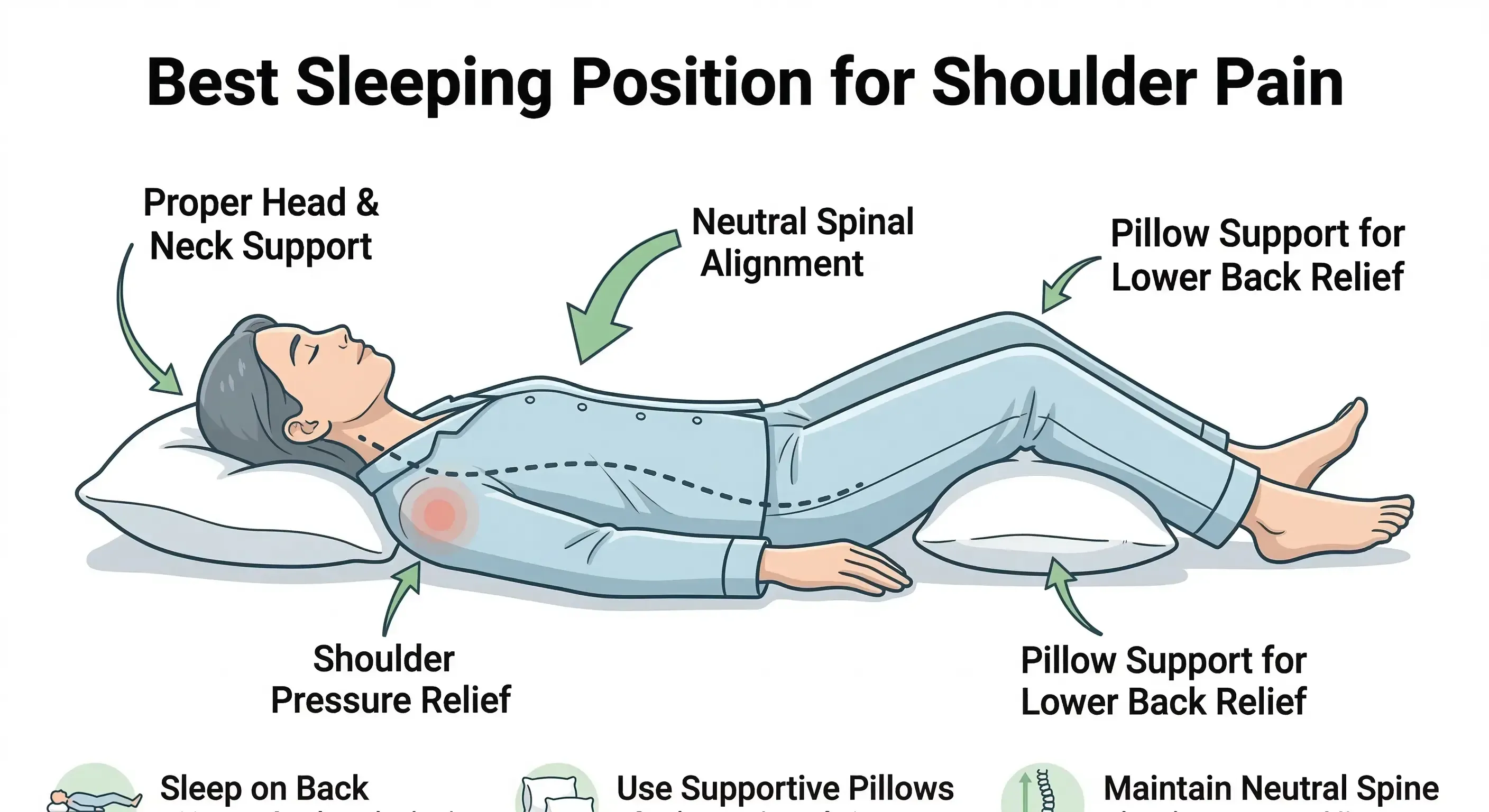
The best sleeping position for shoulder pain is lying on your back with a supportive pillow under the affected arm. Back sleeping distributes body weight evenly across a wide surface area, completely eliminating compressive pressure on the shoulder joint. A small pillow or rolled towel placed under the elbow of the painful arm provides additional support that reduces rotator cuff tension and allows the shoulder muscles to fully relax overnight. This position is recommended by physiotherapists and orthopaedic specialists as the most effective sleeping posture for shoulder pain recovery.
Best Sleeping Positions for Shoulder Pain Relief
1. Sleeping on Your Back — Best Position Overall
Back sleeping is the most recommended position for shoulder pain relief — and for good reason. When you sleep on your back, your body weight spreads across your entire back surface. Neither shoulder bears direct compressive load. The shoulder joint rests in a neutral, open position with no internal rotation, no impingement, and no sustained pressure on the bursa or rotator cuff tendons.
To optimise back sleeping for shoulder pain, use a medium-loft pillow that supports the natural curve of your neck without pushing your head too far forward. Place a small pillow or folded towel under the elbow of your painful arm — this slight elevation reduces tension on the rotator cuff by supporting the arm's weight and preventing the shoulder from rolling internally.
If you experience any shoulder discomfort even in back sleeping, try placing a thin pillow under the shoulder blade of the affected side — this slight elevation adjusts the shoulder position and reduces joint impingement.
Best for: All shoulder pain conditions — rotator cuff injuries, shoulder impingement, bursitis, post-surgical recovery.
2. Sleeping on the Opposite (Unaffected) Side
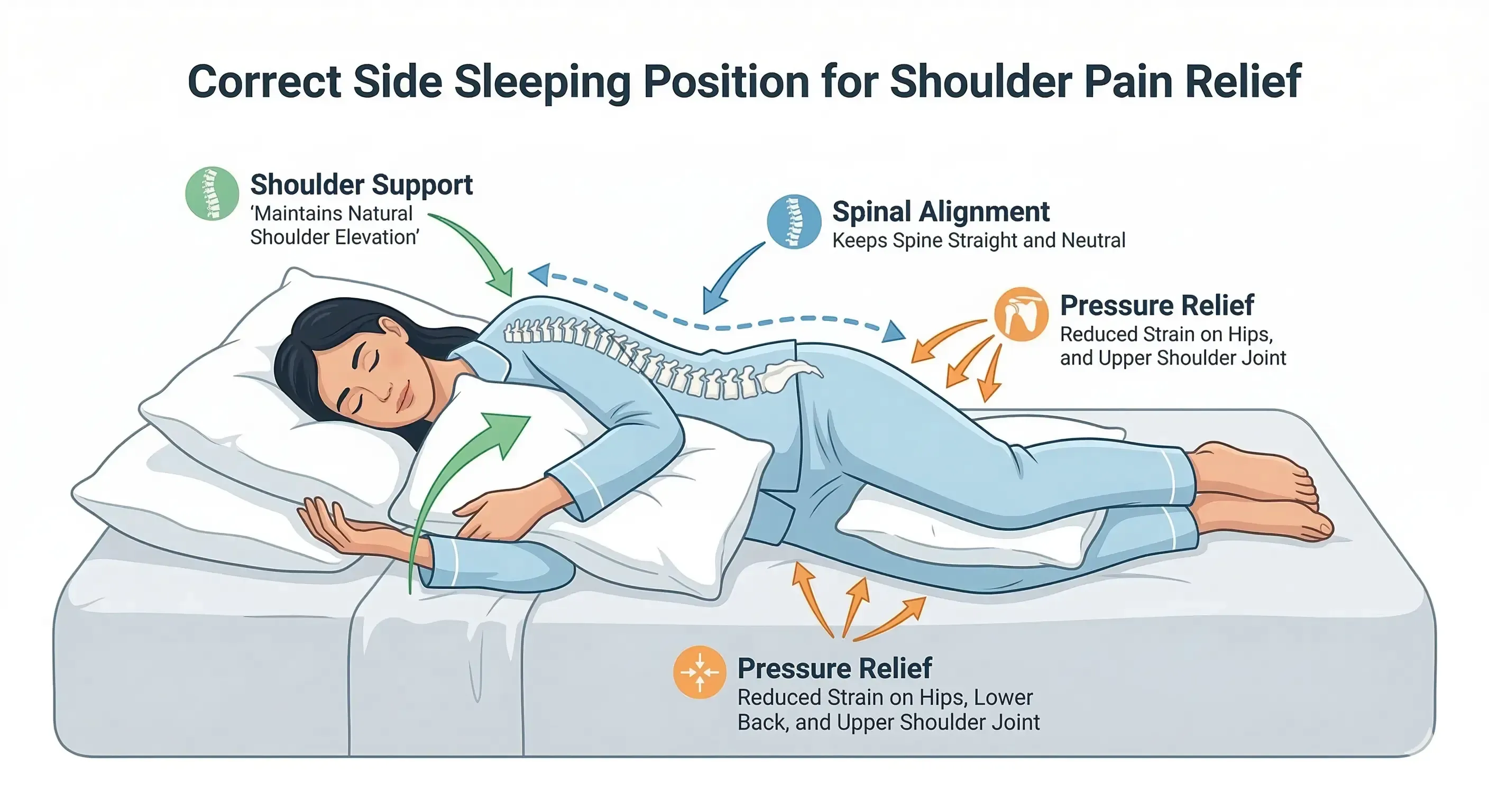
If back sleeping is uncomfortable or you are a committed side sleeper, sleeping on the opposite — unaffected — shoulder is the second-best option. By keeping the painful shoulder facing upward with no body weight on it, you eliminate compressive pressure on the injured joint while still sleeping in your preferred side position.
The critical factor for this position is proper arm support for the upper (painful) shoulder. Without support, the top arm falls forward across the body, internally rotating the painful shoulder and creating tension in the rotator cuff. Place a supportive pillow in front of your chest and rest your top arm on it — this keeps the painful shoulder in a neutral, externally rotated position with no strain on the surrounding soft tissue.
Best for: Side sleepers who cannot transition to back sleeping, those with unilateral shoulder pain.
3. Supported Side Sleeping With Pillow System
For side sleepers determined to sleep on their affected side — or for those whose pain is mild enough to tolerate it — a proper pillow support system can significantly reduce shoulder pressure. The goal is to minimise the amount of body weight that transmits directly to the shoulder joint by surrounding it with supporting pillows.
Use a soft mattress or mattress topper that allows the shoulder to sink into the surface, reducing peak pressure. Place a small pillow directly under the affected shoulder to slightly elevate and support it. Use a body pillow in front of your chest to prevent your body from rolling fully onto the shoulder. Keep the arm extended forward rather than tucked under the pillow.
This supported position is significantly less effective than back sleeping or opposite-side sleeping for shoulder pain relief — but it is better than unsupported side sleeping on the painful shoulder.
Worst Sleeping Positions for Shoulder Pain
Sleeping on the Painful Shoulder
Sleeping directly on the injured or painful shoulder is the single worst position for shoulder pain — and unfortunately one of the most natural positions for habitual side sleepers. When you sleep on your painful shoulder, your entire upper body weight presses directly into the joint for hours at a time. This sustained compressive load increases inflammation in the bursa and rotator cuff tendons, restricts blood flow to the healing tissue, and prevents the joint from the decompression it needs to recover overnight.
People with rotator cuff tears, shoulder impingement syndrome, frozen shoulder, or shoulder bursitis experience the most severe pain from this position. If you regularly wake up with intense shoulder pain and you are a side sleeper, sleeping on the painful shoulder is almost certainly the primary cause.
Sleeping on Your Stomach
Stomach sleeping is the second worst position for shoulder pain. When you sleep face down, you must turn your head to one side to breathe — which immediately creates asymmetric neck and shoulder tension. The shoulder on the side the head faces is pulled upward and internally rotated, placing significant strain on the rotator cuff and cervical spine connection.
Additionally, stomach sleepers often extend one or both arms overhead or tucked under their body — positions that further strain the shoulder joint and surrounding tendons. The combination of neck rotation and arm positioning makes stomach sleeping consistently damaging for shoulder pain sufferers. Transitioning to back sleeping is strongly recommended.
 Best Pillow Placement for Shoulder Pain
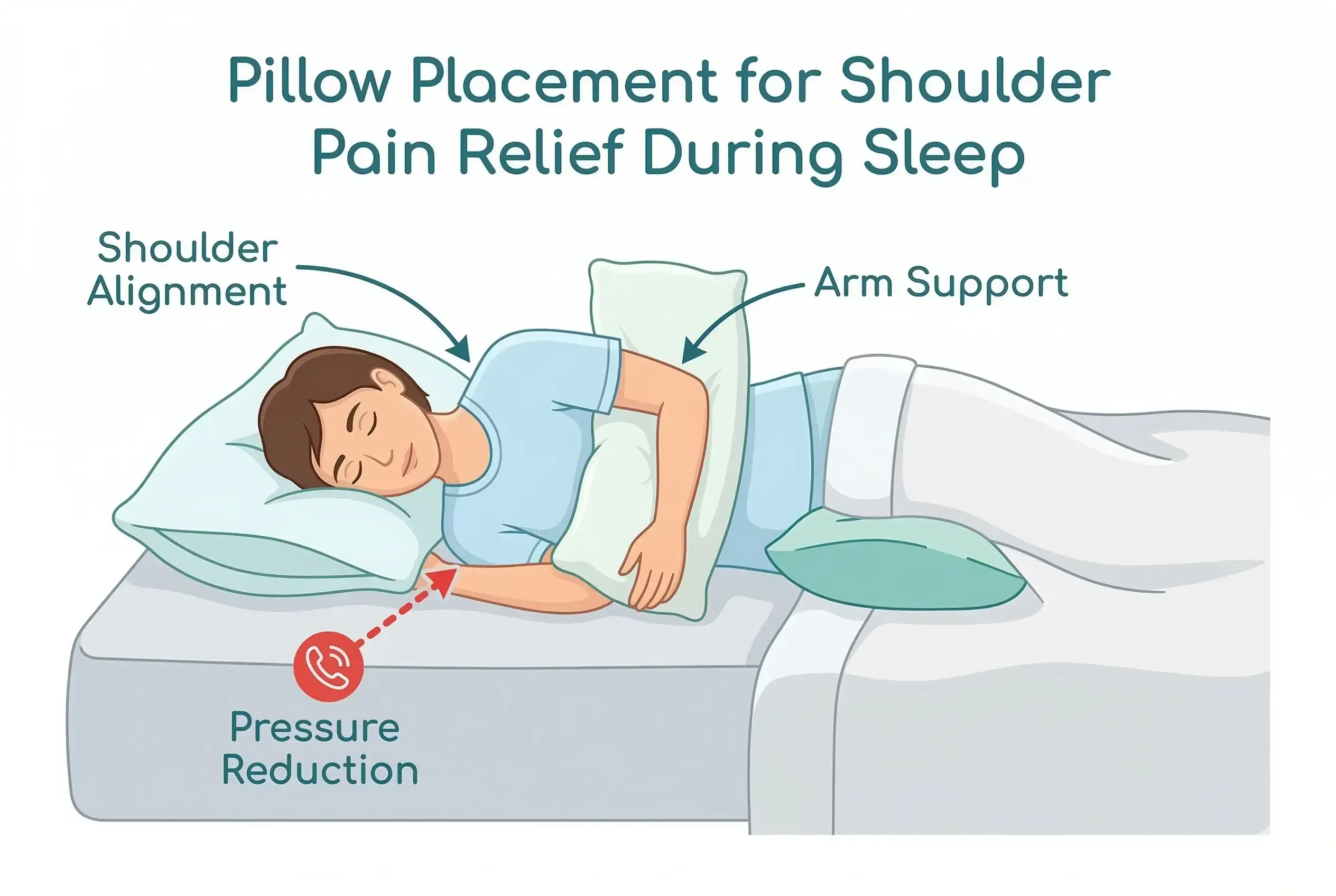
Pillow placement is as important as sleeping position for shoulder pain management. Here are the most effective techniques:
Pillow Between Arms (Side Sleepers)
For side sleepers using the opposite shoulder, placing a medium-firm body pillow or standard pillow between your arms and chest prevents the top arm from falling forward and internally rotating the painful shoulder. Rest the full length of your top arm on the pillow — from shoulder to wrist — to keep the shoulder in a neutral, supported position throughout the night.
Pillow Under the Elbow (Back Sleepers)
Back sleepers with shoulder pain benefit significantly from a small pillow or rolled towel placed under the elbow of the painful arm. This slight elevation — typically 5 to 8cm — supports the weight of the arm, reduces tension on the rotator cuff, and keeps the shoulder in a slightly externally rotated position that minimises impingement. This is one of the most effective and simple interventions for shoulder pain during sleep.
Pillow Under the Knees (Back Sleepers)
While primarily a lower back support technique, placing a pillow under the knees in back sleeping also helps shoulder pain indirectly. By flattening the lower back against the mattress, this position prevents the pelvis from tilting — which in turn keeps the entire spine and shoulder girdle in a more neutral, relaxed position.
Cervical Pillow for Neck Alignment
A cervical pillow — designed to support the natural curve of the neck — can significantly reduce shoulder pain by eliminating the neck tension and cervical misalignment that refer pain into the shoulder. For shoulder pain sufferers, a medium-firm contoured cervical pillow that fills the gap between the ear and shoulder precisely is often more effective than a standard pillow.
How Your Mattress Affects Shoulder Pain
Your mattress plays a direct role in shoulder pain during sleep — and choosing the wrong firmness is one of the most common and correctable causes of sleep-related shoulder pain.
Mattress Firmness: A mattress that is too firm does not allow the shoulder to sink adequately when side sleeping, concentrating body weight directly onto the shoulder joint and creating compressive pressure that worsens inflammation. Side sleepers with shoulder pain need a mattress soft enough to cushion the shoulder — typically medium to medium-soft (firmness 4 to 6).
Pressure Relief: Look for mattresses with dedicated pressure relief comfort layers — at least 2 to 3 inches of memory foam or soft latex on the surface. These materials distribute shoulder pressure over a wider area, reducing peak pressure at the joint from a concentrated point to a distributed load.
Spinal Alignment: Even for shoulder pain, overall spinal alignment matters. A mattress that allows the hips to sink deeper than the shoulders creates lateral spinal curvature that strains the neck and upper back — which directly worsens shoulder tension and pain. The mattress should keep the entire spine — from neck to tailbone — in a straight horizontal line when viewed from behind.
Best Mattress Type for Shoulder Pain
The three mattress types that most effectively address shoulder pain are:
Memory Foam: Memory foam's body-contouring properties make it the most effective material for shoulder pain relief. It allows the shoulder to sink into the surface while supporting the surrounding area — distributing pressure away from the joint. Medium to medium-soft memory foam (firmness 4 to 5.5) is ideal for side sleepers with shoulder pain. For our full analysis, read our Best Mattress for Side Sleepers guide.
Latex: Natural Talalay latex provides excellent pressure relief with a more responsive, bouncy feel than memory foam. It contours sufficiently to reduce shoulder pressure while maintaining better airflow — a good choice for shoulder pain sufferers who sleep hot. Its responsiveness also makes it easier to change positions during the night without the "stuck" feeling that some memory foam sleepers experience.
Hybrid: Hybrid mattresses combining a soft foam or latex comfort layer with pocketed coil support offer an excellent balance of shoulder pressure relief and overall spinal support. Zoned hybrids — with deliberately softer coils under the shoulder area — are particularly well-suited to side sleepers with shoulder pain.
Shoulder Stretches to Reduce Pain Before Bed
Performing gentle shoulder stretches before bed reduces muscle tension, improves joint mobility, and decreases overnight pain. Do each stretch slowly and stop if sharp pain occurs:
Cross-Body Shoulder Stretch
Gently bring your painful arm across your chest using your opposite hand to support it at the elbow. Hold for 20 to 30 seconds. This stretch releases the posterior shoulder capsule — a common source of shoulder tightness and impingement. Perform 2 to 3 repetitions on each side before bed.
Doorway Chest Stretch
Stand in a doorway with your arm bent at 90 degrees and your forearm resting on the door frame. Gently lean forward until you feel a stretch across the front of the shoulder and chest. Hold for 20 to 30 seconds. This stretch opens the anterior shoulder capsule and reduces the internal rotation that worsens many shoulder pain conditions. Avoid this stretch if it causes sharp pain.
Shoulder Rolls
Slowly roll both shoulders backward in large circles — 10 repetitions. Then forward — 10 repetitions. This simple movement increases blood flow to the shoulder joint, reduces muscle tension in the trapezius and upper back, and promotes synovial fluid circulation in the joint — all of which help reduce overnight pain and morning stiffness.
Neck Side Stretch
Gently tilt your head toward your unaffected shoulder, using your hand to apply light pressure. Hold for 20 to 30 seconds. This releases the upper trapezius and cervical muscles that refer pain into the shoulder — an often-overlooked source of shoulder discomfort during sleep.
Common Mistakes That Make Shoulder Pain Worse
- Wrong Pillow Height: A pillow too low drops the head toward the mattress, stretching the neck and shoulder on the upper side. A pillow too high pushes the head upward, compressing the neck on the lower side. Either way, neck tension refers directly into the shoulder and worsens pain overnight.
- Sleeping on the Injured Shoulder Out of Habit: Many side sleepers habitually sleep on one specific side and continue doing so even after developing shoulder pain on that side. Breaking this habit — even temporarily during recovery — is essential for healing.
- Mattress Too Firm for Side Sleeping: A firm mattress that felt fine before shoulder pain develops becomes a compression device for an inflamed shoulder joint. If your shoulder pain developed gradually as a side sleeper on a firm mattress, the mattress firmness is a likely contributing factor.
- Tucking the Arm Under the Pillow: Many side sleepers tuck their bottom arm under their pillow during sleep. This position internally rotates the shoulder and compresses the rotator cuff — one of the most damaging positions for shoulder pain sufferers.
- Ignoring Sleep Position Until Pain Is Severe: Many people only address their sleeping position after shoulder pain becomes significant. Correcting sleep position early — at the first signs of shoulder discomfort — prevents minor irritation from progressing to chronic pain.
Expert Tips for Sleeping Comfortably With Shoulder Pain
- Apply Ice or Heat Before Bed: Ice reduces acute inflammation—apply it for 15 minutes before bed for recent injuries. Heat relaxes chronic muscle tension — apply for 15 minutes for ongoing stiffness. Both can reduce overnight pain when applied correctly before sleep.
- Use a Supportive Pillow System: Invest in both a proper head pillow and a body pillow. The body pillow acts as a positioning aid — preventing you from rolling onto the painful shoulder during the night even as you change positions unconsciously.
- Sleep in a Reclined Position if Needed: Some shoulder conditions — particularly rotator cuff tears — are less painful in a slightly reclined position (30 to 45 degrees) than fully flat. If lying flat is consistently painful, a recliner or adjustable bed base may significantly improve sleep quality during recovery.
- Wear a Shoulder Support if Recommended: For certain conditions, a soft shoulder support or compression sleeve worn during sleep can reduce joint movement and provide proprioceptive feedback that unconsciously prevents painful positions during sleep.
- Choose Pressure-Relief Mattress: If your current mattress is medium-firm or firmer and you sleep on your side, consider a memory foam or latex mattress topper to add surface softness and specifically relieve shoulder pressure.
When to See a Doctor for Shoulder Pain
While sleeping position adjustments help most cases of shoulder pain, some conditions require professional medical assessment. See a doctor if you experience any of the following:
- Shoulder pain that has persisted for more than 2 to 3 weeks without improvement
- Sharp pain during simple movements like lifting the arm above the head
- Significant limitation in shoulder range of motion — inability to reach behind your back or lift above shoulder height
- Pain that radiates down the arm or is accompanied by numbness or tingling
- A history of shoulder injury, fall, or accident preceding the pain
- Night pain severe enough to consistently wake you from sleep
These symptoms may indicate rotator cuff tears, frozen shoulder, shoulder impingement syndrome, or referred neck pain — all of which benefit significantly from professional diagnosis and targeted treatment beyond sleep position changes alone.
Conclusion
The best sleeping position for shoulder pain is back sleeping with a proper pillow support under the affected arm. This position eliminates compressive pressure on the shoulder joint, keeps the rotator cuff relaxed, and allows the shoulder to recover overnight without aggravation. If back sleeping is not possible, sleeping on the opposite shoulder with a supportive pillow system is the next best option.
Avoid sleeping on the painful shoulder or on your stomach — both positions actively worsen shoulder pain by creating sustained compression and internal rotation of the injured joint. Pair the right sleeping position with the correct pillow height, a pressure-relieving mattress, and pre-bed shoulder stretches — and most shoulder pain sufferers will notice significant improvement in overnight comfort within 1 to 2 weeks.
Your shoulder needs decompression and rest to heal — give it the right conditions every night.