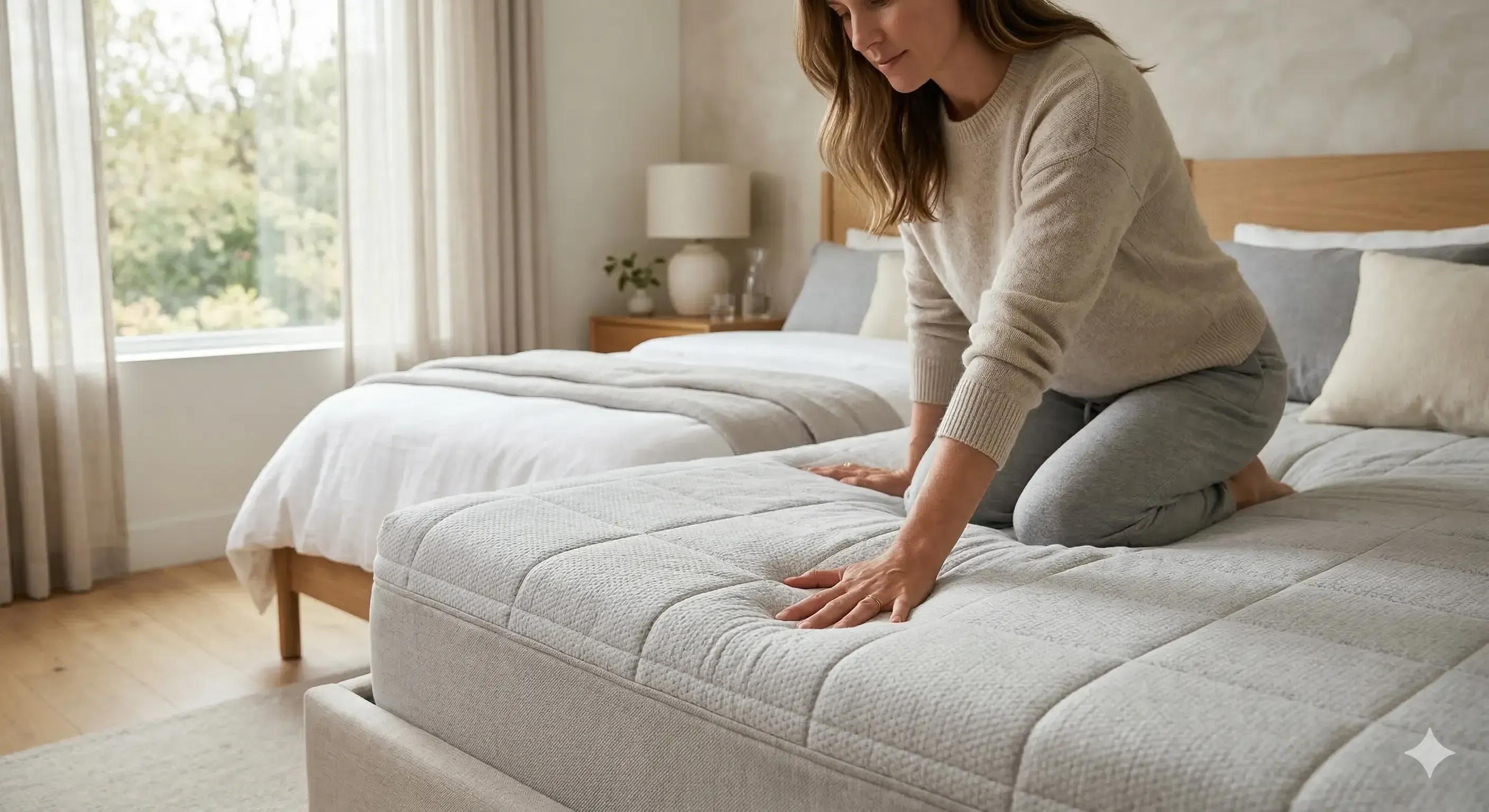
Choosing the right mattress firmness is one of the most important and most misunderstood decisions when shopping for a mattress. Most people walk into a store, lie on a mattress for 30 seconds, and choose whatever feels comfortable in the moment. The result? They bring home a mattress that feels fine at first, but leaves them waking up with back pain, shoulder soreness, or hip pressure within weeks.
The truth is that mattress firmness is not just about personal preference. The right firmness level depends on three specific factors: your body weight, your sleeping position, and the mattress material. Get even one of these wrong, and the mattress that feels perfect for someone else will cause you pain and disrupted sleep.
This mattress firmness guide explains everything you need to know about the firmness scale from 1 to 10, how firmness affects different sleeping positions, how body weight changes your ideal firmness level, and how to test firmness before buying. Whether you are buying your first mattress or replacing an old one, this guide will help you choose the right firmness level for your body.
Quick Answer: What Mattress Firmness Is Best for Most People?
For most adults, a medium-firm mattress between 5 and 7 on the firmness scale provides the best balance between support and pressure relief. Medium-firm mattresses maintain spinal alignment while cushioning the shoulders and hips sufficiently to prevent pressure point pain. Research consistently shows that medium-firm mattresses reduce back pain and improve sleep quality for the widest range of sleeping positions and body types. If you are unsure where to start, medium-firm is always the safest first choice.
What Is Mattress Firmness?
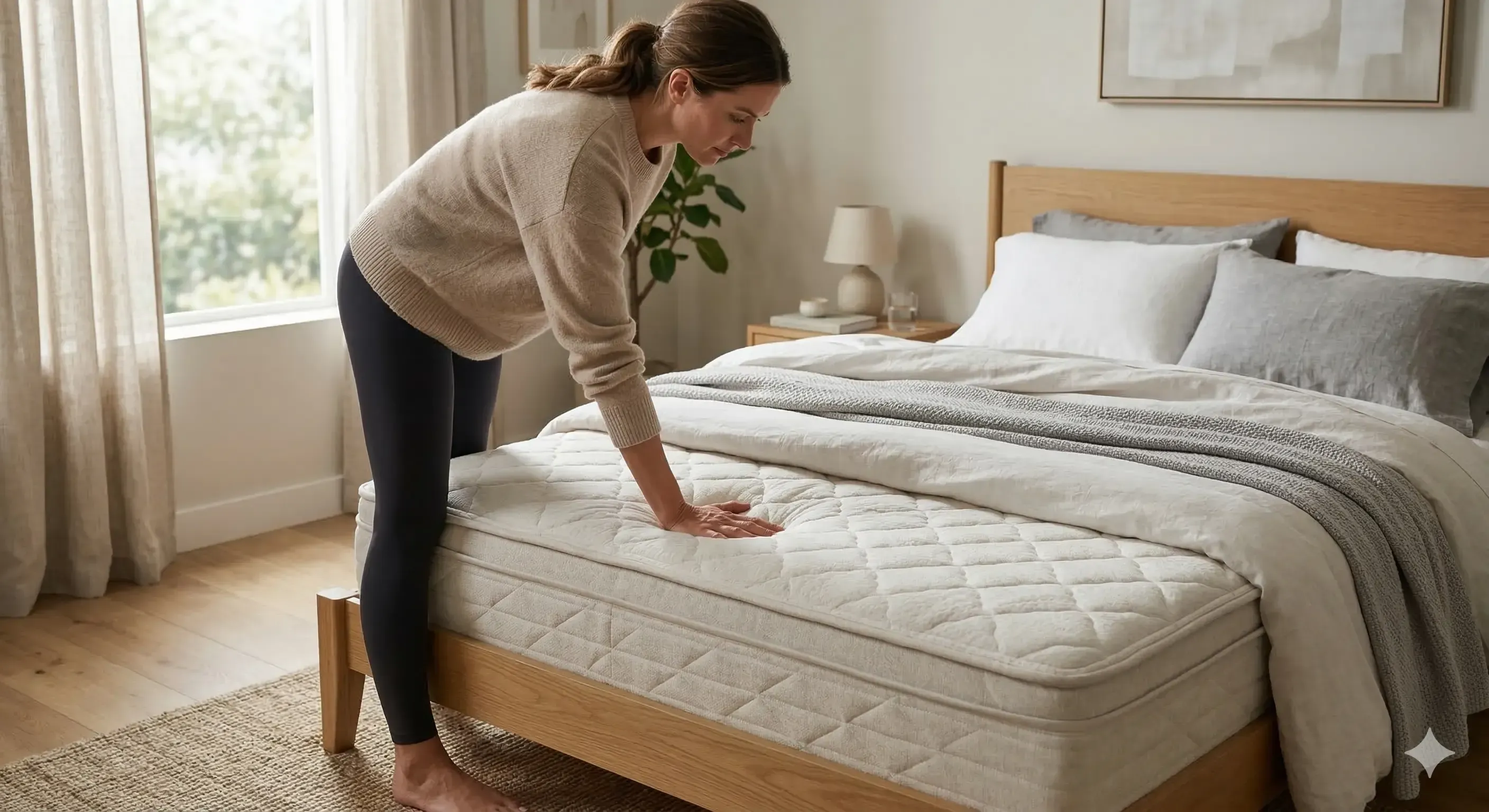
Mattress firmness refers to the initial feel of the mattress surface when you first lie down, how soft or hard it feels against your body. It is the first sensory impression your body receives and one of the primary factors determining whether a mattress is comfortable for you.
Firmness vs Support: An Important Distinction: Many people confuse firmness with support, but they are fundamentally different properties. Firmness is a surface sensation how soft or hard the top of the mattress feels. Support refers to a mattress's ability to maintain proper spinal alignment throughout the night. A mattress can be soft on the surface but highly supportive underneath. A mattress can be firm on the surface but structurally unsupportive. The best mattresses combine appropriate surface firmness with strong underlying support.
How Firmness Affects Sleep Comfort: Firmness directly affects pressure distribution across your body. A mattress that is too firm creates concentrated pressure at the body's heaviest contact points, typically the shoulders and hips, causing pain and numbness. A mattress that is too soft allows the heavier parts of the body to sink too deeply, misaligning the spine and straining the lower back muscles. The right firmness distributes your weight evenly while keeping your spine in its natural position.
How Manufacturers Measure Firmness: Mattress firmness is typically measured using an Indentation Load Deflection (ILD) test, a standardised method that determines the weight required to compress a foam sample by a specific percentage. Higher ILD numbers indicate firmer foam. Most mattress brands translate these technical measurements into a simpler, consumer-facing 1-to-10 firmness scale for ease of comparison.
Mattress Firmness Scale Explained (1–10)
The standard mattress firmness scale runs from 1 (extremely soft) to 10 (extremely firm). Here is a complete breakdown of every level and who it suits:
| Firmness Level | Feel | Best For | Common Use |
|---|---|---|---|
| 1–2 | Ultra Soft | Very lightweight side sleepers under 45kg | Rare speciality mattresses only |
| 3–4 | Soft | Lightweight side sleepers, pressure relief priority | Plush mattresses, pressure relief models |
| 5–6 | Medium | Average weight side and combination sleepers | Most popular range widest variety available |
| 6–7 | Medium-Firm | Back sleepers, average to heavier sleepers | Most recommended for back pain relief |
| 7–8 | Firm | Stomach sleepers, heavy sleepers over 90kg | Orthopaedic and support mattresses |
| 8–9 | Extra Firm | Very heavy sleepers, stomach sleepers with back pain | High-support specialist mattresses |
| 10 | Ultra Firm | Specific medical or orthopaedic requirements | Extremely rare medical use only |
Important Note: Firmness ratings are not standardised across all mattress brands. A "medium-firm" from one manufacturer may feel different from a "medium-firm" from another. Always rely on the numerical ILD rating when available, or use a sleep trial period to verify that the firmness is right for your body before committing to a purchase.
The most commonly purchased firmness levels, accounting for over 80% of all mattress sales globally, fall between 5 and 7 on this scale. This range serves the largest variety of sleeping positions and body types, which is why most quality mattress brands offer their widest selection in this middle range.
Mattress Firmness Based on Body Weight
Body weight is one of the most significant factors in determining your ideal mattress firmness, yet it is the factor most commonly ignored by buyers. The reason it matters so much is simple: heavier bodies compress a mattress more deeply than lighter bodies. What feels medium-firm to a 60kg person may feel soft to a 95kg person on the exact same mattress.
Lightweight Sleepers (Under 60kg)
Lightweight sleepers do not compress a mattress as deeply as average or heavier individuals. This means a medium-firm mattress, which feels perfectly balanced to an average sleeper, may feel too hard for a lightweight person, not allowing sufficient sinkage at the shoulders and hips for proper pressure relief and spinal alignment.
Lightweight sleepers generally do best in the soft-to-medium range firmness, 3 to 5. This allows their lighter body weight to sink adequately into the comfort layers, achieving the pressure relief and spinal alignment that a firmer mattress would deny them. For lightweight side sleepers, a soft-to-medium mattress is almost always the right choice.
Average Weight Sleepers (60–90kg)
Average-weight sleepers have the widest range of suitable firmness options. Medium to medium-firm firmness, 5 to 7, works well for most average-weight adults across all sleeping positions. This range provides enough surface softness for pressure relief while maintaining sufficient underlying support for spinal alignment.
For average-weight back sleepers, medium-firm (6 to 7) is typically ideal. For average-weight side sleepers, medium (5 to 6) usually provides better pressure relief. For average-weight stomach sleepers, medium-firm to firm (6 to 7.5) prevents excessive hip sinking.
Heavy Sleepers (Over 90kg)
Heavier sleepers compress a mattress significantly more deeply than lighter individuals. A mattress that feels medium to an average sleeper can feel soft or even too soft to someone over 90kg, causing excessive sinking, spinal misalignment, and accelerated mattress wear.
Heavy sleepers generally need a medium-firm to firm mattress firmness of 6 to 8 to prevent over-compression and maintain spinal support. Heavy side sleepers are an exception; they still need some surface softness for shoulder and hip pressure relief, but require a firmer base support layer than lighter side sleepers. Hybrid mattresses with high-density foam and robust pocketed coil systems are typically the best option for sleepers over 90kg. Learn more about the advantages of a firmer surface in our guide on why firm mattresses are a smart choice for better sleep.
Best Mattress Firmness for Different Sleeping Positions
Your sleeping position determines exactly where your spine needs support and where it needs pressure relief. This mattress firmness guide covers every position in detail:
Side Sleepers
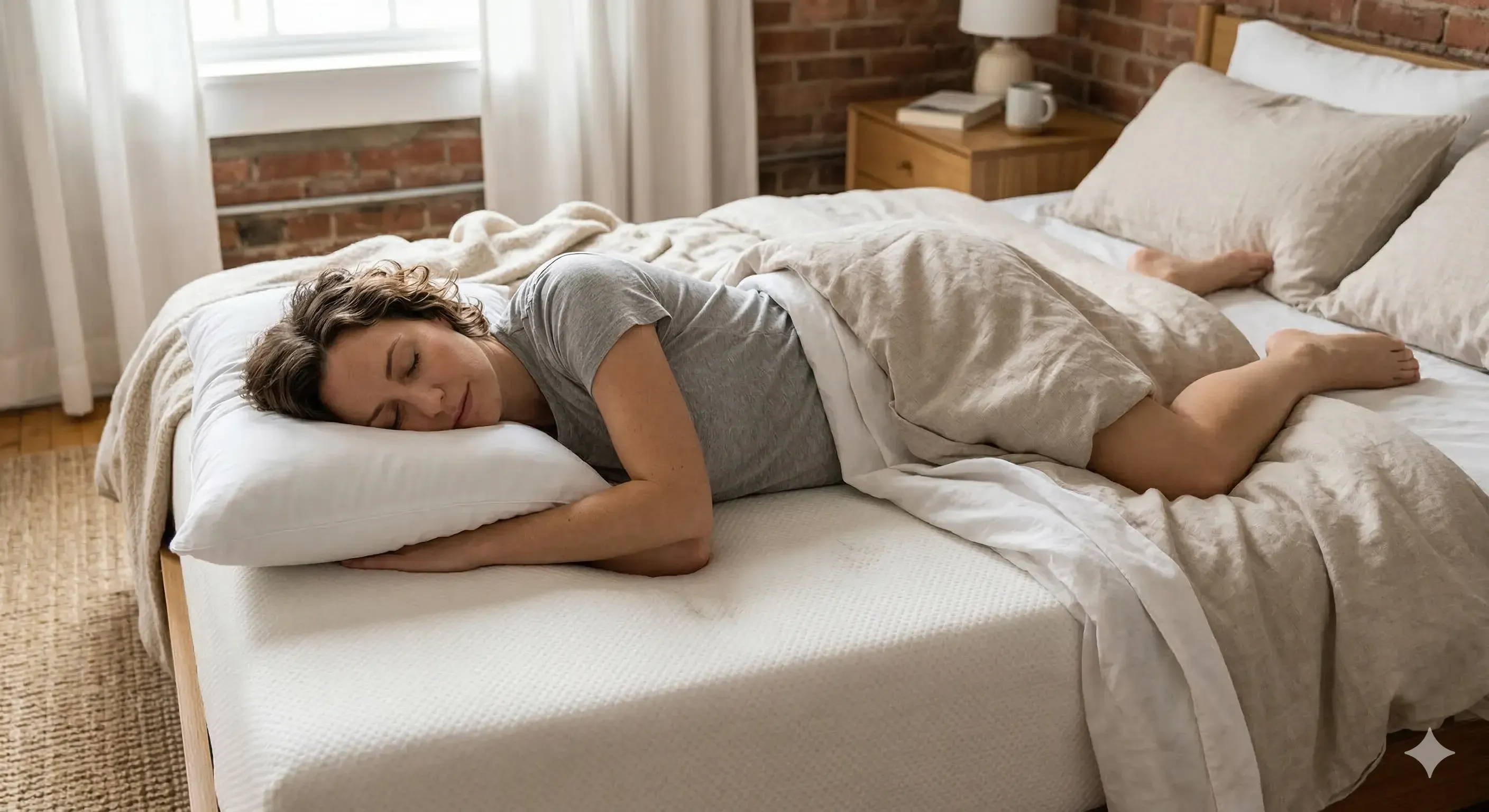
Side sleeping concentrates body weight at two primary contact points: the shoulder and the hip. These areas need to sink into the mattress surface to keep the spine straight from the neck to the tailbone. If the mattress is too firm, the shoulders and hips cannot sink, creating pressure points and lateral spinal curvature that cause pain.
Side sleepers need a soft to medium firmness, typically 4 to 6 on the scale. Lightweight side sleepers should lean toward the softer end (3-4). Average-weight side sleepers do best around medium (5 to 5.5). Heavier side sleepers need a medium (5.5 to 6.5) that is softer than the firmness recommended for other positions, but still firmer than the firmness recommended for lighter side sleepers to prevent oversinking. For mattress recommendations specific to this position, read our guide on the best mattress for side sleepers.
Recommended firmness for side sleepers: 4–6
Back Sleepers
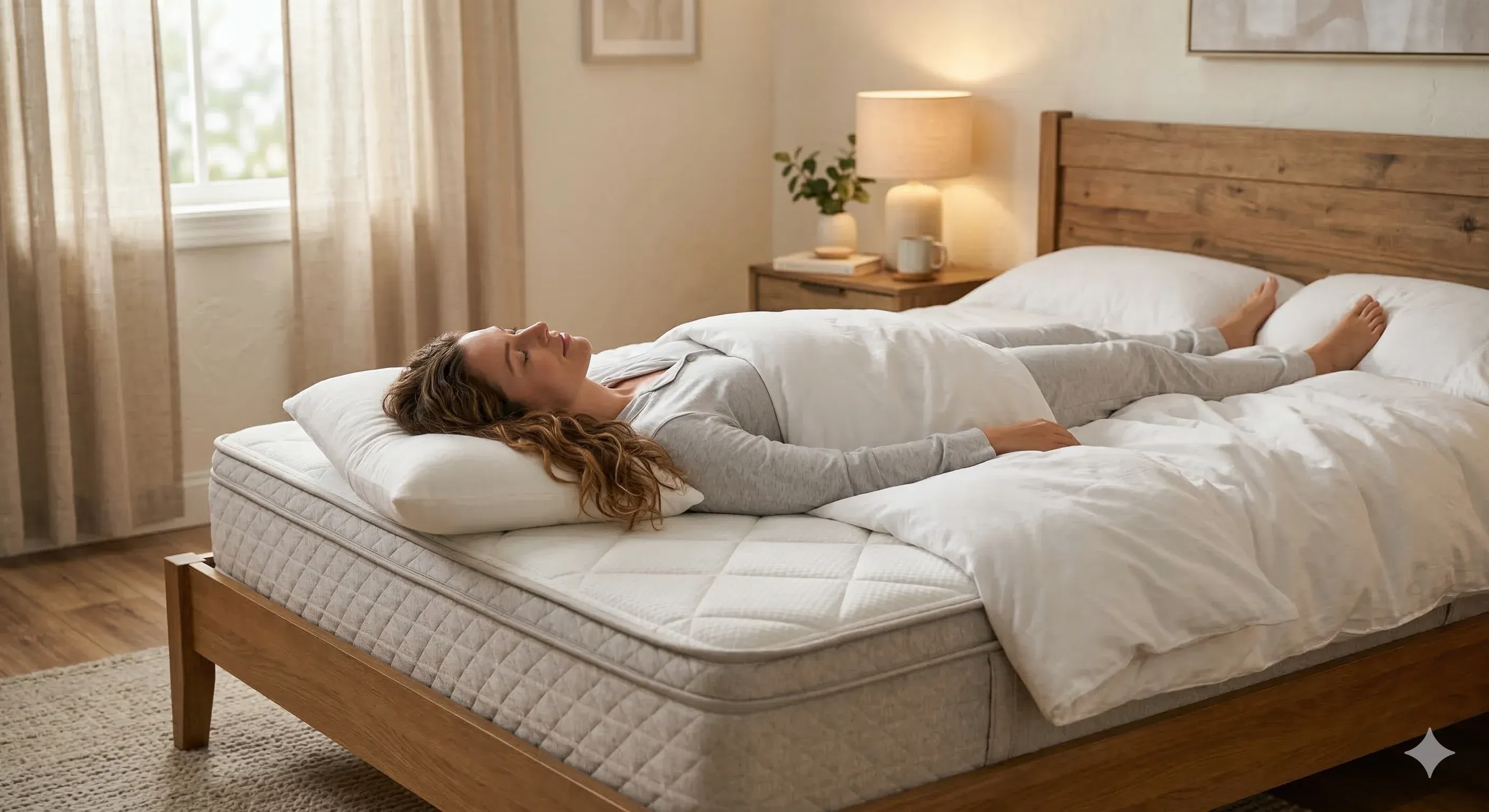
Back sleeping distributes body weight across a larger surface area than side sleeping, making it one of the more forgiving positions for firmness selection. The primary requirement for back sleepers is support for the natural lumbar curve, the inward curve of the lower back that must be maintained throughout the night.
A mattress that is too soft allows the lower back to sink, flattening the lumbar curve and straining the spinal muscles. A mattress that is too firm elevates the lumbar area away from the mattress surface, leaving it unsupported. Medium-firm, typically 5.5 to 7, hits the ideal balance for most back sleepers. Placing a small pillow under the knees further reduces lumbar pressure regardless of firmness level.
Recommended firmness for back sleepers: 5.5–7
Stomach Sleepers
Stomach sleeping is the most demanding position for mattress firmness. When lying face down, the hips are the heaviest part of the body in contact with the mattress. If the mattress is too soft, the hips sink deeply, creating an exaggerated arch in the lower back that directly compresses the lumbar discs and facet joints, a primary cause of lower back pain in stomach sleepers.
Stomach sleepers need a firm to medium-firm mattress, typically 6 to 8, that prevents hip sinking and maintains a flat, neutral spinal position. A thin pillow under the pelvis (not the head) can also help reduce the lumbar arch for stomach sleepers on slightly softer mattresses.
Recommended firmness for stomach sleepers: 6–8
Best Mattress Firmness for Back Pain
Back pain and mattress firmness have a direct, well-documented relationship. According to sleep research, the wrong firmness level is one of the primary causes of chronic lower back pain — and choosing the correct firmness is one of the most effective non-medical interventions for reducing back pain.
For most back pain sufferers, regardless of sleeping position, medium-firm mattresses in the 5.5-7 range are most consistently recommended by orthopaedic specialists and physiotherapists. This firmness range provides the right balance of surface pressure relief and underlying spinal support for back pain management.
A mattress that is too soft for a back pain sufferer allows the spine to sag out of alignment, placing continuous strain on the lumbar muscles and spinal discs throughout the night. A mattress that is too firm creates pressure-point pain in the hips and shoulders, leading to frequent position changes that disrupt sleep and prevent the deep rest needed for pain recovery.
Side sleepers with back pain should lean toward the softer end of medium-firm (5 to 6) to ensure adequate pressure relief for the hips and shoulders. Back sleepers with back pain do best on true medium-firm (6 to 7). Stomach sleepers with back pain need firm support (7 to 8) to prevent the hips from sinking, which directly causes their pain. For detailed guidance, read our Best Mattress for Back Pain complete guide.
How Mattress Materials Affect Firmness
The same firmness level feels different depending on the mattress material. Understanding how each material expresses firmness helps you make a more accurate choice:
| Material | Firmness Feel | Best For |
|---|---|---|
| Memory Foam | Slow-contouring, cradling feel. Medium-firm in foam feels softer than the same rating in spring. | Side sleepers, pressure relief priority |
| Latex | Responsive, buoyant feel. Firmness feels more consistent; it does not soften as dramatically under heat and weight. | Back sleepers, hot sleepers, combination sleepers |
| Hybrid | Surface foam softness with coil push-back underneath. Firmness feels more responsive than pure foam. | All sleeping positions, heavier sleepers |
| Innerspring | Immediate, uniform push-back. Firmness feels more consistent but less targeted than foam. | Stomach sleepers, hot sleepers, traditional feel preference |
The practical implication: if you are choosing between a memory foam and a latex mattress at the same firmness rating, the memory foam will typically feel softer due to its heat-responsive contouring. For a full breakdown of how these two materials compare, read our memory foam vs latex mattress guide. Always adjust your firmness selection based on the material. Consider going one firmness level firmer on memory foam compared to latex or spring for an equivalent feel.
Signs Your Mattress Firmness Is Wrong
Many people live with the wrong mattress firmness for years without realising it is the source of their discomfort. Watch for these clear warning signs:
- Shoulder Pain in the Morning: Waking with shoulder soreness or numbness on the side you sleep on indicates the mattress is too firm, and the shoulder cannot sink adequately for pressure relief.
- Hip Pressure or Numbness: Similar to shoulder pain, hip pressure during or after sleep suggests the mattress firmness is too high for your body weight and sleeping position.
- Lower Back Stiffness: Waking with lower back stiffness that improves within 30 minutes of getting up is a classic sign of mattress-related spinal misalignment, either from being too soft (sinking hips) or too firm (an unsupported lumbar curve).
- Tossing and Turning: Frequent position changes during sleep often indicate the mattress is not providing adequate comfort at the current firmness level your body is searching for a more comfortable position.
- Feeling Unsupported or Sinking Too Deep: If you feel like you are sinking into the mattress and struggle to change positions, the mattress is too soft for your body weight. If you feel like you are lying on top of the mattress rather than in it, it may be too firm. If multiple signs point to your mattress being the problem, check our guide on signs you need a new mattress to know when it is time for a replacement.
- Better Sleep Elsewhere: Consistently sleeping better in hotels, guest beds, or on sofas is the clearest signal that your mattress firmness is wrong for your body.
How to Test Mattress Firmness Before Buying
Choosing the right firmness before purchase significantly reduces the risk of an expensive mistake. Here is how to test effectively:
In-Store Testing: When testing a mattress in a showroom, lie in your actual sleeping position for at least 10 to 15 minutes, not just 30 seconds. Your body needs time to fully settle into the mattress and reveal whether the firmness is truly appropriate. Bring your sleeping pillow if possible for a more accurate test.
Check Firmness Ratings: Ask for the ILD (Indentation Load Deflection) rating rather than just the brand's descriptive label. A specific number allows for more accurate comparison across different brands and materials. Remember that "medium-firm" can mean different things to different manufacturers.
Use Sleep Trials: The most reliable way to test mattress firmness is through a proper sleep trial at home. Look for brands offering a minimum 100-night trial. This gives your body adequate time to adjust and lets you accurately assess whether the firmness is right. Most improvements in back pain (or worsening) become clear within 30 to 60 nights.
Return Policies: Always confirm the return policy before purchasing. Reputable mattress brands offer free returns during the sleep trial period. Never buy a mattress without a clear return option. Firmness assessment cannot be done accurately in a showroom alone.
Common Mattress Firmness Mistakes
These are the most frequent firmness selection errors buyers make; avoid all of them:
- Choosing Too Firm Thinking It Means Better Support: Firmness and support are different things. A very firm mattress is not automatically more supportive; it often creates pressure points and spinal misalignment for side sleepers and average-weight individuals.
- Ignoring Sleeping Position: Many buyers choose firmness based solely on how it feels lying on their back in a showroom, then take it home and sleep on their side, where an entirely different firmness is needed.
- Ignoring Body Weight: Choosing the same firmness as a friend or family member without accounting for how your different body weights will compress the mattress differently leads to consistently wrong choices.
- Buying Based Only on Price: The cheapest mattress at a given firmness level almost always uses lower-quality foam that feels correct initially, but softens and sags significantly within 1 to 2 years, ending up feeling much softer than intended.
- Not Using the Sleep Trial: Many buyers keep a mattress they know feels wrong simply because returning it feels like too much effort. Use the sleep trial; it exists precisely for this purpose.
Expert Tips for Choosing the Right Mattress Firmness
- Start With Medium-Firm if Unsure: Medium-firm is the safest default for most adult sleepers. It suits the widest range of sleeping positions and body types and serves as an effective baseline for adjustment.
- Consider Your Sleeping Position First: Your sleeping position is the most reliable indicator of the firmness range you need. Identify your primary sleeping position and use that as your starting point before considering other factors.
- Adjust With a Mattress Topper: If your mattress is slightly too firm, a 5-7cm memory foam or latex topper can add surface softness without replacing the entire mattress. This is significantly more cost-effective than buying a new mattress.
- Check Pressure Relief Layers: Look for mattresses with dedicated pressure-relief comfort layers of at least 2-3 inches of memory foam, latex, or gel foam on top of the support system. The quality of these layers determines how well the mattress manages pressure, regardless of the overall firmness rating.
- Account for Partner Preferences: If sharing a bed with a partner of significantly different body weight or sleeping position, consider a mattress with dual firmness zones or a split-firmness option, each side set to the appropriate firmness level for each person.
Mattress Firmness Buying Checklist
| ✔ Checklist Item | Why It Matters |
|---|---|
| ✔ Identify your primary sleeping position | Most important firmness factor |
| ✔ Consider your body weight | Changes how every firmness level feels and performs |
| ✔ Choose medium-firm (5–7) as the default | Works for the widest range of sleepers |
| ✔ Check mattress material type | The same firmness feels different in foam, spring, and latex |
| ✔ Look for pressure relief comfort layers | Essential for shoulder and hip cushioning |
| ✔ Confirm 100-night sleep trial | The only reliable way to verify firmness at home |
| ✔ Check return and refund policy | Protects you if firmness is wrong |
| ✔ Consider partner's weight and position | Dual firmness zones available if needed |
Conclusion
This mattress firmness guide covers everything you need to make the right firmness decision, and the most important takeaway is this: firmness is personal, and it depends on your body. There is no single correct firmness for everyone.
For most adults, medium-firm between 5 and 7 on the firmness scale is the safest starting point. Side sleepers should lean more softly. Stomach sleepers should go firmer. Heavier sleepers need more firmness than the same position suggests for average-weight individuals. Always always use a proper 100-night sleep trial to confirm the firmness is truly right for your body before committing. Choosing the correct mattress firmness is not complicated once you understand the factors involved. Follow this guide, and you will sleep better for years to come.