
How to Get Deep Sleep Naturally for Better Health
You can spend eight hours in bed and still wake up exhausted. You can close your eyes on time, avoid your phone, and do everything right on the surface, yet still drag yourself through the next day feeling like you barely slept at all. The reason is almost always the same: you are not getting enough deep sleep.
Deep sleep is the most restorative stage of the sleep cycle. It is during deep sleep that the body repairs damaged tissue, releases growth hormone, consolidates long-term memories, and strengthens the immune system. It is the stage that determines whether you wake up genuinely refreshed or merely technically awake. Most adults need 1.5 to 2 hours of deep sleep per night, but millions are getting far less than this due to stress, poor sleep habits, an uncomfortable mattress, or a sleep environment that actively suppresses the deepest sleep stages.
The good news is that knowing how to get deep sleep naturally is entirely within your control. The factors that most directly determine deep sleep quantity and quality are lifestyle and environment-based, meaning they respond to deliberate, consistent change. In this complete guide, we cover exactly what deep sleep is, why it matters, the common causes of insufficient deep sleep, and twelve natural strategies that reliably increase it.
What Is Deep Sleep?
Deep sleep, technically called slow-wave sleep or Stage 3 NREM (Non-Rapid Eye Movement) sleep, is the third stage of the sleep cycle and the one most responsible for physical and cognitive restoration.
Stages of Sleep: Each sleep cycle lasts approximately 90 minutes and consists of four stages. Stage 1 is brief light transitional sleep. Stage 2 is a consolidated period of sleep, during which heart rate slows, and body temperature begins to drop. Stage 3 is deep slow-wave sleep, characterised by the slowest brain wave activity of any sleep stage (delta waves), the lowest heart rate and blood pressure, and the highest threshold for external awakening. Stage 4 is REM (Rapid Eye Movement) sleep, where dreaming and emotional processing occur. A full night of sleep contains 4 to 6 of these cycles.
Deep Sleep vs. Light Sleep vs. REM Sleep: The distinction between these stages matters in practice. Light sleep (Stages 1 and 2) is important for sleep continuity but provides limited restoration. REM sleep is essential for emotional processing, memory consolidation, and creativity, but it is not the stage of maximum physical repair. Deep slow-wave sleep is where the most intensive physical restoration happens. The brain is most difficult to awaken from deep sleep. People roused from deep sleep feel profoundly groggy (sleep inertia) because the body resists being interrupted during this critical repair stage.
Role of Deep Sleep in Recovery: During deep sleep, the pituitary gland releases most of the body's daily growth hormone, which is essential for muscle repair, bone maintenance, and fat metabolism. Adenosine, the sleep-pressure chemical that accumulates during wakefulness, is most effectively cleared during deep sleep. The glymphatic system, the brain's waste clearance mechanism, is most active during deep slow-wave sleep, flushing out the metabolic byproducts that accumulate during waking neural activity.
Why Deep Sleep Is Important for Health
Understanding the specific functions of deep sleep explains why insufficient deep sleep produces such wide-ranging health consequences:
Brain Restoration: Deep sleep is when the brain performs its most essential maintenance. The glymphatic system flushes metabolic waste from the brain's interstitial spaces, including the amyloid beta and tau proteins associated with Alzheimer's disease, when they accumulate chronically. Memory traces formed during the day are transferred from the hippocampus to the neocortex for long-term storage during deep sleep. People who consistently get insufficient deep sleep show accelerated cognitive decline and impaired learning capacity compared to those who achieve adequate deep sleep.
Muscle Recovery: Growth hormone released during deep sleep drives the protein synthesis that repairs the microscopic muscle damage from physical activity. Without adequate deep sleep, this repair process is incomplete, resulting in residual muscle soreness, reduced strength, and impaired performance that athletes experience with poor sleep. Even non-athletes rely on deep sleep to repair or recover from physical wear. and tea.r People who consistently under-sleep in deep sleep experience higher rates of musculoskeletal injuries and slower recovery from minor strains.
Immune System Strengthening: Deep sleep is when the immune system is most active. Cytokines, the proteins that coordinate immune responses to infection and inflammation, are produced most abundantly during deep slow-wave sleep. Immunological memory, the mechanism by which the immune system remembers how to respond to previously encountered pathogens and vaccines, is consolidated during deep sleep. Reducing deep sleep directly reduces immune competence in measurable, documented ways.
Hormone Balance: Beyond growth hormone, deep sleep regulates several other critical hormones. Insulin sensitivity is restored during sleep, with deep sleep deprivation directly promoting insulin resistance. Cortisol, the stress hormone, reaches its daily minimum during deep sleep, allowing the HPA axis to reset. Testosterone, important for muscle maintenance, bone density, and libido in both men and women, is produced primarily during deep sleep. Chronic deep sleep deficiency disrupts all of these hormonal systems simultaneously.

How Much Deep Sleep Do You Need?
Adults typically spend approximately 13 to 23% of their total sleep time in deep slow-wave sleep, which translates to roughly 1 to 2 hours of deep sleep in a 7 to 9-hour sleep period. For a person sleeping 8 hours, this means approximately 60 to 110 minutes of deep sleep per night represents the normal healthy range.
Deep Sleep Distribution: Deep sleep is not evenly distributed across the night. It is heavily concentrated in the first two sleep cycles, meaning the 11 pm to 3 am window for most adults who sleep at regular times. The first sleep cycle contains the largest deep sleep period of the night. Subsequent cycles contain progressively less deep sleep and more REM sleep. This distribution has a critical practical implication: losing the first hours of sleep through late bedtimes causes a disproportionate loss of deep sleep compared to losing the same hours from the end of sleep.
Individual Variation: The proportion of deep sleep naturally declines with age. Young adults typically achieve 20-25% of their sleep in deep sleep. By middle age, this often drops to 15-20%. Older adults often achieve only 5-10% deep sleep, which is one reason sleep feels less restorative as people age. This age-related decline makes protecting the factors that maximise deep sleep, particularly consistent timing and exercise, increasingly important, not less, as people get older.
Signs You Are Not Getting Enough Deep Sleep
The following are reliable indicators that your deep sleep is insufficient despite adequate total sleep time:
- Waking Up Tired: Feeling unrefreshed after a full night's sleep is the most consistent sign of insufficient deep sleep. If you are spending 7 to 9 hours in bed but waking feeling like you need more sleep, the quality of your sleep, specifically the deep sleep proportion, is the problem rather than the duration.
- Poor Concentration: Mental fog, difficulty sustaining focus on complex tasks, and slower information processing during the day reflect incomplete brain restoration due to insufficient deep sleep. The glymphatic clearing and memory consolidation that depend on deep sleep are incomplete, leaving the brain in a compromised functional state.
- Daytime Fatigue: Persistent physical fatigue, reduced motivation, and low energy throughout the day, despite adequate sleep hours, indicate that the growth hormone release and physical restoration that occur during deep sleep were insufficient to meet the body's recovery needs.
- Frequent Night Awakenings: Waking repeatedly during the night often indicates that deep sleep is fragmented or abbreviated. Deep sleep is the hardest stage to awaken from, so frequent awakenings suggest the body is spending insufficient time in this stage, cycling through lighter sleep stages that are more easily disrupted.
- Morning Muscle Stiffness: Waking with muscle soreness or stiffness that is disproportionate to the previous day's physical activity is a sign that the growth-hormone-driven overnight muscle repair occurring during deep sleep was insufficient.

Common Causes of Poor Deep Sleep
Deep sleep is suppressed by specific, identifiable factors that can all be addressed with targeted interventions:
Stress and Anxiety: Elevated cortisol levels from psychological stress are the most potent suppressors of deep, slow-wave sleep. Cortisol and deep sleep are directly antagonistic; high cortisol prevents the brain from reaching and sustaining deep sleep stages. This is why stressed individuals consistently report non-restorative sleep despite adequate hours: they spend excessive time in light sleep and insufficient time in deep sleep due to cortisol-driven arousal that suppresses deeper stages of sleep.
Irregular Sleep Schedule: Deep sleep is concentrated in the first sleep cycles of the night, which occur at a specific circadian time rather than simply after a certain number of hours in bed. When sleep timing is irregular, the circadian preparation for deep sleep at the correct time is disrupted, reducing the proportion of deep sleep even when total sleep hours appear adequate. Going to bed at 11 pm one night and 2 am the next prevents the circadian system from reliably initiating deep sleep at the optimal time.
Excessive Screen Exposure: Blue-wavelength light from screens suppresses melatonin and keeps the brain in a state of alertness that directly opposes deep sleep initiation. Screens also provide engaging content that activates the brain's attention and reward systems, creating cognitive arousal that competes with the mental disengagement deep sleep requires. Evening screen use consistently reduces the proportion of deep sleep in sleep research, with effects that persist even after the screen is turned off.
Caffeine Consumption: Caffeine blocks adenosine receptors, and adenosine accumulation during waking is a primary driver of deep sleep pressure. With a half-life of 5 to 6 hours, afternoon caffeine still blocks sufficient adenosine receptors at bedtime to measurably reduce the proportion of deep sleep. Many people attribute their non-restorative sleep to stress or insomnia when the primary cause is afternoon caffeine suppressing deep sleep chemistry.
Alcohol: Alcohol is perhaps the most widely misunderstood deep sleep suppressor. While it promotes initial drowsiness and faster sleep onset, alcohol is metabolised during the second half of the night and produces a rebound suppression of deep slow-wave sleep. Regular alcohol consumers consistently show reduced deep sleep proportion compared to non-drinkers, explaining the unrefreshing quality of sleep that regular evening drinkers experience.
12 Natural Ways to Increase Deep Sleep
These twelve strategies directly address the causes of poor deep sleep and work by creating the specific physiological conditions that maximise the proportion of deep slow-wave sleep. Implementing several of them simultaneously produces faster and more substantial improvement than changing any single factor alone.
1. Maintain a Consistent Sleep Schedule
A fixed bedtime and wake time every day, including weekends, is the single most powerful intervention for deep sleep quality. The circadian rhythm controls the timing of deep sleep and concentration, meaning that consistent sleep timing ensures the body's deep-sleep-preparation chemistry is active at precisely the right point in your sleep period. Within 1 to 2 weeks of consistent timing, most people notice more restorative sleep meaningfully as the circadian system aligns deep sleep with the correct portion of their sleep window. Even a 60-minute variation on weekends disrupts the weekday deep sleep architecture for many people.
2. Reduce Screen Time Before Bed
Stop all screen use 60 to 90 minutes before bed to allow melatonin production and cognitive deactivation to develop naturally. Melatonin does not directly cause deep sleep but creates the physiological conditions in which it can occur. Blue-light filtering is a partial measure. Complete screen elimination is significantly more effective. Replace screen time with physical books, gentle stretching, or relaxation practices that actively promote the parasympathetic calm from which deep sleep emerges.
3. Exercise Regularly
Regular aerobic exercise is the most potent natural deep sleep promoter and has the strongest research evidence of any lifestyle intervention for increasing the proportion of deep slow-wave sleep. Exercise increases the depth of sleep drive, elevates growth hormone response during subsequent sleep, and reduces baseline cortisol, all three of which directly increase deep sleep. Even a single session of moderate aerobic exercise produces measurable improvements in deep sleep the same night. The minimum effective dose is 150 minutes of moderate aerobic activity per week, distributed across most days. Avoid vigorous exercise within 2 to 3 hours of bedtime.
4. Create a Dark and Quiet Sleep Environment
Deep sleep is the stage most dependent on environmental conditions, allowing the brain to disengage from external monitoring fully. Even low-level light exposure during sleep reduces melatonin and shifts the brain toward lighter sleep stages. Irregular noise activates the auditory cortex and prevents the deep neural synchronisation of slow-wave sleep. Blackout curtains, a sleep mask, earplugs, or a white noise machine address these two factors directly and consistently produce measurable improvements in deep sleep from the first night of use.
5. Avoid Caffeine Late in the day
Set a firm daily caffeine cutoff of 1 pm to 2 pm. This gives caffeine sufficient time to clear from your system before the adenosine-dependent deep sleep pressure builds to its optimal pre-sleep level. For people who have been consuming afternoon caffeine for extended periods, the improvement in deep sleep quality within the first 1 to 2 weeks of implementing this change is often dramatic and among the fastest-acting deep sleep interventions available.
6. Practice Relaxation Techniques
Reducing cortisol before bed directly increases the proportion of deep sleep in the subsequent sleep period. The most effective pre-sleep relaxation techniques for deep sleep are progressive muscle relaxation (tensing and releasing muscle groups from the feet to the head), diaphragmatic breathing with extended exhales, and mindfulness body-scan meditation. Even 10 to 15 minutes of consistent practice before bed produces a measurable reduction in cortisol, which translates directly into improved deep sleep architecture.
7. Keep Your Bedroom Cool
Core body temperature must drop by approximately 1-2 degrees Celsius to initiate and sustain deep sleep. A bedroom temperature between 17 and 20 degrees Celsius supports this drop and maintains the cool environment that deep sleep requires throughout the night. In India's warm climate, this is one of the highest-impact deep sleep improvements available. A fan or air conditioning set to a comfortable cool level directly increases the duration and continuity of deep sleep stages by sustaining the temperature conditions they require.
8. Eat Sleep-Friendly Foods
Foods that support deep sleep contain magnesium (which activates GABA receptors that promote deep sleep), tryptophan (a precursor to serotonin and melatonin), and complex carbohydrates (which facilitate tryptophan transport to the brain). The most evidence-supported deep-sleep-promoting foods are almonds and walnuts (magnesium and melatonin), bananas (magnesium and tryptophan), tart cherries (direct dietary melatonin source), warm milk (tryptophan and warmth), and oats (complex carbohydrate and melatonin). A small snack containing these foods 1 to 2 hours before bed can measurably support deep sleep chemistry.
9. Reduce Stress
Because cortisol is the primary suppressor of deep, slow-wave sleep, stress reduction is one of the most direct paths to improving deep sleep. Beyond pre-sleep relaxation techniques, daytime stress management produces the most lasting cortisol reduction. Regular aerobic exercise, daily worry journaling (processing anxieties during the day rather than at bedtime), consistent social connection, and professional psychological support or CBT therapy all reduce baseline cortisol in ways that compound into sustained deep sleep improvement over weeks and months.
10. Develop a Bedtime Routine
A consistent pre-sleep routine performed at the same time each evening conditions the nervous system to begin the physiological transition toward deep sleep preparation at a predictable time. The routine itself becomes a conditioned cue that activates melatonin release and parasympathetic nervous system dominance. Effective deep-sleep-promoting routines include a warm shower (the subsequent temperature drop reinforces deep sleep onset), light reading under dim warm light, gentle yoga or stretching, and progressive muscle relaxation. Consistency matters more than the specific activities chosen.
11. Limit Alcohol Consumption
Alcohol is one of the most significant suppressors of deep slow-wave sleep and is responsible for the non-restorative sleep quality that regular evening drinkers experience. Limiting alcohol and specifically avoiding it within 3 hours of bedtime produces significant deep sleep improvement. For people who have been consuming alcohol regularly before sleep, the deep sleep quality improvement following elimination is typically one of the most dramatic and quickly apparent changes they experience, often noticed within the first alcohol-free week.
12. Use a Comfortable Mattress
Physical discomfort from an unsuitable mattress triggers unconscious arousal signals that prevent the brain from sustaining deep, slow-wave sleep. A mattress that creates pressure at the shoulders or hips, fails to maintain spinal alignment, or has deteriorated beyond its effective lifespan produces continuous low-level discomfort that keeps the brain cycling through lighter sleep stages rather than deepening into and sustaining slow-wave sleep. The correct mattress matched to your sleeping position and body weight eliminates this barrier to deep sleep. It is one of the most impactful physical investments for improving the quality of deep sleep.
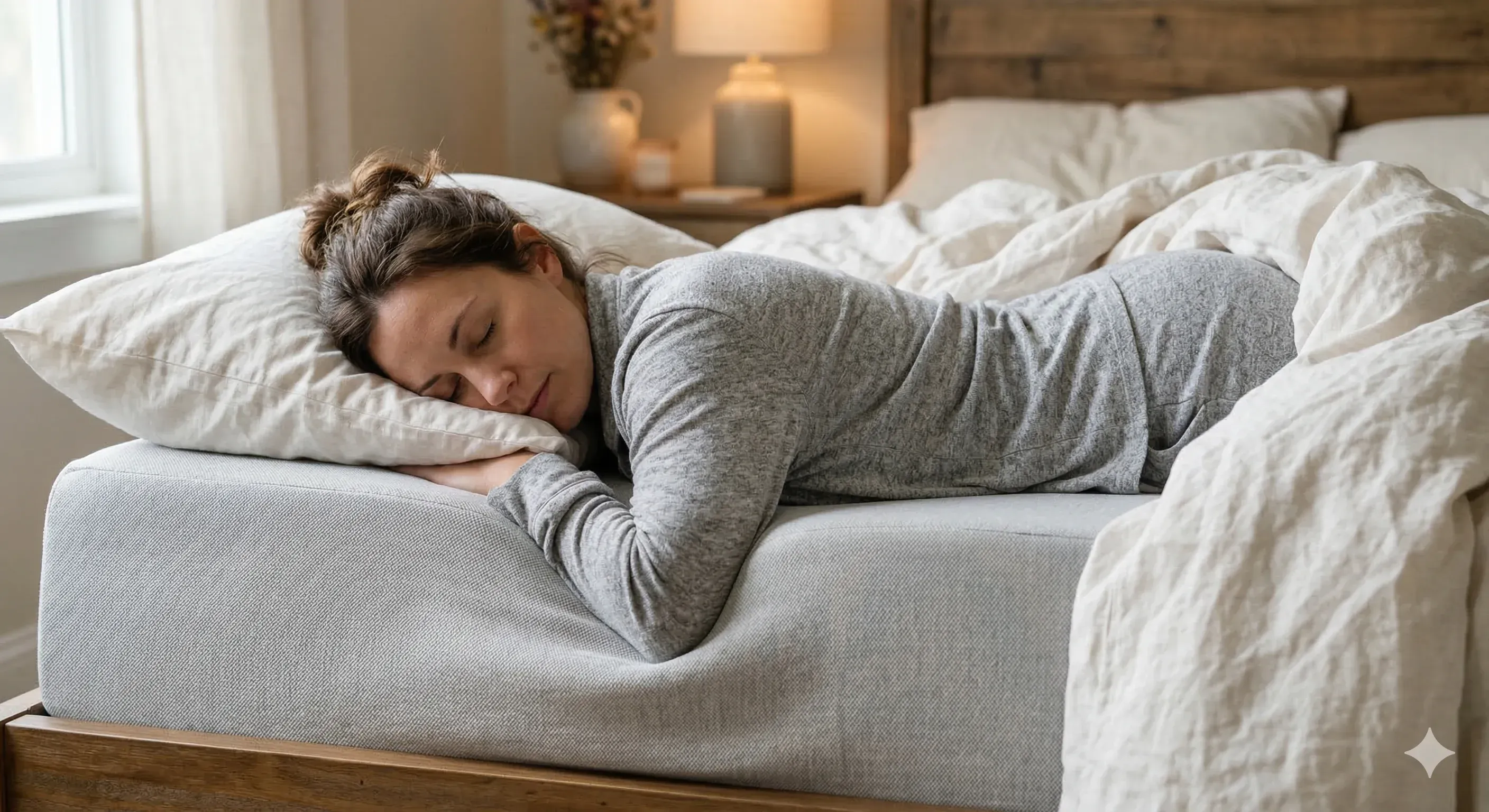
How Your Mattress Affects Deep Sleep
The mattress is the physical foundation of deep sleep quality and deserves specific attention when it comes to getting deep sleep naturally.
Pressure Relief: Inadequate pressure relief at the shoulders and hips in side sleeping creates progressive discomfort that builds during sleep. Deep slow-wave sleep has the highest arousal threshold of any sleep stage, meaning significant discomfort is required to disrupt it. However, by the second and third sleep cycles, when deep sleep periods are shorter, and the accumulated discomfort is greater, even moderate pressure can prevent the brain from re-entering deep sleep after the normal cycle transition. A mattress with adequate pressure-relieving comfort layers allows the body to remain still and comfortable through these transitions, sustaining deeper sleep stages.
Spinal Alignment: A mattress that allows spinal misalignment creates sustained muscular tension throughout the night. This tension represents a continuous low-level proprioceptive arousal signal that competes with deep sleep architecture. The correct mattress firmness maintains the spine in its natural neutral position, allowing the musculoskeletal system to relax fully rather than maintaining compensatory tension during sleep.
Mattress Firmness: Medium-firm mattresses in the 5.5-7 range on the firmness scale provide the optimal combination of pressure relief and spinal support for most adults across most sleeping positions. Read our complete Mattress Firmness Guide for detailed firmness selection guidance and our Best Mattress for Back Pain guide for back-pain specific recommendations.
How Sleep Environment Impacts Deep Sleep
The sleep environment affects deep sleep through direct physiological mechanisms, not merely through comfort or preference:
Bedroom Lighting: Light exposure during sleep, even at low levels, activates retinal photoreceptors, which signal the suprachiasmatic nucleus to reduce melatonin and increase arousal. This effect occurs even through closed eyelids. The result is a measurable shift from deeper to lighter sleep stages in response to ambient light. Complete darkness, achieved through blackout curtains or a high-quality sleep mask, is one of the most immediately effective deep sleep interventions available because it removes a direct suppressor of deep sleep chemistry.
Noise Levels: The auditory cortex remains partially active during all sleep stages, including deep sleep, monitoring the environment for threat-relevant sounds. Irregular noise that exceeds the arousal threshold of deep sleep produces partial awakenings that fragment slow-wave sleep without necessarily producing full conscious awakening. White noise or consistent fan noise masks irregular sound spikes by raising the ambient noise floor, preventing the sudden contrasts that trigger arousal responses during deep sleep.
Temperature Control: Core body temperature continues to drop during the first half of the night, reaching its minimum during the deepest sleep periods. A room that becomes warmer as the night progresses (common in Indian summers) can interrupt this temperature descent and shift the brain toward lighter sleep stages even after deep sleep has been successfully initiated. Consistent cool temperature throughout the night is more important than the initial bedroom temperature alone.
For a complete guide to sleep quality improvement that builds on the deep sleep strategies in this article, read our How to Improve Sleep Quality Naturally guide, our Why Can't I Sleep Through the Night, and our complete guide on How Many Hours of Sleep Do You Need.
Conclusion
Learning how to get deep sleep naturally is one of the highest-return health improvements available because deep slow-wave sleep is the foundation of physical recovery, immune function, hormonal balance, and cognitive restoration. Spending more hours in bed is far less valuable than increasing the proportion of those hours spent in deep sleep.
The twelve strategies in this guide address every major modifiable factor that determines the quality of deep sleep, from circadian timing and exercise to cortisol management, bedroom environment, and mattress suitability. Implementing the highest-impact changes first, consistent sleep schedule, regular exercise, afternoon caffeine cutoff, cool dark bedroom, and alcohol elimination, produces the most significant deep sleep improvement in the shortest time. Add progressive layers from the remaining strategies over subsequent weeks, and your deep sleep will improve consistently and sustainably. The quality of your waking hours depends entirely on the quality of the sleep hours that precede them.