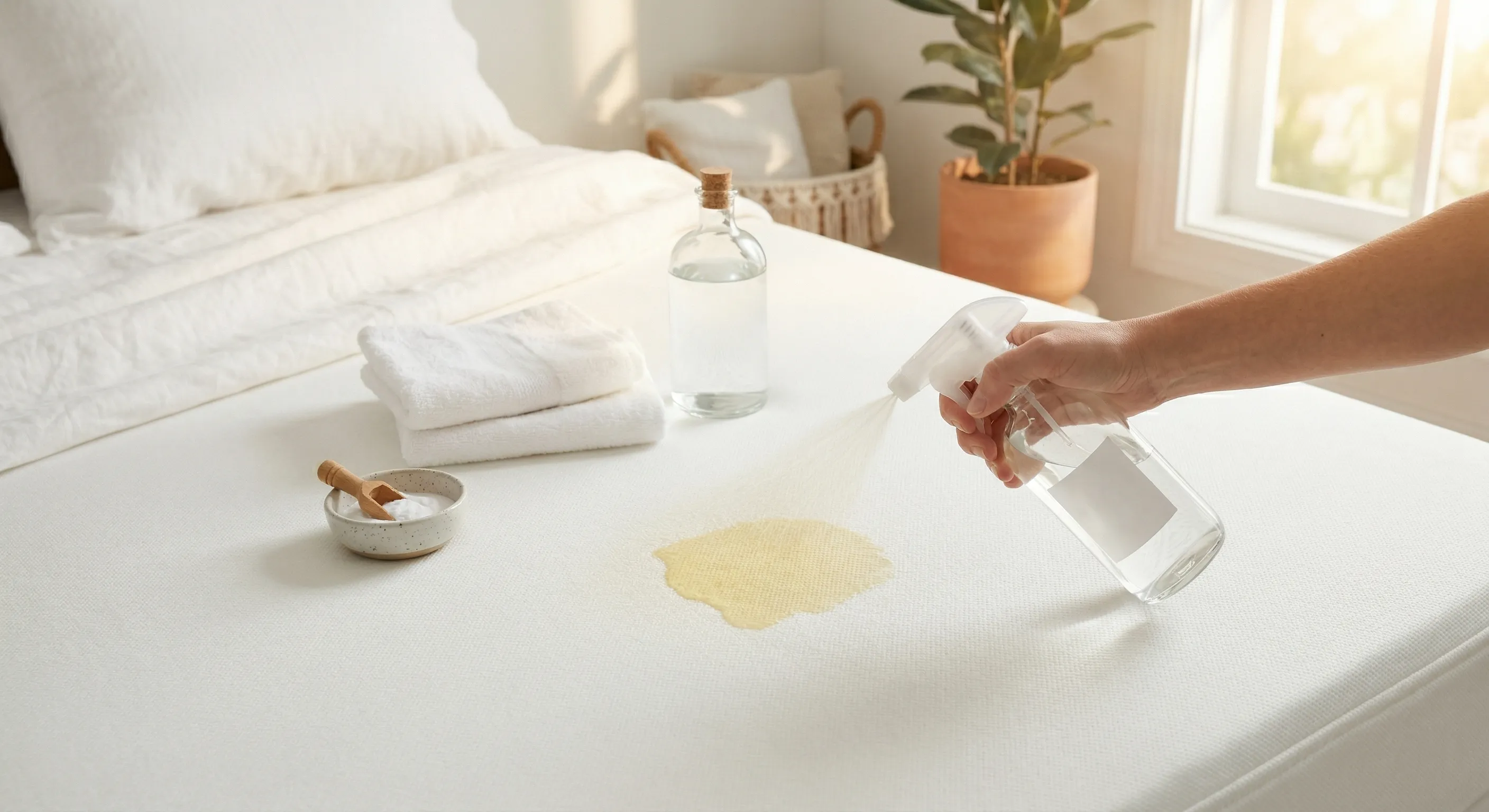
How to Get Pee Out of a Mattress: The Complete Guide to Removing Urine Stains and Smell
Accidents happen. Whether your child has wet the bed, your cat has decided your mattress is a better option than the litter box, or your dog has had an indoor accident, getting urine out of a mattress is a problem most of us face at some point.
The good news? You do not need expensive professional cleaning services. With the right tools and techniques, you can completely remove pee stains, eliminate urine smell, and restore your mattress to a fresh and clean state - using items you probably already have at home.
This is the most comprehensive guide you will find on removing pee from a mattress. We cover everything: fresh urine, dried urine, stubborn stains, lingering odors, cat pee, dog pee, memory foam mattresses, and the best cleaning products. By the end of this guide, your mattress will be as good as new.
We have also included a detailed FAQ section at the end to answer the most common questions people have about cleaning urine from a mattress. Whether you are dealing with a fresh accident or a stain that has been sitting for weeks, this guide walks you through every scenario with clear, practical steps that actually work.
What You Will Learn in This Guide
- How to remove fresh pee from a mattress immediately
- How to get dried urine stains out of a mattress
- How to get the urine smell out of a mattress
- How to clean cat pee from a mattress
- How to get dog pee out of a mattress
- Best cleaning solutions: baking soda, vinegar, hydrogen peroxide, enzyme cleaners
- How to clean urine from memory foam mattresses
- How to dry a mattress after cleaning
- How to prevent future urine stains
- FAQ - answers to the most commonly asked questions
Why You Must Act Fast When Urine Hits Your Mattress
The moment urine lands on your mattress, a clock starts ticking. Fresh urine is far easier to clean than dried urine. Here is why speed matters:
- Fresh urine sits on the surface of the mattress and has not yet penetrated deep into the foam or fibers.
- As urine dries, it oxidizes, and the compounds that cause that strong ammonia smell become much harder to break down.
- Dried urine creates yellow stains that set into the fabric and become progressively more stubborn over time.
- Bacteria in urine multiply rapidly, intensifying the odor and potentially degrading your mattress materials.
The rule is simple: the sooner you act, the easier the job. But even if you are dealing with old dried urine, do not worry - we have methods for that too.
One thing many people do not realize is that urine does not just sit on the top layer of a mattress. Depending on how much liquid was involved, it can seep through the fabric cover, through the comfort layers, and deep into the core of the mattress. This is why blotting quickly and using enough cleaning solution to match the depth of penetration is so important. Surface-level cleaning that does not reach where the urine actually went will leave behind odor even when the visible stain appears gone.
Another important point: do not let the mattress sit wet for extended periods. A mattress that stays damp for too long can develop mold and mildew inside its layers - and that is a problem that is far harder to fix than a urine stain. Always prioritize drying as part of your cleaning process.
What You Will Need to Clean Urine From a Mattress
Before we get into the step-by-step methods, gather these supplies. Most of these items are common household products:
- Clean white towels, rags, or paper towels
- Empty spray bottle
- Cold water (never hot - heat sets stains permanently)
- Distilled white vinegar
- Baking soda
- Liquid dish soap or laundry detergent
- Hydrogen peroxide (3% solution, available at any pharmacy)
- Enzyme cleaner (especially important for pet urine)
- Vacuum cleaner with upholstery attachment
- Fan or hair dryer (for drying)
Important: Never use bleach on a mattress. Bleach is too harsh, can damage the mattress materials, and is harmful to humans and pets.
Also, avoid using hot water. Heat causes proteins in urine to bond with fabric fibers, making stains permanent.
If you do not have distilled white vinegar at home, it is widely available at any grocery store and is very inexpensive. It is worth keeping a bottle on hand specifically for cleaning purposes. Similarly, baking soda is a pantry staple that doubles as one of the most effective natural deodorizers available - buy it in bulk if you have young children or pets, as you will use it regularly.
How to Get Fresh Pee Out of a Mattress: Step-by-Step
If the accident just happened, follow these steps immediately. Acting within the first 30 minutes gives you the best chance of complete removal.
Step 1: Strip the Bed Immediately
Remove all sheets, pillowcases, mattress protectors, and blankets. Put them directly into the washing machine. Wash them in cold water with your regular laundry detergent. For extra cleaning power, add half a cup of distilled white vinegar and a quarter cup of baking soda to the wash cycle.
Step 2: Blot - Do Not Rub
Use clean towels or thick paper towels to blot the wet area of the mattress. Press firmly to absorb as much liquid as possible. Work from the outside of the stain inward to prevent spreading. Do not rub - rubbing pushes urine deeper into the mattress layers, making it harder to remove.
Continue blotting with fresh towels until you have absorbed as much liquid as you can.
Step 3: Make Your Cleaning Solution
In an empty spray bottle, mix:
- 1 cup of cold water
- 1 cup of distilled white vinegar
- 1 to 2 tablespoons of liquid laundry detergent or dish soap
Shake well to combine. This solution works because vinegar is acidic and breaks down the uric acid crystals in urine, while the detergent lifts the stain from the fabric.
Step 4: Spray and Soak the Affected Area
Spray the cleaning solution generously over the entire stained area. Do not be shy with the solution - you need it to penetrate as deeply as the urine did. Let it sit for 10 to 15 minutes.
Step 5: Blot Again
After allowing the solution to work, blot the area again with fresh, clean towels. You should see the stain transferring to your towels. Keep blotting until the area feels as dry as possible.
Step 6: Cover With Baking Soda
Sprinkle a generous layer of baking soda over the entire treated area. Baking soda is a natural deodorizer and will absorb any remaining moisture and odor. Cover the area completely - do not skimp. Leave the baking soda on the mattress for at least 8 hours, or ideally overnight.
Step 7: Vacuum and Inspect
After the baking soda has had time to work, vacuum it up thoroughly using an upholstery attachment. Inspect the mattress for any remaining stains or odors. If any stain or smell persists, repeat steps 3 through 6 until the mattress is completely clean.
How to Get Dried Urine Stains Out of a Mattress
If you discovered the stain too late and it has already dried, do not panic. Dried urine stains require a bit more effort but are still very treatable. Here are two highly effective methods.
Method 1: Vinegar Solution for Old Urine Stains
Vinegar is excellent at breaking down even dried, set-in urine stains because of its acidic properties.
What You Need:
- Spray bottle
- Distilled white vinegar
- Cold water
- Laundry detergent
- Baking soda
- Clean towels
Steps:
- Mix equal parts distilled white vinegar and cold water in a spray bottle. Add 1 to 2 tablespoons of laundry detergent.
- Generously spray the dried stain. Use enough solution to re-wet the stain completely and penetrate adeeplyep as the original urine did.
- Let the solution sit on the stain for 15 to 20 minutes.
- Blot firmly with clean towels. Do not rub.
- Cover the area with baking soda and let it sit for at least 8 hours.
- Vacuum up the baking soda.
- Inspect and repeat if necessary. Old stains may require 2 to 3 treatment rounds.
Method 2: Hydrogen Peroxide Solution for Stubborn Stains
Hydrogen peroxide is a mild bleaching agent that works especially well on stubborn yellow urine stains that vinegar alone cannot fully remove.
Caution: Hydrogen peroxide can lighten or discolor some fabrics. Test on a small hidden area first. Avoid using on dark-colored mattress covers. Also, use sparingly on foam and latex mattresses - too much liquid can damage the foam.
What You Need:
- 1 cup of 3% hydrogen peroxide (standard pharmacy concentration)
- 3 tablespoons of baking soda
- A few drops of dish soap
- Spray bottle
- Vacuum cleaner
Steps:
- Combine the hydrogen peroxide, baking soda, and dish soap in the spray bottle. Mix gently - this solution will fizz slightly.
- Spray the solution directly onto the urine stain. Use just enough to dampen the stain - avoid soaking the mattress.
- Let the solution dry completely on its own. As it dries, the baking soda will form a white powder residue over the treated area.
- Vacuum up all the dried residue thoroughly.
- Inspect the mattress. Repeat if the stain remains. Multiple rounds may be needed for very old or deep stains.
How to Get Urine Smell Out of a Mattress
Sometimes you successfully clean the stain, but the smell lingers. This happens because urine odor comes from uric acid crystals that have bonded deep into the mattress fibers. Here are the most effective methods for eliminating urine smell.
Method 1: Baking Soda Odor Treatment
Baking soda is one of the most powerful natural odor absorbers available. It neutralizes acidic odors, such as urine, rather than masking them.
- Sprinkle a very thick, even layer of dry baking soda over the entire smelly area. Apply it dry - do not mix it with anything.
- Press it gently into the mattress surface with your hands.
- Leave it for a minimum of 8 hours. For severe odors, leave it for up to 24 hours.
- Vacuum thoroughly.
- Repeat if any smell remains.
Method 2: Baking Soda and Vinegar Paste
For deeply embedded odors, a baking soda and vinegar paste works better than dry baking soda alone.
- Combine equal parts baking soda and distilled white vinegar in a bowl. Expect a fizzing reaction - use a large bowl and mix over a sink.
- Apply the paste generously over the smelly area with a spoon or spatula.
- Scrub the paste gently into the mattress surface using a soft brush or an old toothbrush.
- Allow it to dry completely - this may take several hours.
- Vacuum up all dried residue.
- Allow the mattress to air out before replacing bedding.
Method 3: Enzyme Cleaner for Persistent Odors
If the smell persists after baking soda treatments, an enzyme cleaner is your next step. Enzyme cleaners contain enzymes that break down odor-causing compounds in urine at a molecular level. They are the most effective solution for stubborn urine odors.
You can find enzyme cleaners at supermarkets, pet stores, and online. Follow the product instructions carefully. Most require you to spray, let sit for a period of time, then blot or vacuum. Do not rinse enzyme cleaners off - they need time to work.
Enzyme cleaners are especially effective at neutralizing urine odor in a mattress, deodorizing it, and eliminating pee odor.
Method 4: White Vinegar Spray as a Finishing Deodorizer
Once you have cleaned the stain and treated the odor, a final light spray of undiluted white vinegar can act as a finishing deodorizer. Spray it lightly over the treated area and allow it to air dry completely. Do not worry about the vinegar smell - it dissipates fully as it dries and takes residual urine odor with it. This is a particularly useful final step when dealing with older or more embedded odors that have had time to develop.
How to Get Cat Pee Out of a Mattress
Cat urine is notoriously difficult to remove and is far more concentrated than human urine. It contains high levels of uric acid, ammonia, and other compounds that produce a very intense, persistent odor. Here is exactly how to handle cat pee on a mattress.
Why Cat Urine Is Different
Cat urine contains urobilin, creatinine, urea, sodium, and pheromones that make the smell uniquely sharp and long-lasting. When it dries, uric acid crystallizes and becomes extremely difficult to dissolve with regular water-based cleaners. This is why standard cleaning methods often fail on cat urine - you need enzyme cleaners specifically designed to break down uric acid crystals.
Another issue: if your cat can still smell its urine on the mattress, it will likely urinate there again. Removing all traces of the odor is critical for preventing repeat accidents.
Step-by-Step: Cleaning Cat Pee From a Mattress
- Blot up as much fresh cat urine as possible with paper towels or a clean cloth. Press firmly, but do not rub.
- Apply a pet-specific enzyme cleaner directly to the affected area. Look for products specifically formulated for cat urine.
- Follow the product instructions - most require you to let the cleaner sit for 10 to 15 minutes (some recommend up to an hour for severe cases).
- Blot up the enzyme cleaner with clean towels.
- Sprinkle baking soda generously over the area and let it sit for 8 to 24 hours.
- Vacuum thoroughly.
- Repeat the enzyme cleaner application if any smell or stain remains.
Note: Do not use vinegar-based cleaners as your primary cleaner for cat urine. The strong smell of vinegar can trigger marking behavior in cats, potentially worsening the problem.
For very old or severe cat urine stains, you may need to apply the enzyme cleaner 2 to 3 times over several days to eliminate the odor.
Dealing With Repeat Cat Marking
If your cat keeps returning to the same spot on the mattress, it may still smell traces of its previous urine even after cleaning. Cats have a sense of smell that is far more sensitive than ours - what smells clean to us may still carry detectable signals of urine to them. The solution is to use enzyme cleaners consistently until every last trace of odor is gone, and to consider keeping the cat out of the bedroom until the behavior is fully resolved. You may also want to consult a vet to rule out any underlying medical cause for the repeated urination.
How to Get Dog Pee Out of a Mattress
Dog urine is similar to human urine in composition, but is often deposited in larger volumes, which can cause it to soak deeper into the mattress. Here is how to tackle dog pee on a mattress effectively.
For Fresh Dog Urine
- Act immediately - blot up as much urine as possible with thick towels.
- Apply the vinegar and water solution (equal parts) with laundry detergent in a spray bottle.
- Spray generously, let sit for 15 minutes, then blot.
- Cover with baking soda, leave for 8 hours, then vacuum.
- If any odor remains, apply an enzyme cleaner designed for dog urine.
For Dried Dog Urine
If your dog peed on the mattress and you did not notice immediately, the stain will have dried. Use the hydrogen peroxide method described earlier or apply a dog-specific enzyme cleaner.
The key to dog urine is to ensure you have eliminated the smell - dogs have an extremely sensitive sense of smell and will be attracted back to the same spot if any trace of urine odor remains. Use an enzyme cleaner as your final step to ensure complete odor neutralization.
Large Dog Accidents
When a large dog urinates on a mattress, the volume of liquid involved can be significant. In these cases, you may need to use considerably more cleaning solution than you would for a smaller accident. After blotting up the initial liquid, apply the vinegar solution in multiple rounds rather than a single application - this helps ensure the cleaning agents reach every layer that the urine has penetrated. Follow with a generous application of an enzyme cleaner and allow extended drying time. For very large accidents, it may help to stand the mattress upright to allow airflow through the core during the drying phase.
How to Clean Urine From a Memory Foam Mattress
Memory foam mattresses require special care because memory foam is highly porous and absorbs liquids very quickly. A urine stain on a memory foam mattress can penetrate deeply in a very short time.
Key Rules for Memory Foam
- Never soak a memory foam mattress - excessive liquid can damage the foam structure permanently.
- Never use hot water or a steam cleaner on memory foam.
- Use a minimal amount of cleaning solution and blot thoroughly to remove as much moisture as possible.
- Allow it to dry completely before putting sheets back on - this can take 24 hours or more.
- Use fans or open windows to speed up drying.
Cleaning Steps for Memory Foam
- Blot up fresh urine immediately and thoroughly.
- Apply a small amount of the vinegar-and-water solution using a spray bottle. Use less liquid than you would on a regular mattress.
- Blot, do not rub.
- Apply baking soda and let it sit for at least 8 hours.
- Vacuum thoroughly.
- Allow the mattress to air dry completely - ideally in a sunny, well-ventilated area. Use fans to speed drying.
For dried urine on memory foam, use the hydrogen peroxide method carefully - apply small amounts and blot thoroughly after each application to avoid over-saturating the foam.
Why Memory Foam Holds Odor Longer
Memory foam is denser and less breathable than innerspring or latex mattresses. This means urine absorbed into memory foam takes longer to dry and can hold onto odor more tenaciously. If you are dealing with a memory foam mattress that has a strong lingering smell after cleaning, try placing it outdoors in direct sunlight for several hours. UV rays from sunlight are a natural disinfectant and help break down the organic compounds responsible for urine odor. This can make a significant difference when the smell persists despite proper cleaning.
How to Dry a Mattress After Cleaning
Proper drying is just as important as the cleaning itself. A mattress that is not completely dry can develop mold and mildew, which creates a whole new problem. Here is how to dry your mattress quickly and effectively.
- Place the mattress in a sunny, well-ventilated area if possible. Sunlight is a natural disinfectant and deodorizer.
- Use one or more fans pointed directly at the treated area to speed up evaporation.
- Open windows and doors to increase airflow in the room.
- Use a hair dryer on the low heat setting if you need to speed things up - but keep it moving to avoid overheating any one spot, especially on foam mattresses.
- Do not put sheets or mattress protectors back on the mattress until it is completely dry. Trapping moisture inside leads to mold and odor.
- Allow 8 to 24 hours for drying, depending on how much cleaning solution was used and the mattress type.
To check if your mattress is fully dry, press your palm firmly against the treated area and hold it there for several seconds. If you feel any coolness or dampness, the mattress still contains moisture and needs more drying time. Only replace your bedding when the mattress passes this test across the entire treated area.
Best Products for Removing Urine From a Mattress
While homemade solutions work very well in most cases, sometimes a purpose-made product gives you better results. Here are the types of products to look for:
Enzyme Cleaners
Enzyme cleaners are the gold standard for removing urine odor, especially pet urine. They contain biological enzymes that break down uric acid crystals and other organic compounds that cause urine smell. Look for enzyme cleaners specifically formulated for urine and safe to use on mattresses and upholstery.
Mattress Stain Remover Sprays
There are commercial mattress-cleaning sprays formulated to tackle urine and other biological stains. These can be convenient alternatives to making your own solution. Look for products that are non-toxic, odor-neutralizing, and safe for your mattress type.
Mattress Odor Remover Products
Some products are specifically designed as mattress odor removers and deodorizers. These often come as sprays and can be used after cleaning to ensure all traces of odor are eliminated. They work well as a final step after you have treated the stain.
Baking Soda and Vinegar
You really cannot go wrong with these two household staples. Baking soda is one of the most effective natural odor absorbers available, and distilled white vinegar is an acid that breaks down urine's alkaline compounds. Used together or separately, they handle most urine-cleaning situations without special products.
Hydrogen Peroxide (3%)
Standard 3% hydrogen peroxide, available at any pharmacy, is an excellent stain remover for yellow urine stains. It acts as a mild bleaching agent, oxidizing stain compounds. Just remember to use it carefully on foam mattresses and test it in an inconspicuous area first.
How to Remove Old, Set-In Urine Stains From a Mattress
Old urine stains - ones that have been there for days, weeks, or even months - are the most challenging to deal with. The urine has fully crystallized and bonded with the mattress fibers. Here is a specialized approach for these stubborn cases:
- Re-hydrate the stain first by lightly misting it with cold water. Do not soak - dampen it enough to soften the dried urine crystals.
- Apply a generous amount of enzyme cleaner directly to the area. These work even on very old stains by breaking down the crystallized uric acid.
- Cover the area with a damp cloth and let the enzyme cleaner work for 30 minutes to an hour.
- Remove the cloth and blot up the moisture.
- Apply the hydrogen peroxide solution (1 cup hydrogen peroxide, 3 tablespoons baking soda, a few drops of dish soap) to address the remaining stain.
- Let it air dry completely.
- Vacuum thoroughly once dry.
- Repeat the entire process if the stain or smell persists. Old, deeply set stains may require 3 or more treatment rounds.
Patience is key with old urine stains. Do not expect a single application to remove a stain that has been sitting for weeks. Multiple treatments are normal.
Cleaning Different Types of Urine From a Mattress
Human Urine (Adult)
Adult urine is typically less concentrated than pet urine. However, it can still leave significant stains and odor, especially if the mattress is used regularly by someone with incontinence or during illness. The vinegar solution method works excellently for human urine. Follow up with baking soda for odor. For individuals dealing with incontinence on an ongoing basis, investing in a high-quality waterproof mattress protector is the most practical long-term solution to protect the mattress from repeated exposure to urine.
Baby and Child Urine
Children's urine from bedwetting is the most common type of mattress urine accident. It responds very well to the standard vinegar-and-baking-soda method described in this guide. The key is acting quickly when accidents happen. If bedwetting is a regular occurrence, a waterproof mattress protector is essential. It will save you from having to clean the mattress and significantly extend its lifespan repeatedly.
Cat Urine
As detailed above, cat urine requires enzyme-based cleaners. Do not rely solely on vinegar or baking soda for cat pee - while they help, only enzyme cleaners fully break down the uric acid crystals responsible for that distinctive, persistent cat urine odor.
Dog Urine
Dog urine responds well to both the vinegar method and enzyme cleaners. For large dogs that deposit higher volumes of urine, make sure you use enough cleaning solution to reach as deeply as the urine-soaked area. Enzyme cleaners are highly recommended as a final step to ensure complete odor neutralization and deter remarking.
How to Disinfect a Mattress After a Urine Accident
Cleaning a urine stain is about more than just removing the visible mark and the smell. Urine contains bacteria, and on a warm, slightly damp mattress, bacteria can multiply quickly. Disinfecting the mattress after cleaning is an important step that many people skip.
To disinfect a mattress after a urine accident, use one of the following approaches:
Hydrogen Peroxide as a Disinfectant
The hydrogen peroxide solution described earlier in this guide does double duty - it removes stains and acts as a disinfectant. Hydrogen peroxide kills bacteria on contact, making it an ideal choice for treating a mattress after a urine accident. Use the standard 3% concentration available at pharmacies and allow the treated area to dry completely.
Sunlight
Direct sunlight is one of the most effective natural disinfectants available. If you can move your mattress outdoors or place it near a large window that receives direct sunlight, UV rays will kill bacteria and help break down odor-causing compounds. Even a few hours of direct sun exposure can make a meaningful difference in both hygiene and freshness.
Commercial Mattress Disinfectant Sprays
There are sprays specifically designed to disinfect mattresses and upholstery. Look for products that are non-toxic and safe for use around children and pets. These are particularly useful for mattresses used by people who are ill or for mattresses that have experienced repeated urine accidents.
How to Prevent Urine Stains on Your Mattress
Prevention is always better than a cure. Once you have thoroughly cleaned your mattress, take these steps to protect it going forward:
Use a Waterproof Mattress Protector
This is the single most effective way to protect your mattress from future urine accidents. A waterproof mattress protector sits between your mattress and your sheets, creating a barrier that prevents liquid from reaching the mattress surface. They are affordable, machine-washable, and significantly extend the life of your mattress. If you have young children, a pet that sleeps on the bed, or anyone with incontinence issues, a mattress protector is essential.
Limit Liquids Before Bedtime
For children who wet the bed, limit fluid intake for an hour or two before bedtime. Encourage a bathroom visit immediately before sleep. You can also try waking children for a bathroom trip before you go to bed yourself.
Regular Mattress Cleaning
Even without urine accidents, mattresses accumulate sweat, dead skin cells, dust mites, and other debris over time. Vacuum your mattress monthly and deodorize it with baking soda every 3 to 6 months to keep it fresh. This also helps prevent any lingering odors from building up.
Pet Management
If your pet urinates on the mattress, the most effective long-term solution is to prevent access to the bedroom. If you prefer to allow your pet on the bed, a waterproof mattress protector is non-negotiable. Keep your pet well hydrated and ensure they have regular outdoor bathroom breaks or access to clean litter boxes to reduce accidents.
Train Pets to Use Designated Areas
If your cat or dog is repeatedly urinating on the mattress, it may be a behavioral issue that requires training. Consult a veterinarian if the behavior persists, as frequent inappropriate urination in pets can also indicate a medical issue such as a urinary tract infection.
Final Thoughts
A urine stain on your mattress is frustrating, but it is far from permanent. With the right approach - acting quickly, using the correct cleaning solutions, and allowing proper drying time - you can completely remove pee stains and odors from virtually any mattress.
To recap the key points:
- Act fast on fresh urine - the sooner you treat it, the easier the job.
- Use the vinegar-and-water solution for fresh stains and general cleaning.
- Use the hydrogen peroxide solution for stubborn, set-in yellow stains.
- Use baking soda generously to absorb odors.
- Use an enzyme cleaner for cat and dog urine, and for any persistent odors that baking soda alone cannot resolve.
- Be extra careful with memory foam - use less liquid and ensure thorough drying.
- Disinfect the mattress after cleaning to eliminate bacteria left behind by urine.
- Invest in a waterproof mattress protector to prevent future accidents from reaching the mattress.
Whether you are dealing with fresh pee, dried urine, cat pee, dog pee, or a urine stain that has been there for weeks, this guide has you covered. Follow the steps carefully, be patient with old stains, and your mattress will be clean, fresh, and odor-free.
And once your mattress is clean, do yourself a favor and order a good waterproof mattress protector. It is the single best investment you can make to protect your mattress and make any future accidents a five-minute cleanup instead of a multi-hour project.