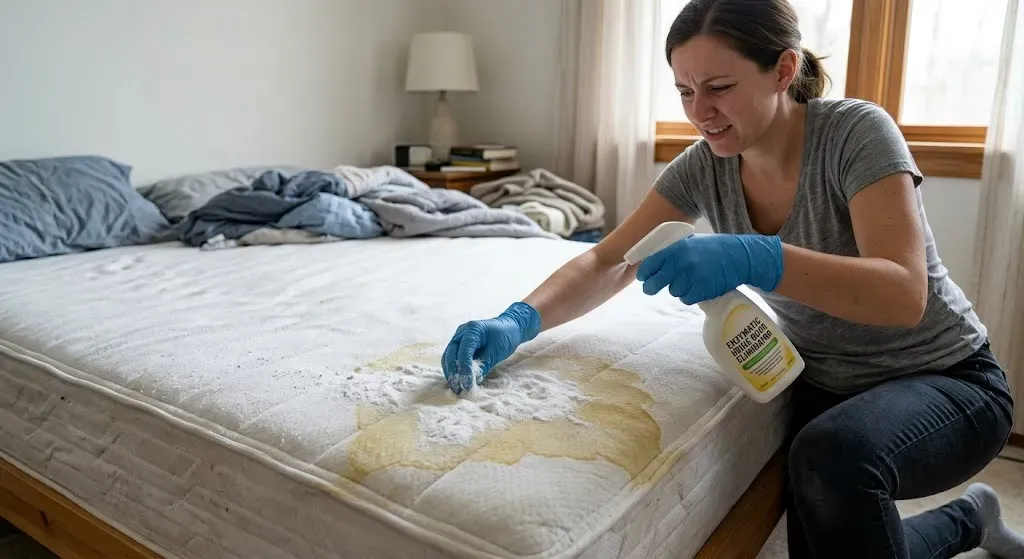
How to Get Pee Smell Out of a Mattress
You have cleaned the stain. The mattress looks fine. But that pee smell is still there every time you walk into the room. Sound familiar? Getting the pee smell out of a mattress is a separate job from cleaning the visible stain, and many people do not realise this until they are still dealing with the odour days later.
The good news is that it is completely fixable. Here is exactly what to do.
Quick Links
- Why the Pee Smell Stays Even After Cleaning
- Method One: Baking Soda
- Method Two: Baking Soda and Vinegar Paste
- Method Three: Enzyme Cleaner
- Quick Tips That Make a Difference
- Frequently Asked Questions
Why the Pee Smell Stays Even After Cleaning
Here is the thing most people do not know. The visible stain and the smell come from different things. The stain is caused by urobilin, a yellow pigment in urine. But the smell comes from uric acid crystals and ammonia compounds that penetrate much deeper into the mattress than the surface stain does.
So when you clean the surface, you lift the stain, but you do not always reach those deeper odour compounds. That is why the mattress can look perfectly clean and still smell like pee.
According to the NHS, bedwetting is extremely common in children and can happen regularly for years, which means many families deal with repeated mattress accidents. Getting the odour removal right is just as important as cleaning the stain itself.
Method One: Baking Soda
This is where most people should start. Baking soda is genuinely brilliant at absorbing odours. It does not just mask the smell the way an air freshener does. It actually neutralises the acidic odour compounds and pulls them out of the mattress fabric.
Grab your baking soda and pour a really generous amount over the smelly area. Do not be stingy here. A thin dusting will barely do anything. You want a thick, uniform layer, almost like a blanket of white powder covering the whole area.
Leave it there for at least 8 hours. If the smell is strong, leave it for a full 24 hours. The longer it sits, the more odour it absorbs. Then vacuum it all up thoroughly and give the mattress a sniff test.
For mild to moderate pee smells caught reasonably quickly, this method alone often does the job completely.
Method Two: Baking Soda and Vinegar Paste
If the smell is stronger or has been sitting for a while, you need to go a step further. A baking soda and vinegar paste is more effective than dry baking soda alone because the vinegar breaks down uric acid compounds before the baking soda can absorb them.
Mix equal parts baking soda and white vinegar in a bowl. It will fizz up quite a bit,t so use a large bowl and do this over a sink. Once the fizzing calms down, you will have a thick paste.
Spread this paste generously over the smelly area of the mattress. Use an old toothbrush or a soft scrubbing brush to work it gently into the fabric. Then leave it completely alone until it dries. This can take anywhere from a couple of hours to half a day, ay depending on how much paste you used.
Once it is fully dry, vacuum up every bit of the residue. Then give the mattress some time to air out before doing your sniff test. Most people fithat nd this method takes care of even fairly stubborn pee smells in one round.
Method Three: Enzyme Cleaner
If the smell is still hanging around after the baking soda method, it is time to bring in the big guns. An enzyme cleaner is genuinely the most powerful odour removal tool you can use on a mattress.
Enzyme cleaners work completely differently from other cleaning products. They contain live enzymes that literally break down the odour-causing compounds in urine at the molecular level. They do not cover up the smell. They destroy it.
Spray the enzyme cleaner directly onto the smelly area. Be generous. Let it sit for at least 30 minutes. Some products are recommended for longer for severe odours, so check the label. Do not rinse it off. Enzyme cleaners need time to work, and rinsing stops that process. Leave it to air dry on its own.
For pet pee smells in particular, enzyme cleaners are not just the best option, they are really the only option that fully works. Standard baking soda and vinegar will reduce the smell, but they will not completely eliminate pet urine odour, as an enzyme cleaner does.
Quick Tips That Make a Real Difference
- After any odour treatment, put the mattress near a window or, if you can, outside in the sun. Fresh air and sunlight are natural deodorisers and will significantly speed up the process.
- Make sure the mattress is completely dry before putting sheets back on. A slightly damp mattress will smell worse, not better.
- If the smell keeps coming back after cleaning, it means the urine soaked deeper than your treatment reached. Try the enzyme cleaner and leave it on for longer than you think you need to.
- For memory foam mattresses, use less liquid than you normally would. Too much moisture damages memory foam and takes forever to dry.
Still Struggling With the Smell?
If the pee smell is from a cat or dog, read our specific guides on how to get cat pee smell out of a mattress and how to get dog pee smell out of a mattress. Pet urine odours are a whole different level of stubborn and need a targeted approach.
If you still have a visible stain and a lingering smell, visit our guide on how to get pee stains out of a mattress to tackle both problems at once.
For everything in one place, our complete guide covers every scenario: How to Get Urine Out of a Mattress: The Complete Guide.