Memory Foam vs Latex Mattress: Complete Comparison Guide
When it comes to choosing a new mattress, the memory foam vs latex mattress debate is one of the most common and genuinely difficult decisions buyers face. Both materials are widely praised for pressure relief and comfort. Both are significantly better than traditional innerspring mattresses in terms of spinal support. And both are available across a wide range of price points, making choosing between them a real decision rather than a simple budget call.
But memory foam and latex are fundamentally different materials that deliver very different sleeping experiences. Memory foam contours slowly and deeply to your body, absorbing pressure and isolating motion. Latex responds quickly and springily, providing buoyant support with natural breathability. One traps heat; the other disperses it. One lasts 8 to 10 years on average; the other routinely lasts 12 to 15 years. One is ideal for side sleepers who want deep pressure relief; the other suits combination sleepers who need to move freely.
In this complete memory foam vs latex mattress comparison guide, we break down every important difference: comfort, cooling, durability, motion isolation, suitability by sleeping position, back pain performance, and price, so you can make a confident, informed decision about which mattress material is genuinely right for your body and sleep needs.
What Is a Memory Foam Mattress?
Memory foam, technically known as viscoelastic polyurethane foam, was originally developed by NASA in the 1960s to improve aircraft seat cushioning and crash protection. It entered the consumer mattress market in the 1990s and has since become the most widely sold mattress material worldwide.
Material Composition: Memory foam is a temperature-sensitive polyurethane foam with an open-cell structure. The "viscoelastic" property means it is both viscous (slow to respond to pressure) and elastic (returns to its original shape when pressure is removed). This combination creates the characteristic slow-contouring feel that memory foam is known for.
Body Contouring: When you lie on memory foam, your body heat softens the foam directly beneath you. The foam slowly conforms to the exact shape of your body, distributing your weight across a much larger surface area than traditional materials. This precise body-contouring is the primary reason memory foam is so effective at providing pressure relief for the shoulders, hips, and lumbar region.
Pressure Relief: Memory foam's slow-contouring response allows it to cradle pressure points, particularly the shoulders and hips, in side sleeping, more completely than any other material. For people with shoulder or hip pain, or pressure-related sleep disruption, memory foam consistently outperforms other materials in pressure relief.
Motion Isolation: The viscous nature of memory foam absorbs movement energy rather than transferring it across the mattress surface. This makes memory foam the best material for motion-isolation couples, in which one partner moves frequently during sleep, who consistently report less sleep disruption on memory foam than on any other material.
Modern Variations: Standard memory foam's tendency to trap body heat has led manufacturers to develop gel-infused, copper-infused, and open-cell foam formulations, all designed to improve heat dissipation while maintaining the pressure-relief benefits of the original material.
What Is a Latex Mattress?
Latex mattresses are made from the sap of rubber trees, a natural, renewable material used in mattresses since the 1930s. Latex is the oldest foam mattress material and, by most objective measures, the highest performing in terms of longevity and consistent support.
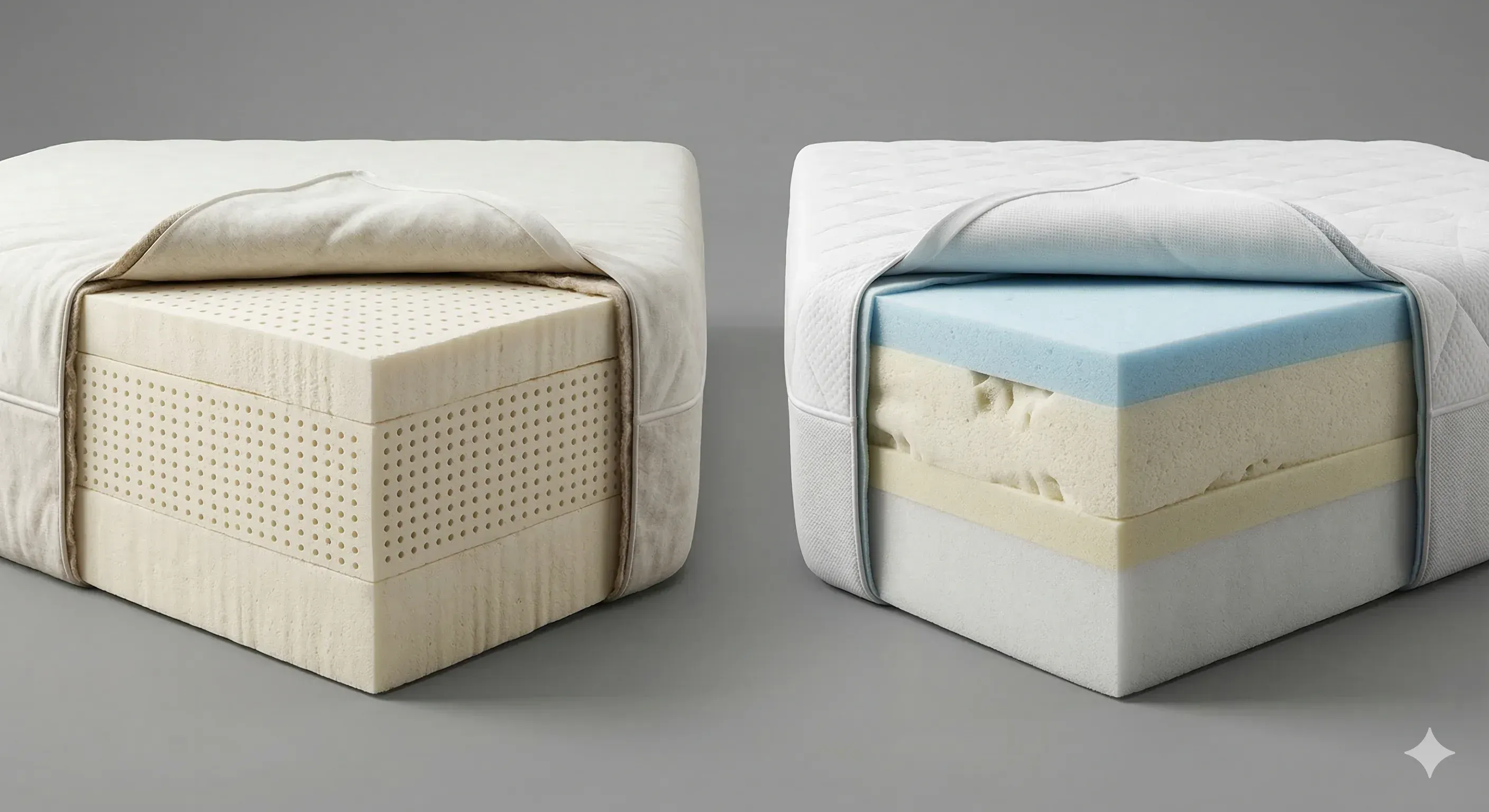
Natural Latex Material: The two primary types of latex used in mattresses are Dunlop latex and Talalay latex. Dunlop latex, the traditional method produces a denser, heavier foam that is firmer at the bottom and slightly softer at the top due to natural sedimentation during manufacturing. Talalay latex, a more refined process, produces a more uniform, consistent foam that is generally softer and more responsive than Dunlop at equivalent densities. Both are natural materials derived from rubber tree sap and are significantly more sustainable than petroleum-based foam products.
Responsive Support: Unlike memory foam's slow, temperature-dependent contouring, latex responds immediately to pressure. When you press into a latex mattress and release, it springs back instantly. This responsiveness, often described as a "buoyant" or "floating on top" sensation, is fundamentally different from the "sinking into" feel of memory foam. Combination sleepers who change position frequently during the night find latex significantly easier to move on than memory foam.
Durability: Latex is the most durable mattress material available. Natural latex mattresses routinely last 12 to 15 years without significant compression or performance degradation. High-quality Dunlop latex cores have been documented to last 20 or more years. This longevity, combined with the material's natural origin, makes latex the most cost-effective mattress material over the full product lifetime, despite its higher upfront price.
Natural Resistance: Natural latex is inherently resistant to dust mites, mould, and mildew, making it an excellent choice for allergy sufferers. It does not off-gas the volatile organic compounds associated with some synthetic foam products, though people with latex allergies should choose synthetic or blended alternatives.
Memory Foam vs Latex Mattress: Key Differences
Here is a complete side-by-side comparison of every important performance category in the memory foam vs latex mattress decision:
| Feature | Memory Foam | Latex | Winner |
|---|---|---|---|
| Feel | Slow-contouring, cradling, sinking | Responsive, buoyant, springy | Personal preference |
| Pressure Relief | Excellent deepest contouring | Very good responsive cushioning | Memory Foam |
| Spinal Support | Good conforms to natural curves | Excellent consistent pushback | Latex |
| Cooling | Poor (standard) / Good (gel-infused) | Excellent naturally breathable | Latex |
| Durability | 8–10 years average | 12–15+ years average | Latex |
| Motion Isolation | Excellent absorbs all movement | Good slight movement transfer | Memory Foam |
| Ease of Movement | Poor "stuck" feeling when moving | Excellent responsive repositioning | Latex |
| Bounce | Very low | Medium to high | Latex |
| Edge Support | Poor to moderate | Good to very good | Latex |
| Allergy Friendliness | Good (no latex allergens) | Excellent (dust mite resistant), not for latex allergy sufferers | Tie |
| Eco-Friendliness | Poor petroleum-based | Excellent natural, renewable | Latex |
| Price (entry level) | Lower widely available | Higher premium material cost | Memory Foam |
| Off-Gassing | Common initially | Minimal | Latex |
The summary: Latex wins on most objective performance measures. Memory foam excels in pressure relief and motion isolation — two factors that matter enormously to certain sleepers. The right choice depends entirely on which performance factors matter most to your personal sleep needs.
Comfort and Pressure Relief Comparison
Pressure relief is the area where the memory foam vs latex mattress comparison is most nuanced and where personal preference plays the largest role.
Body Contouring: Memory foam's slow, heat-responsive contouring allows it to mould precisely to every curve of the body, including areas where the body's shape deviates significantly from a flat surface, like the lumbar curve and the shoulder-neck transition. This precise contouring distributes weight over the maximum possible surface area, reducing peak pressure at contact points to the lowest level achievable among mattress materials. For people who have experienced significant shoulder or hip pressure issues, this level of contouring is genuinely transformative.
Latex contours well, it compresses under body weight and cushions pressure points effectively, but its immediate elastic response means it does not conform as precisely as memory foam. The latex surface pushes back more actively against the body, providing excellent support but slightly less deep cradling than memory foam.
Shoulder and Hip Pressure Relief: For side sleepers, where shoulder and hip pressure relief is most critical, memory foam typically delivers superior pressure-relief performance. The shoulder sinks more completely into memory foam than latex, reducing peak shoulder pressure more effectively. For back sleepers, the difference is smaller because pressure distribution is less concentrated in back sleep, and latex's firm, consistent support is equally effective.
Spinal Alignment: Latex has an edge in maintaining long-term spinal alignment because its consistent elastic response prevents the gradual over-compression that can occur with memory foam under sustained heat and weight over years of use. Latex maintains its support profile more consistently over the mattress's lifetime, meaning the spinal alignment it provides on day one is similar to that in year ten.
Cooling and Breathability
Heat retention is memory foam's most commonly cited weakness and latex's most consistently praised advantage.
Heat Retention in Memory Foam: Standard memory foam's closed-cell structure traps body heat rather than allowing it to dissipate. The same temperature sensitivity that makes memory foam contour to your body, softening in response to warmth, also means it retains the heat your body generates throughout the night. Hot sleepers on standard memory foam frequently report waking up in a sweat, with discomfort, particularly in warm climates.
Gel-infused and open-cell memory foam formulations significantly improve heat dissipation compared to standard foam, but even these improved versions typically sleep warmer than latex. If you sleep hot in India's climate, this difference is especially significant and should weigh heavily in your decision.
Airflow in Latex: Latex's open-cell structure, particularly in Talalay latex, which has pin-core holes throughout the foam, allows continuous airflow through the mattress. Body heat escapes through the structure rather than being retained at the sleeping surface. Most latex sleepers report sleeping noticeably cooler than on memory foam, which is why latex is consistently recommended for warm climates and hot sleepers.
Durability and Lifespan
When comparing latex vs memory foam mattress durability, latex wins clearly and consistently.
Latex Longevity: High-quality natural latex mattresses typically last 12 to 15 years, and premium Dunlop latex cores have been documented to last 20 or more years without significant performance degradation. The natural rubber polymer structure of latex is highly resistant to compression, which can lead to permanent deformation and cause mattresses to sag and lose support over time. Latex maintains its original firmness profile and support characteristics far longer than any foam alternative.
Memory Foam Compression Issues: Memory foam, even high-quality, high-density foam, is more susceptible to compression set than latex. Standard memory foam begins to show body impressions and reduced support after 6 to 8 years of regular use. Budget memory foam products degrade significantly faster. The heat-responsive softening that makes memory foam comfortable also makes it vulnerable to permanent compression in areas of regular contact, particularly under the hips.
The practical implication: while latex mattresses cost more upfront, the per-year cost of quality sleep is typically lower than that of memory foam when the full product lifetime is accounted for.
Motion Isolation and Noise
Memory Foam: Memory foam is the gold standard for motion isolation. Its viscous structure absorbs movement energy almost completely, so dropping a glass of water on one side of a memory foam mattress will not disturb a person sleeping on the other side. For couples where one partner is a light sleeper or moves frequently, memory foam's motion isolation is a significant practical advantage that directly improves sleep quality for both partners.
Latex: Latex provides good but not exceptional motion isolation. Its elastic response means movement energy is partially absorbed and partially transferred across the mattress surface. The amount of transfer is much less than innerspring mattresses but noticeably more than memory foam. For most couples, the difference is manageable, but for very light sleepers who are highly sensitive to partner movement, memory foam's superiority in this category is meaningful.
Noise: Both memory foam and latex are silent under compression and movement; neither material produces the squeaking associated with innerspring and hybrid mattresses. This makes both excellent choices for partners who are sensitive to sleep noise.
Best Mattress for Different Sleeping Positions
Side Sleepers
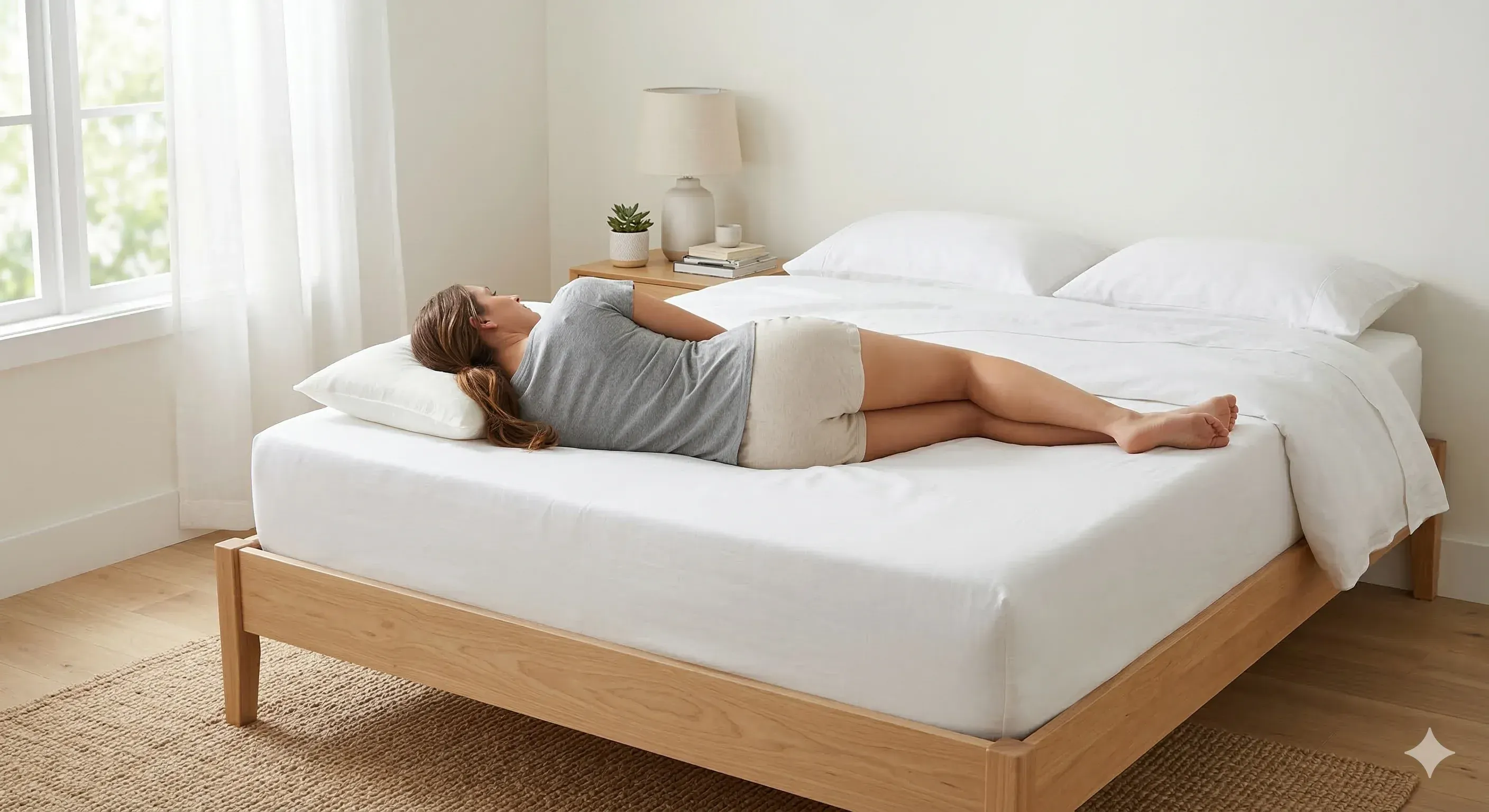
Side sleepers generally do better on memory foam than latex. The deeper contouring of memory foam allows the shoulder and hip to sink adequately for pressure relief, the primary requirement for pain-free side sleeping. Latex provides good pressure relief for side sleepers, but the more active pushback can create shoulder pressure in lighter individuals or those with shoulder conditions. Medium to medium-soft memory foam (firmness 4 to 5.5) is the top choice for most side sleepers. For detailed guidance, read our Best Mattress for Side Sleepers guide.
Back Sleepers
Both materials serve back sleepers well, but latex has a slight edge. Back sleeping distributes weight widely, reducing the need for deep pressure-point contouring. What matters most for back sleepers is consistent lumbar support and spinal alignment areas, where latex's consistent elastic response and long-term compression resistance give it an advantage over memory foam. Medium-firm latex (firmness 6 to 7) is ideal for most back sleepers.
Stomach Sleepers
Stomach sleepers need a firm surface that prevents hip sinking and lumbar hyperextension. Latex handles this significantly better than memory foam. Memory foam's heat-responsive softening under the hips is exactly what stomach sleepers need to avoid, as it creates the deeper hip sinking that misaligns the lumbar spine. Firm to medium-firm latex (firmness 6.5 to 8) maintains the flat, neutral surface that stomach sleepers require. See our Mattress Firmness Guide: How to Choose the Perfect Firmness Level for complete firmness guidance.
Memory Foam vs Latex for Back Pain
Both memory foam and latex can effectively address back pain. Still, they do so through different mechanisms, making one more suitable than the other depending on the specific type of back pain.
Memory Foam for Back Pain: Memory foam's superior pressure relief makes it particularly effective for back pain caused by pressure-point stress common in side sleepers, where hip and lower back pressure can create referred lumbar pain. The deep contouring reduces concentrated loading, which causes muscle tension and joint irritation. For back pain sufferers who are side sleepers, medium-firm memory foam is typically the most effective choice.
Latex for Back Pain: Latex's consistent, responsive support maintains spinal alignment more reliably than memory foam, making it more effective for back pain related to spinal misalignment, muscular imbalance, and conditions that worsen with the lumbar flexion that deep memory foam contouring can create. For back sleepers and stomach sleepers with back pain, medium-firm latex typically outperforms memory foam.
For a complete guide to mattresses for back pain, read our Best Mattress for Back Pain: Complete Buying Guide for Pain-Free Sleep.
Pros and Cons of Memory Foam Mattress
| Pros | Cons |
|---|---|
| Superior pressure relief is best for side sleepers | Retains body heat poorly for hot sleepers |
| Excellent motion isolation is ideal for couples | Slow response, difficult to change positions |
| Deep body contouring, precise weight distribution | Shorter lifespan, 8–10 years average |
| Wide price range accessible to all budgets | Can develop body impressions over time |
| Silent, no noise under movement | The initial off-gassing smell is common |
| A wide variety of options | Not eco-friendly, petroleum-based material |
Pros and Cons of Latex Mattress
| Pros | Cons |
|---|---|
| Naturally breathable sleeps cooler | Higher upfront cost than memory foam |
| Exceptional durability 12–15+ years | Heavy, difficult to move and rotate |
| Responsive support, easy to change positions | Not suitable for latex allergy sufferers |
| Consistent spinal alignment over its lifetime | Less pressure relief than memory foam for side sleepers |
| Eco-friendly, natural, and renewable material | Limited variety at lower price points |
| Naturally dust mite and mould resistant | Slight motion transfer compared to memory foam |
Which Mattress Should You Choose?
Choose Memory Foam if you are a side sleeper who prioritizes deep pressure relief for your shoulders and hips. You share a bed with a partner who moves frequently during the night. You are on a budget and need quality comfort at a lower price point. You do not sleep hot or are willing to invest in a gel-infused version for better cooling.
Choose Latex if: You sleep hot and need a naturally breathable sleeping surface, particularly relevant in India's warm climate. You are a back or stomach sleeper who needs responsive, consistent spinal support. You change positions frequently during the night and find memory foam's slow response restrictive. You want the longest possible mattress lifespan and are willing to invest more upfront for better long-term value.
Choose Hybrid if: You want the benefits of both a hybrid mattress with a latex or memory foam comfort layer over a pocketed coil support system, which provides the pressure relief of foam with the airflow, responsiveness, and support of a spring system. Hybrids represent the premium middle ground between both materials.
Conclusion
The memory foam vs latex mattress comparison does not have a single universal winner; it has a winner for your specific needs. Memory foam wins for side sleepers who need the deepest possible pressure relief and for couples who need maximum motion isolation. Latex wins for hot sleepers, back and stomach sleepers, combination sleepers who move frequently, and anyone who prioritizes long-term durability and eco-friendliness over upfront cost savings.
Both materials are genuine improvements over traditional innerspring mattresses for most sleepers. The decision between them comes down to your sleeping position, temperature sensitivity, budget, and how long you want your mattress to last. Use this guide as your reference and always choose a mattress with a minimum 100-night sleep trial to verify the material is genuinely right for your body before committing.