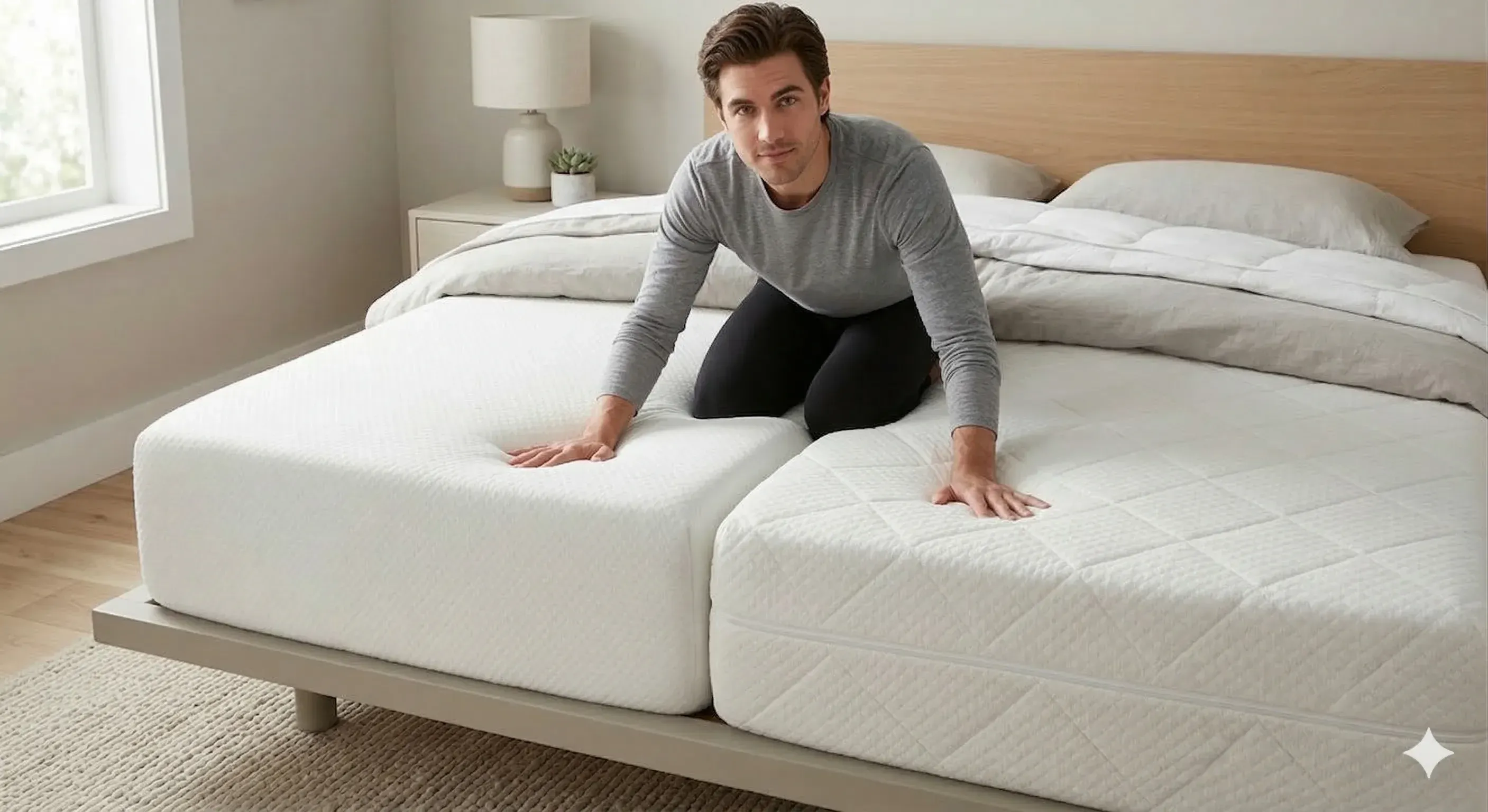
Choosing between a memory foam vs a spring mattress is one of the most common decisions every mattress buyer faces, and also one of the most confusing. Walk into any mattress store or browse any online retailer, and you will find both types dominating the options, each with its own set of loyal advocates and compelling claims.
Memory foam mattresses are celebrated for their pressure relief, body contouring, and motion isolation. Spring mattresses, also called innerspring mattresses, are valued for their bounce, breathability, and traditional responsive feel. Both have genuine strengths and real limitations. The right choice depends entirely on how you sleep, what you prioritise, and what your body specifically needs.
In this comprehensive comparison guide, we break down every important difference between memory foam and spring mattresses in terms of comfort, support, durability, cooling, motion isolation, back-pain performance, and suitability for different sleeping positions. By the end of this guide, you will know exactly which mattress type is right for you.
What Is a Memory Foam Mattress?
Memory foam was originally developed by NASA in the 1960s for aircraft cushioning — and its journey from aerospace technology to the world's most popular mattress material is a testament to its effectiveness in pressure relief and comfort.
A memory foam mattress is constructed primarily from viscoelastic polyurethane foam a material that responds to both pressure and heat. When you lie on a memory foam mattress, the foam softens under your body weight and warmth, contouring precisely to your body's shape. When you get up, it slowly returns to its original flat shape, hence the name "memory" foam.
This contouring property is what makes memory foam so effective for pressure relief. Instead of pushing back against your body uniformly like a spring, memory foam distributes your weight across a larger surface area, eliminating the concentrated pressure points that cause hip, shoulder, and lower back pain.
Modern memory foam mattresses typically consist of multiple layers: a soft comfort layer of memory foam on top, a transitional foam layer in the middle for gradual support, and a high-density base foam layer at the bottom for structural integrity. Higher quality memory foam mattresses use denser foam (4lb per cubic foot or above) which provides better support, longer durability, and more consistent contouring over time. If you are also considering natural rubber as an alternative, our memory foam vs latex mattress comparison covers all the key differences.
The primary evolution in memory foam technology has been the development of gel-infused foam, open-cell foam, and plant-based foam, all designed to address the one significant weakness of traditional memory foam: heat retention. For a full breakdown of which materials keep you coolest, read our guide on the best cooling mattress materials.
What Is a Spring Mattress?
Spring mattresses, more accurately called innerspring mattresses, are the original modern mattress design, having dominated the market for over a century. Their core structure is a system of metal coils that provide support, bounce, and airflow throughout the mattress.
The coil system is the defining feature of a spring mattress. Traditional Bonnell coils are hourglass-shaped and interconnected; when one coil moves, neighbouring coils move too. This creates a bouncy, responsive feel but also means motion transfers easily across the mattress surface. Pocketed coils used in higher-quality spring and hybrid mattresses are individually wrapped in fabric, allowing each coil to move independently for better motion isolation and more targeted support.
Above the coil system, spring mattresses typically feature comfort layers of foam, fibre, or padding. The thickness and quality of these comfort layers significantly affect the overall feel and pressure relief of the mattress. Budget spring mattresses often have thin, low-quality comfort layers that compress quickly, leading to early sagging and loss of support.
The natural airflow through the coil structure is one of the most significant advantages of spring mattresses. The open space between coils allows air to circulate continuously, keeping the sleep surface cooler than that of solid-foam mattresses. For hot sleepers, this breathability is a major benefit that foam mattresses struggle to fully replicate, even with cooling technology.
Memory Foam vs Spring Mattress: Key Differences
Here is a complete side-by-side comparison of memory foam vs spring mattress across every important category:
| Feature | Memory Foam Mattress | Spring Mattress |
|---|---|---|
| Support Type | Contours and cradles body | Push-back responsive support |
| Pressure Relief | Excellent | Average |
| Motion Isolation | Excellent | Poor to average |
| Cooling | Can trap heat | Better airflow |
| Bounce | Minimal | High |
| Noise | Silent | Can squeak over time |
| Durability | 8–10 years | 6–8 years |
| Edge Support | Average | Better |
| Back Pain | Excellent | Good (depends on quality) |
| Best For | Side sleepers, pain relief | Hot sleepers, active couples |
| Price Range | Mid to high | Budget to mid |
| Weight | Heavy | Lighter |
Understanding these differences is the foundation for making the right decision between memory foam and spring mattresses for your specific needs.
Comfort and Pressure Relief Comparison
When it comes to comfort and pressure relief, memory foam holds a clear advantage over spring mattresses for most sleepers, particularly those with pain issues or pressure sensitivity.
Memory Foam Comfort
The body-contouring property of memory foam is unmatched by any other mattress material. As you lie down, the foam responds to your body heat and weight, slowly moulding itself to every curve filling the gap at your waist, cradling your shoulders and hips, and supporting the natural arch of your lower back. This personalised contouring distributes your body weight evenly across the entire mattress surface, eliminating the pressure points that cause pain and discomfort.
For side sleepers especially, this pressure relief is transformative. The shoulder and hip, the two main contact points in side sleeping, sink gently into the foam rather than being pushed against by a firm surface. This dramatically reduces the shoulder pain, hip soreness, and arm numbness that side sleepers commonly experience on firmer mattresses.
Spring Mattress Comfort
Spring mattresses provide a different kind of comfort, one that many sleepers prefer for its responsiveness and traditional feel. The coil system pushes back against your body rather than conforming to it, creating a supported, on-top-of-the-mattress sensation rather than the sinking-into-the-mattress feeling of foam.
For back and stomach sleepers who prefer a firmer, more responsive surface, a quality spring mattress provides excellent comfort. However, spring mattresses are significantly less effective at pressure relief — the uniform push-back from coils cannot target specific pressure points the way memory foam can. Budget spring mattresses with thin comfort layers are particularly poor at pressure relief, often causing hip and shoulder pain in side sleepers.
Durability and Lifespan
Durability is a significant factor in the memory foam vs spring mattress comparison, and memory foam holds a notable advantage here.
Memory Foam Lifespan: High-quality memory foam mattresses typically last 8 to 10 years with consistent performance. Higher-density foam (4lb per cubic foot and above) resists sagging and compression far better than low-density alternatives. The main durability concern with memory foam is body impressions, permanent indentations that form over time in the areas of heaviest use. High-density foam resists impressions significantly better and maintains its supportive properties throughout its lifespan.
Spring Mattress Lifespan: Spring mattresses generally last 6 to 8 years before significant sagging occurs. The coil system can maintain its structural integrity for years, but the comfort layers above the coils typically have lower-quality foam or fibre, which compress and break down faster. Once the comfort layers fail, the mattress becomes uncomfortable even if the coils are still functional. Pocketed coil spring mattresses tend to last longer than traditional Bonnell coil designs.
Sagging Issues: Both mattress types are susceptible to sagging, but in different ways. Memory foam sags into body impressions at specific pressure points. Spring mattresses sag more broadly in the centre as both the comfort layers and coils lose their structural integrity. Both forms of sagging cause spinal misalignment and back pain.
Cooling and Breathability
Cooling is the area where spring mattresses hold their clearest advantage over traditional memory foam.
Heat Retention in Memory Foam: Traditional memory foam traps body heat because its dense, closed-cell structure prevents airflow. The same contouring that makes memory foam so effective at pressure relief wrapping closely around your body also creates an insulating effect that raises the sleep surface temperature. Hot sleepers frequently find traditional memory foam mattresses uncomfortable, particularly in warmer climates.
Modern memory foam technology has significantly addressed this. Gel-infused memory foam incorporates phase-change gel beads that absorb and dissipate heat. Open-cell memory foam has a more porous structure, allowing greater airflow. Copper-infused and graphite-infused foam variants also improve heat dissipation. However, even the best cooling memory foam typically does not match the natural breathability of a spring mattress.
Airflow in Spring Mattresses: The open structure of a coil system allows continuous air circulation throughout the mattress. As you move during sleep, air is actively pumped through the coil space, maintaining a consistently cooler sleep surface. This natural ventilation is one of the most enduring advantages of spring mattresses and a primary reason many sleepers in hot climates continue to prefer them.
Motion Isolation and Noise
For couples sharing a bed, motion isolation is one of the most practically important factors in the memory foam vs spring mattress decision.
Memory Foam Motion Isolation: Memory foam absorbs and isolates movement exceptionally well. When one partner shifts position, rolls over, or gets in and out of bed, the foam absorbs that movement locally without transferring it across the mattress surface. The sleeping partner feels nothing. This makes memory foam the clear winner for couples where one partner is a light sleeper or has different sleep patterns.
Spring Mattress Motion Transfer: Traditional interconnected coil spring mattresses transfer motion significantly when one side moves; the connected coil system transmits that movement across the entire surface. For light sleepers sharing a bed, this motion transfer is a constant source of sleep disruption. Pocketed coil spring mattresses perform considerably better than Bonnell coil designs, as individually wrapped coils move more independently. However, even the best pocketed coil spring mattresses cannot match the motion isolation of quality memory foam.
Noise: Memory foam mattresses are completely silent; the foam absorbs all movement without any sound. Spring mattresses can develop squeaking and creaking sounds as the coil system ages and the springs begin to rub against one another or against their fabric wrapping. This noise increases with mattress age and can become a significant sleep disruption over time.
Which Mattress Is Better for Different Sleep Positions
Side Sleepers
Memory foam is the clear winner for side sleepers. The body-contouring properties of memory foam allow the shoulders and hips to sink into the surface while supporting the waist, maintaining spinal alignment, and eliminating pressure-point pain. Spring mattresses push back against the shoulder and hip uniformly, creating pressure and misalignment. Side sleepers who consistently wake up with shoulder or hip pain on a spring mattress almost always see improvement on a medium memory foam mattress. For position-specific mattress recommendations, explore our guide on the best mattress for side sleepers.
Back Sleepers
Both mattress types work well for back sleepers, but with different qualities. Memory foam provides excellent lumbar support by filling the natural gap at the lower back, maintaining the spine's natural curve. A quality medium-firm spring mattress also supports back sleepers well, with the added benefit of better cooling and a more responsive feel. Back sleepers who sleep hot will appreciate the breathability of a spring mattress. Those with back pain will benefit more from the contouring support of memory foam.
Stomach Sleepers
Spring mattresses are generally better for stomach sleepers. Stomach sleeping requires a firmer surface that prevents the hips from sinking too deeply, which would exaggerate the lower back arch and cause pain. A firm spring mattress keeps the body in a flatter, more neutral position. Memory foam can be too conforming for stomach sleepers, particularly in softer firmness levels, allowing the hips to sink and leading to lumbar strain.
Memory Foam vs Spring Mattress for Back Pain
Back pain is one of the most common reasons people seek a new mattress, and the choice between memory foam and spring mattresses has significant implications for back pain sufferers.
Memory foam has a clear advantage for most back pain conditions, particularly lower back pain and hip pain. Its body-contouring ability supports the natural lumbar curve, distributes weight away from pressure points, and keeps the spine aligned throughout the night. Research consistently shows that medium-firm memory foam mattresses reduce chronic lower back pain and morning stiffness more effectively than spring alternatives. If back pain is your primary concern, our complete guide on the best mattress for back pain goes into much greater detail.
Spring mattresses can also be effective for back pain, particularly for back and stomach sleepers who need a firmer, more responsive surface. A quality pocketed coil spring mattress with a supportive comfort layer maintains spinal alignment well for these sleeping positions. However, budget spring mattresses with thin, worn comfort layers are among the leading mattress-related causes of back pain, due to the inadequate cushioning and eventual sagging, which directly strain the lumbar spine.
For side sleepers with back pain specifically, memory foam is almost always the superior choice. The pressure relief at the hip and shoulder that only foam provides is essential for maintaining spinal alignment, which prevents lower back pain when sleeping on the side.
Pros and Cons of Memory Foam Mattress
| Pros | Cons |
|---|---|
| Excellent pressure relief | Can retain heat (traditional foam) |
| Superior body contouring | Minimal bounce, some find it restrictive |
| Outstanding motion isolation | Heavier than spring mattresses |
| Silent no squeaking | Can have an initial off-gassing smell |
| Longer lifespan (8–10 years) | Higher price point than budget springs |
| Excellent for back and hip pain | Not ideal for stomach sleepers |
| Best for side sleepers | Edge support is weaker than the spring |
Pros and Cons of Spring Mattress
| Pros | Cons |
|---|---|
| Excellent natural airflow and cooling | Poor motion isolation (Bonnell coils) |
| Responsive, bouncy feel | Can squeak and creak with age |
| Better edge support | Shorter lifespan (6–8 years) |
| Lighter weight, easier to move | Less effective pressure relief |
| Wide price range budget options available | Motion transfer disrupts light sleepers |
| Good for stomach and back sleepers | Comfort layers sag faster than foam |
| Traditional feel preferred by many | Not ideal for side sleepers with pain |
Which Mattress Should You Choose?
The right choice in the memory foam vs spring mattress decision comes down to your specific sleep needs:
| Choose Memory Foam If... | Choose Spring Mattress If... |
|---|---|
| You sleep on your side | You sleep on your stomach |
| You have back, hip or shoulder pain | You sleep hot and need cooling |
| You share a bed and need motion isolation | You prefer a bouncy, responsive feel |
| You are a light sleeper, disturbed by movement | You are on a tighter budget |
| You want a longer mattress lifespan | You need a lighter mattress to move |
Conclusion
The memory foam vs spring mattress debate does not have a single winner; it has a right answer for each individual sleeper. Memory foam excels at pressure relief, body contouring, motion isolation, and back pain support making it the better choice for side sleepers, pain sufferers, and couples. Spring mattresses excel at cooling, bounce, edge support, and affordability, making them better for hot sleepers, stomach sleepers, and budget-conscious buyers.
For most modern sleepers, particularly those with back or joint pain, memory foam or a hybrid mattress combining foam comfort with coil support represents the best investment in long-term sleep quality. Not sure which firmness is right for your body? Our complete mattress firmness guide will help you choose the perfect level. But if you sleep hot, prefer a traditional bouncy feel, or are replacing a mattress on a tight budget, a quality pocketed coil spring mattress remains a perfectly valid choice. Understand what your body needs first, then let that guide your decision.